
Why in news?
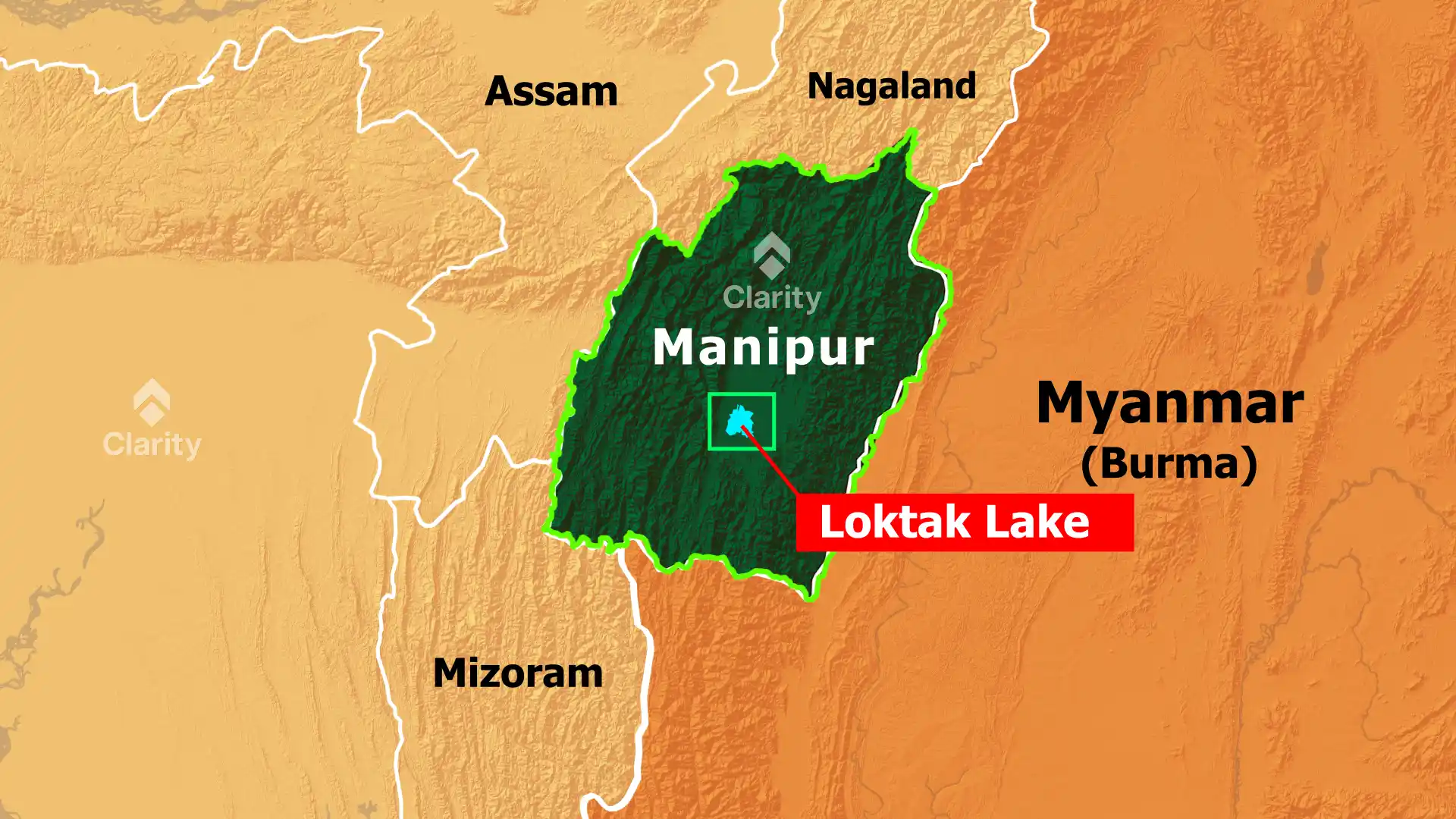
Recent reports in May 2026 highlighted the severe ecological and social pressures on Loktak Lake, the largest freshwater lake in northeast India. Ethnic violence in Manipur has displaced thousands of people, many of whom have turned to the lake for food and livelihood. This increased fishing pressure, combined with longstanding environmental issues, threatens the lake’s fragile ecosystem.
Background
Loktak Lake, located in the Moirang basin of Manipur, covers about 287 square kilometres and contains unique floating islands called phumdis—thick mats of soil and vegetation that support houses and wildlife. The lake is divided into zones based on phumdi thickness and human activity. It is home to the world’s only floating national park, Keibul Lamjao, which shelters the endangered brow‑antlered deer (Sangai). Local Meitei and fishing communities depend on the lake for food, water, irrigation and hydropower.
Issues facing the lake
- Influx of displaced people: The ongoing ethnic conflict has driven new families to settle on the phumdis and fish in the lake, straining resources traditionally managed by established fishing communities.
- Environmental degradation: Construction of the Ithai barrage in the 1980s raised water levels year‑round, preventing phumdis from sinking and regenerating. This has led to habitat loss, eutrophication and the decline of native fish species.
- Climate change impacts: Unseasonal heavy rains and hailstorms have increased siltation and flooded villages around the lake. Warmer temperatures and altered rainfall patterns threaten the delicate balance of the wetlands.
- Ramsar Montreux Record: Due to its deteriorating condition, Loktak Lake was placed on the Montreux Record of threatened wetlands in 1993. Despite conservation efforts, pollution and uncontrolled development continue.
Cultural and ecological significance
- The lake supports 132 plant and 54 fish species and regulates local climate by moderating extremes of temperature and rainfall.
- More than one‑tenth of Manipur’s population depends directly or indirectly on the lake for their livelihood.
- Traditional festivals, dances and sacred sites near Moirang reflect the deep cultural connection between the Meitei people and the lake.
Conclusion
The ecological decline of Loktak Lake, compounded by social conflict and climate change, threatens both biodiversity and human well‑being. Sustainable management—such as regulating fishing, restoring phumdis and controlling pollution—is essential to safeguard this “lifeline of Manipur.”
Sources: TOI

