
Why in news?
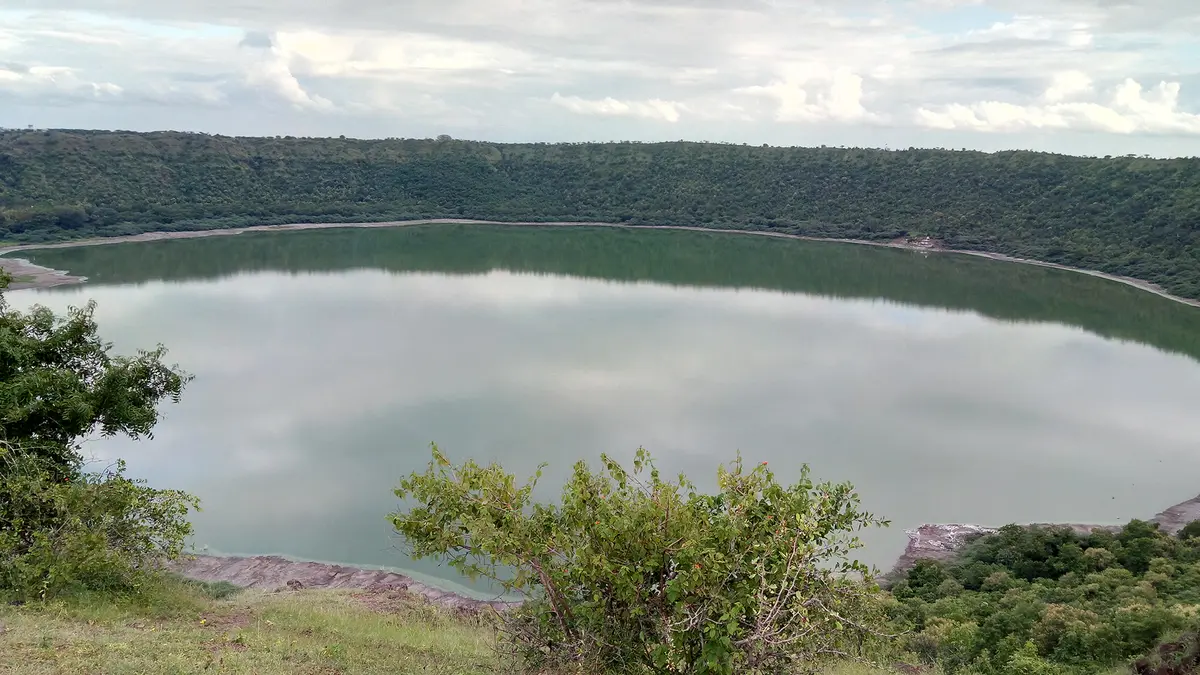
Environmentalists have reported a steep rise in the water level of Lonar Lake in Maharashtra’s Buldhana district. Since September 2025 the level has increased by about 15–20 feet, submerging parts of ancient temples. The Nagpur Bench of the Bombay High Court has ordered a Public Interest Litigation to examine the cause and protect the lake’s unique ecosystem.
Background
Lonar Lake formed around 50,000 years ago when a meteorite struck the Deccan plateau. It is one of the world’s only known basaltic impact craters and contains saline and alkaline water. The lake is considered a national geo‑heritage site and is surrounded by ancient temples like the Kamalja Devi shrine. In 2020 the lake briefly turned pink due to salt‑loving microbes, highlighting its fragile ecology.
Key points
- Water inflow: Continuous discharge from four perennial springs around the crater has raised the lake level by about 15–20 feet.
- Submerged heritage: Several Shiva temples and the Kamalja Devi Temple have been partly submerged. The Deepstambh (lamp tower) now stands half underwater.
- Ecological threat: Lonar is a saltwater ecosystem, but the influx of freshwater is diluting its salinity. Fish have appeared in the lake for the first time, which could upset its microbial balance.
- Legal action: Justices Anil Kilor and Raj Wakode have asked an amicus curiae to file a detailed PIL. Experts from the state water department are investigating, but the precise cause of the rising water remains unknown.
- Scientific importance: Lonar Lake attracts researchers and tourists worldwide. Conserving its unique characteristics is essential for science and heritage.
Conclusion
The mysterious rise in Lonar Lake’s water level calls for scientific study and careful conservation. Balancing tourism, heritage and ecology will be crucial to preserve this otherworldly site.