
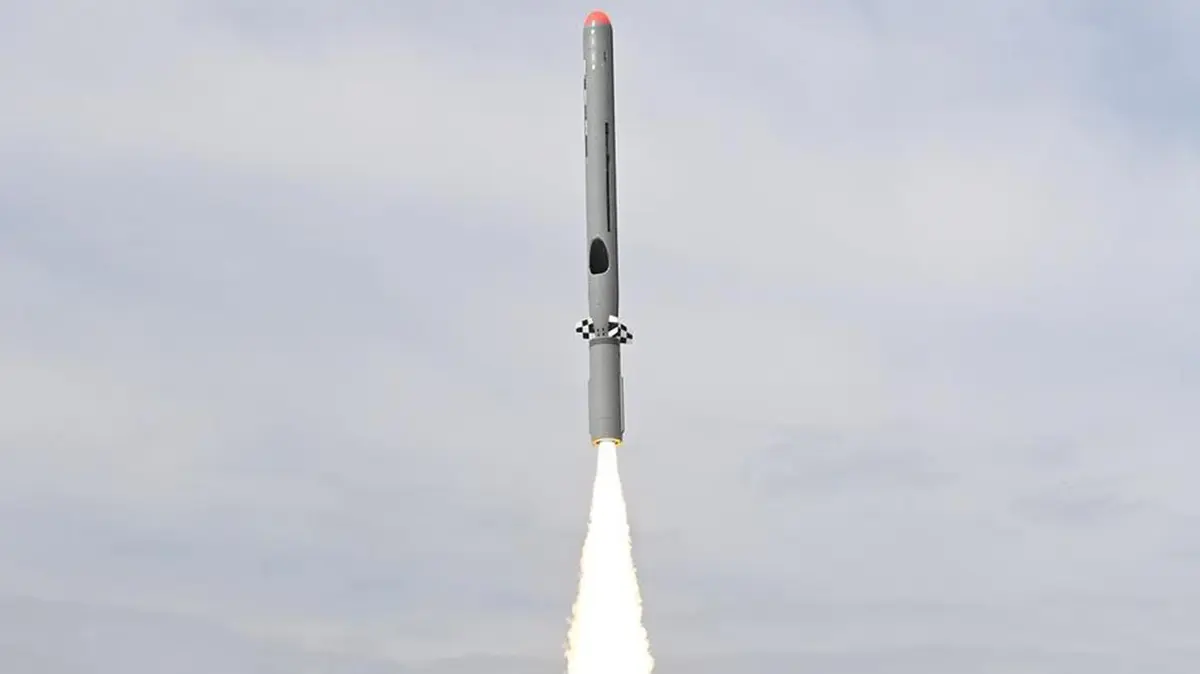
Why in news?
On 15 June 2026 the Defence Research and Development Organisation (DRDO) conducted a successful flight test of the Long Range Land Attack Cruise Missile (LRLACM) from Dr APJ Abdul Kalam Island off the coast of Odisha. The launch validated the missile’s design and performance parameters.
Background
The LRLACM is a subsonic cruise missile developed for precision strikes on land targets from long distances. It is part of India’s Nirbhay family of cruise missiles and is designed to complement the supersonic BrahMos system. The missile has been under development at the Aeronautical Development Establishment in Bengaluru with contributions from several DRDO laboratories and private industry partners.
Key features
- Range: Capable of striking targets up to around 1,000 kilometres while carrying a 450‑kg conventional warhead.
- Propulsion: Powered by a small turbofan engine (Manik) developed indigenously, which enables sustained low‑altitude flight.
- Navigation: Uses a combination of inertial navigation, satellite guidance and terrain‑contour matching for high accuracy.
- Stealthy flight: The missile flies at low altitude, hugging the terrain to avoid detection by enemy radars.
- Stand‑off capability: Allows the Indian Armed Forces to engage high‑value targets from safe distances, enhancing deterrence.
Significance
The successful test demonstrates India’s progress in developing indigenous long‑range strike weapons. The LRLACM will equip the Navy and Air Force with a modern cruise missile that strengthens deterrence and provides flexible response options. It also advances the “Aatmanirbhar Bharat” initiative by reducing dependence on imported systems.
Conclusion
With the LRLACM test India moves closer to fielding a credible long‑range cruise missile capability. Continued development and integration into naval and air platforms will expand the country’s precision strike arsenal.