

Why in news?
A long-running study of shearwaters on Australia's Lord Howe Island has found a sharp recent increase in severe plastic ingestion. Coverage on 21 September highlighted one chick containing 894 plastic pieces. The underlying study examined observations from 2010–2026, focusing on the most heavily affected young birds each year. It found that plastic burdens could rise substantially even when the proportion of birds containing plastic changed little. This matters because a stable pollution percentage can conceal worsening exposure. The record count concerns an extreme individual, not the average chick. The study connects the island's breeding colonies with plastic encountered by adult birds far out at sea.
An oceanic island with far-reaching ecological connections
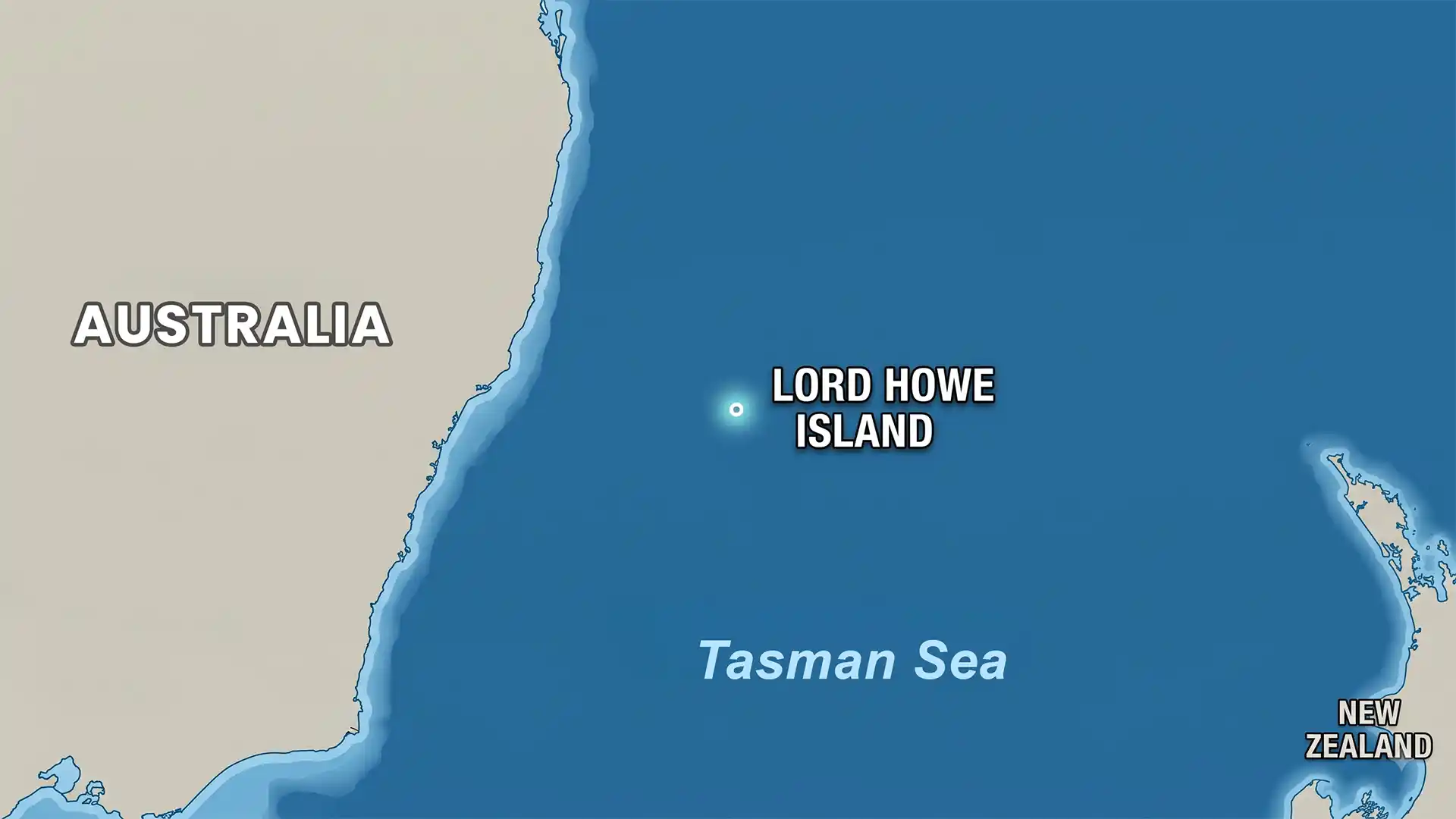
Lord Howe Island lies in the Tasman Sea, roughly 650 kilometres east of mainland Australia, and forms part of New South Wales. The island group includes remnants of an old volcanic system, surrounding reefs and the striking rocky outcrop of Balls Pyramid. Its isolation has supported distinctive plants and animals. The group is on the United Nations Educational, Scientific and Cultural Organization's World Heritage List. That recognition protects outstanding natural values, but cannot insulate its wildlife from pollution carried across the ocean.
The study concerns Ardenna carneipes, called the sable shearwater in the paper and widely known as the flesh-footed shearwater. Adult birds forage at sea and return to feed chicks in breeding colonies. During chick-rearing, their feeding areas can extend hundreds of kilometres from the island. Consequently, plastic found in chicks does not necessarily come from rubbish discarded on Lord Howe itself. The birds connect a relatively small nesting area to a much larger marine feeding environment.
How plastic reaches a chick
Shearwaters gather food at sea and deliver it to their young. When adults swallow plastic while feeding, some of that material can be transferred to chicks. Pieces can accumulate because plastic is not digested like fish or squid. Its shape, size and location within the digestive tract affect how readily it passes through. The result is more than an untidy stomach: retained debris can occupy space, injure tissue and interfere with normal feeding and development.
Researchers examined different kinds of plastic, including broken fragments, bottle caps and industrial resin pellets. These pellets, often called nurdles, are raw material used to manufacture plastic products. Their presence differs from that of a fragment broken from a finished item. Identifying such categories can help connect wildlife exposure with preventable leakage points. It does not, however, identify the individual factory, ship or country responsible for every piece found in a bird.
What the study actually measured
The research used repeated fieldwork in April and May across 2010–2026. Live birds were sampled using an authorised stomach-flushing method. Researchers also examined beach-washed birds, including freshly dead individuals after unsuccessful fledging attempts. These methods do not recover exactly the same material. Flushing mainly samples one part of the stomach and can miss retained plastic. Examination after death allows a more complete assessment of the digestive compartments.
For this analysis, the authors concentrated on the ten most heavily affected fledglings in each year, where samples allowed. Fledglings are young birds approaching or beginning independent flight. This approach studies the severe end of exposure rather than estimating the burden in a randomly selected average bird. The pandemic also reduced the 2020 sample to two individuals. Understanding that design is essential before interpreting a graph of increasing plastic loads as a population-wide average.
The numerical extremes illustrate why both count and mass matter. In 2025, one bird contained 894 pieces weighing 64.21 grams. In 2026, another recorded extreme involved fewer pieces—644—but a greater mass of 67.4 grams. The largest count and greatest mass therefore did not come from the same bird or year. A large number of small fragments and a smaller number of heavy pieces can create different exposure profiles.
Why a stable percentage can be misleading
The paper reports that plastic occurrence remained broadly within 75–85% during the study period. That measure asks whether plastic is present at all. It does not distinguish a bird carrying one piece from another carrying hundreds. Counts and mass reveal another dimension of exposure. Thus, an apparently stable prevalence can coexist with a worsening burden among affected animals. Monitoring only the percentage would miss an important part of the environmental change.
The researchers also compared trends over different study windows. Short periods sometimes suggested improvement or no clear change, depending on the years selected. Longer records revealed the recent escalation against substantial earlier variation. This is why a single exceptional season cannot substitute for continued monitoring. The record-breaking chick illustrates the problem. The multi-year dataset provides the stronger basis for understanding its direction.
Harm and the limits of the evidence
Earlier work cited by the authors links ingested plastic with tissue scarring and impaired condition in these birds. The new analysis documents changes in exposure; it does not assign every death to plastic alone. Food supply, other pollutants and additional pressures can interact with plastic burden. Nor can an extreme-focused sample directly establish the percentage decline of the whole breeding population. Those questions require population monitoring and research designed to separate overlapping causes.
Nevertheless, the routes of exposure suggest practical intervention points. Preventing pellet losses, reducing leakage of caps and fragments, and improving waste containment address material before it reaches wildlife. Local protection of nesting habitat remains necessary, but cannot resolve pollution collected hundreds of kilometres away. The island's conservation needs therefore extend beyond its shoreline. Measures at production, transport and disposal stages complement work at breeding colonies rather than replace it.
Conclusion
The Lord Howe findings show why environmental monitoring must examine severity as well as frequency. Many birds already contained plastic; the newer concern is how sharply the burden can increase among those most affected. The evidence supports sustained monitoring and prevention of plastic leakage across the wider marine environment. The worst recorded chick is not typical of all chicks. Nor can an isolated, protected island shield its seabirds from distant pollution sources.