

Why in news?
Indian researchers from 28 medical and research institutions compiled the country’s first government‑supported national biobank for Lysosomal Storage Disorders (LSDs). The biobank collects biological samples and clinical data to advance research and develop affordable treatments for these rare genetic diseases.
Background
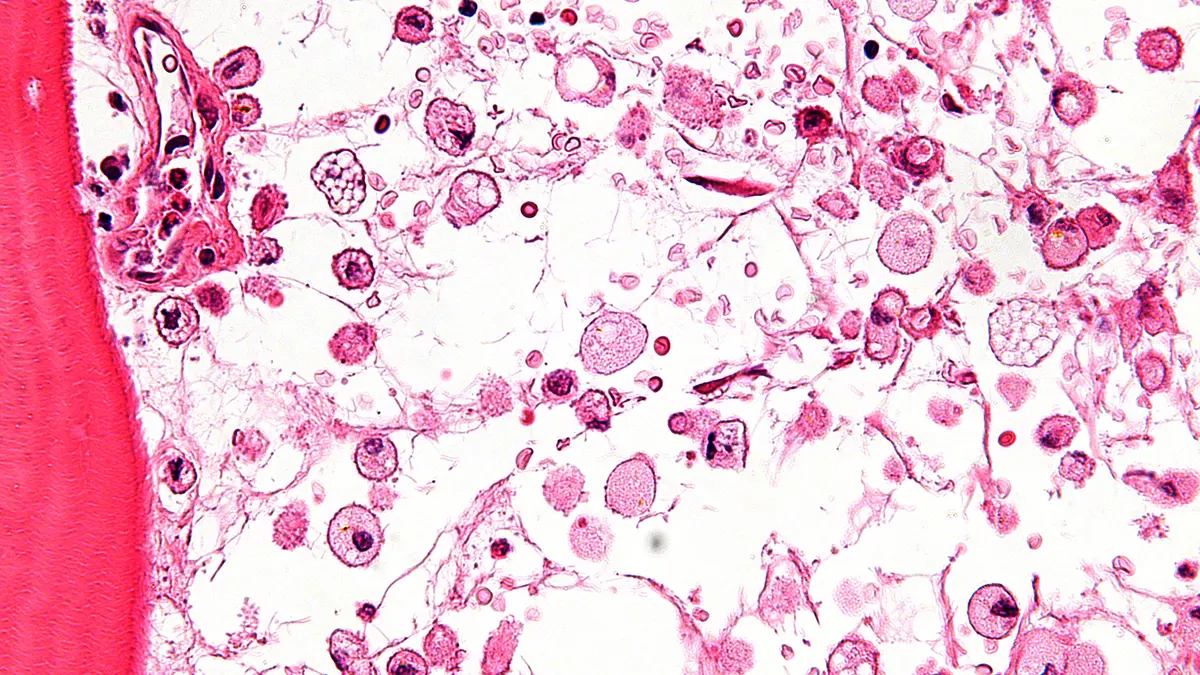
Lysosomal storage diseases are a group of more than 70 inherited metabolic disorders. They arise when gene mutations disrupt the production or function of lysosomal enzymes that break down fats, sugars and other biomolecules. The resulting buildup of toxic substances damages organs and tissues. Examples include Gaucher, Pompe, Fabry and various mucopolysaccharidoses. Except for a few conditions like Fabry disease and Hunter syndrome, most LSDs have no effective treatment, and existing therapies can cost over ₹1 crore per patient annually.
Biobank features
- Scale: The biobank houses samples from 530 patients across 15 states collected over 17 years (2008–2025). It includes genomic DNA, plasma and urine, along with detailed clinical, biochemical and genetic information.
- Use: At least two research centres already use the biobank to develop disease models and screening techniques. Collaborations with institutions like the Institute for Stem Cell Science and Regenerative Medicine (inStem) and the Centre for DNA Fingerprinting and Diagnostics (CDFD) aim to create stem‑cell models and spectrometry‑based diagnostic assays.
- Burden: India is estimated to have over 12 000 patients with LSDs. Of the 530 patients in the biobank, 60 percent have died and only eight are currently receiving treatment. This underscores the urgent need for research and accessible therapies.
- Administration: The biobank is managed by the Foundation for Research in Genetics and Endocrinology (FRIGE) in Ahmedabad and funded by the Department of Biotechnology. Its database is designed to function as a sustainable national resource beyond the initial funding period.
Significance
By centralising clinical and genetic data, the biobank enables researchers to study disease mechanisms, identify biomarkers and test potential therapies. It also serves as a registry that could improve diagnosis, family counselling and policy‑making for rare diseases. Policymakers hope that pooling resources will accelerate development of affordable treatments for LSDs in India.
Sources: The Indian Express