

Why in news?
Indian researchers developed an instrument for studying magnetorheological fluids. The device measures flow, friction and wear under a magnetic field. It also combines compression with sliding motion during each test. The work could support safer design of controllable mechanical systems.
Background
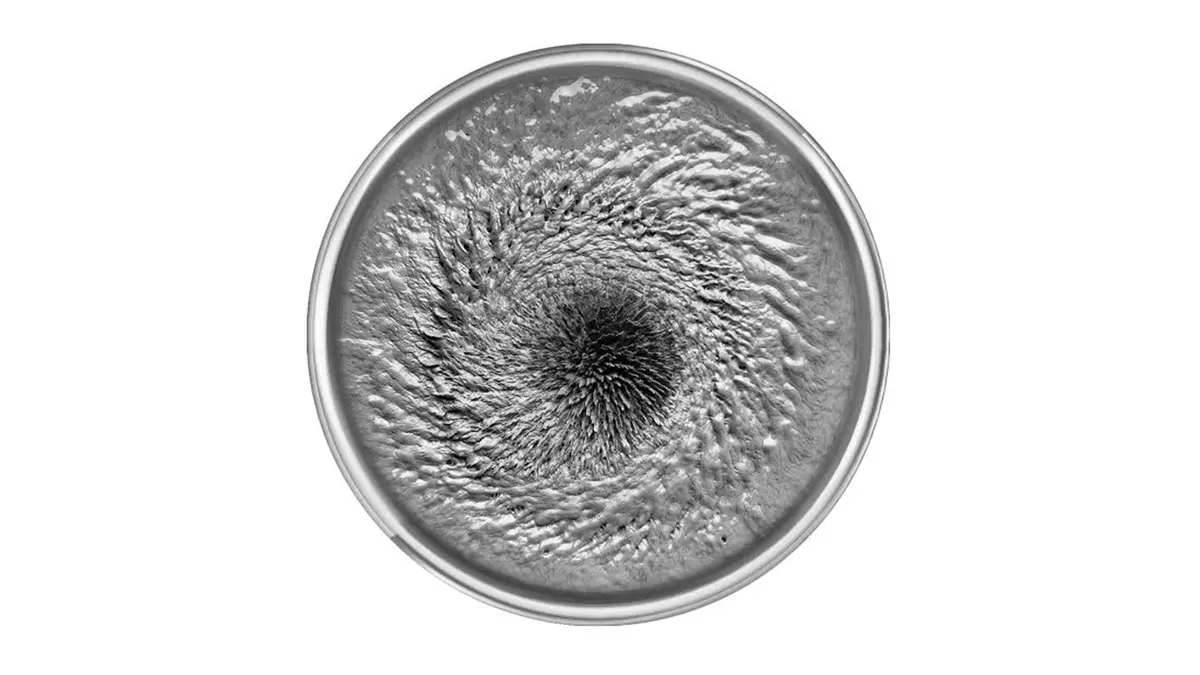
A magnetorheological fluid contains tiny magnetisable particles within a carrier liquid. Iron or iron-alloy particles are commonly used, alongside additives that reduce settling. Without a magnetic field, the material can flow broadly like a suspension.
An applied field aligns the particles into chain-like structures, which resist movement and rapidly raise the fluid's apparent viscosity. A sufficiently strong field can create solid-like resistance within milliseconds.
The change is reversible because removing the field breaks the organised particle structures. Engineers can therefore regulate resistance electronically, without ordinary valves or complicated mechanical linkages.
Magnetorheological materials have been studied for decades and already appear in specialised dampers, brakes, clutches and vibration-control systems. The August development concerned a better testing instrument, not the invention of these fluids.
What the research team developed
A team at the Indian Institute of Technology Patna built a hybrid magneto-rheometer. Professor Chiranjit Sarkar led the department-supported project under its Nano and Advanced Materials programme.
A rheometer measures material flow or deformation, while a tribometer studies friction, lubrication and wear. The new apparatus brings both measurements into one experimental arrangement.
The device applies compression and shear simultaneously, pushing surfaces together while moving them sideways. Researchers can vary the normal load and repeat measurements with or without magnetisation.
Its magnetic assembly keeps a strong field across the sample using comparatively modest current. This design limits unwanted heating while providing controlled experimental conditions. The team tested nano-iron powder formulations and reported its work in Rheologica Acta.
Why combined testing matters
Real components rarely experience one neat force, because dampers, clutches and prosthetic joints face combined pressure, sliding and vibration. Separate laboratory measurements can therefore miss important interactions.
Particle chains may support load differently under compression and sideways motion. They can also increase surface abrasion if hard particles enter a contact zone. A combined instrument helps relate useful field-controlled resistance to damaging friction and wear.
Better measurements can improve models used for component design. They may also help manufacturers compare carrier liquids, particle sizes and stabilising additives. Such evidence is important before laboratory materials enter safety-critical equipment.
Applications and remaining constraints
- Adaptive dampers can alter resistance according to changing vibration or road conditions.
- Brakes and clutches can regulate transmitted torque through an applied magnetic field.
- Industrial mounts may protect machines and buildings from harmful vibration.
- Medical and robotic devices can provide controllable resistance in compact mechanisms.
Commercial adoption still faces particle settling, aggregation and seal durability. Hard particles can abrade surfaces, while temperature changes alter the carrier liquid. Systems also require reliable sensors, electrical control and fail-safe behaviour.
Conclusion
The Patna instrument links material science with practical surface engineering. Its value will depend upon reproducible measurements and successful validation across real components.