
Why in news?
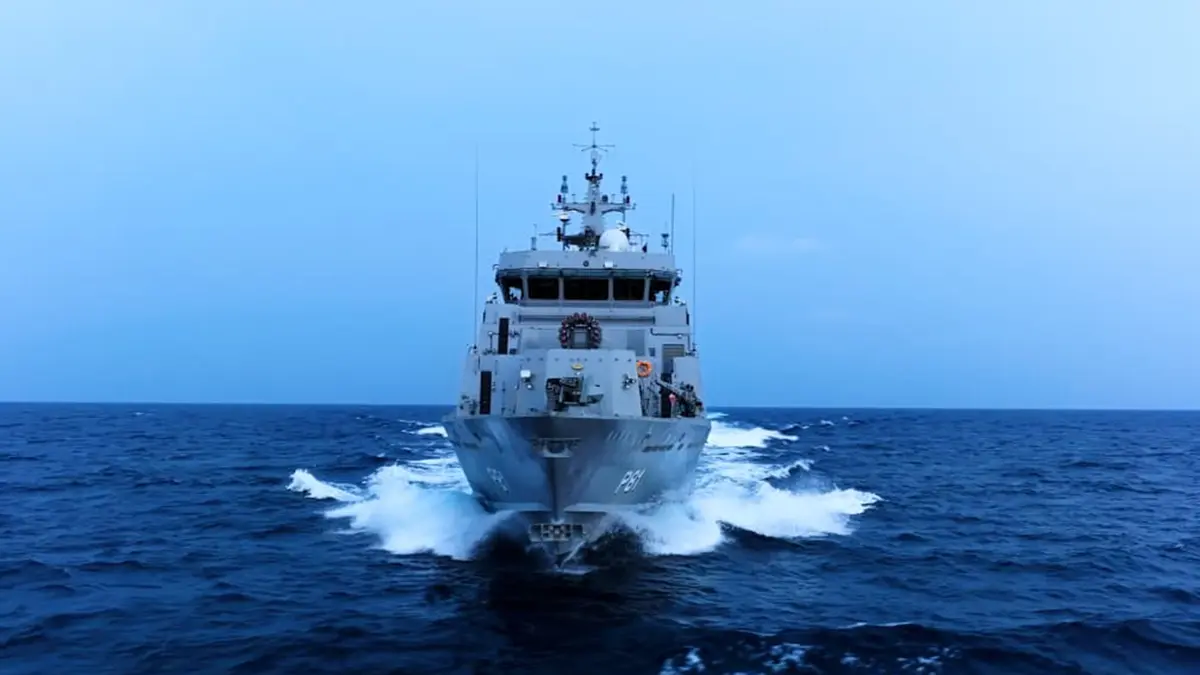
The Indian Navy will commission Malvan on 22 July 2026. It is the second ship of the Mahe class. The vessel is designed for anti-submarine work in coastal waters. Its commissioning strengthens India’s locally built shallow-water warfare capacity.
Background
Malvan is an Anti-Submarine Warfare Shallow Water Craft built for the Indian Navy.
Anti-submarine warfare covers the detection, tracking and possible destruction of hostile submarines.
Shallow-water craft operate close to coasts, ports and important sea approaches.
Cochin Shipyard Limited built Malvan at Kochi; it is one of eight vessels ordered from the public-sector shipbuilder.
The Navy signed the construction contract on 30 April 2019.
The new Mahe-class ships will replace ageing Abhay-class anti-submarine corvettes, which are smaller warships.
How did Malvan reach the commissioning stage?
- The Navy ordered eight shallow-water anti-submarine vessels in April 2019.
- Mahe, Malvan and Mangrol were launched together on 30 November 2023.
- Cochin Shipyard delivered Malvan to the Navy on 31 March 2026.
- The Navy scheduled its commissioning for 22 July 2026.
Air Chief Marshal Amar Preet Singh will chair the commissioning ceremony.
Vice Admiral Sanjay Vatsayan, head of the Western Naval Command, will also attend.
Three different stages: Launching puts a ship into water; delivery transfers it to the Navy. Commissioning places it in active service.
Why is the ship named Malvan?
Malvan is a historic coastal town in Maharashtra’s Sindhudurg district.
The region has a long maritime tradition; Sindhudurg Fort was built under Chhatrapati Shivaji Maharaj during the seventeenth century.
The ship’s name connects a modern naval platform with India’s coastal history.
What are the vessel’s main features?
- Malvan is about 78 metres long and 11.36 metres wide.
- Its shallow draught is about 2.7 metres.
- Its maximum speed is about 25 knots.
- One knot equals one nautical mile per hour.
- Twenty-five knots is roughly 46 kilometres per hour.
- Its endurance is about 1,800 nautical miles.
- This distance is roughly 3,334 kilometres under standard conversion.
The shallow draught helps the vessel work closer to the coast.
Cochin Shipyard describes this class as the Navy’s largest warships using diesel engines and waterjets.
A waterjet draws in water and forces it backwards; the reaction pushes the vessel forward.
Waterjets support quick manoeuvring and avoid an exposed external propeller; these qualities suit crowded and shallow waters.
What equipment does it carry?
Official releases identify lightweight torpedoes and locally developed anti-submarine rockets.
The craft also carries advanced sonar systems designed for shallow-water conditions.
Sonar sends sound through water and studies returning echoes; these echoes can reveal an underwater object.
The ship combines these sensors with weapons and modern communication systems for coordinated coastal operations.
Why is submarine detection difficult near a coast?
Shallow seas create confusing sound reflections from the seabed, surface, rocks and harbour structures.
Fishing vessels, merchant ships and coastal activity add background noise.
Temperature, salinity and currents can also change the path of sound underwater.
A smaller submarine may hide among these signals; specialised sonar and trained operators are therefore essential.
What missions can Malvan perform?
- It can search for submarines and monitor underwater activity near ports and sea lanes.
- It can support search and rescue operations and undertake low-intensity maritime security tasks.
- It can conduct limited mine-laying operations.
Low-intensity operations are security missions below full-scale naval warfare.
Mine-laying places explosive devices where hostile vessels may pass.
These roles protect naval bases, commercial ports and coastal shipping routes.
How indigenous is the vessel?
The Navy’s commissioning release reports more than 80 per cent indigenous content.
Indian firms supplied many systems and components; this spreads naval manufacturing across a wider domestic network.
Local construction also supports maintenance, upgrades and supply security during the ship’s service life.
Prelims point: Malvan is the second Mahe-class vessel; Cochin Shipyard Limited is building eight vessels of this class.
Conclusion
Malvan adds a specialised coastal defence platform to the Navy; its local construction also strengthens India’s maritime industrial capacity.