
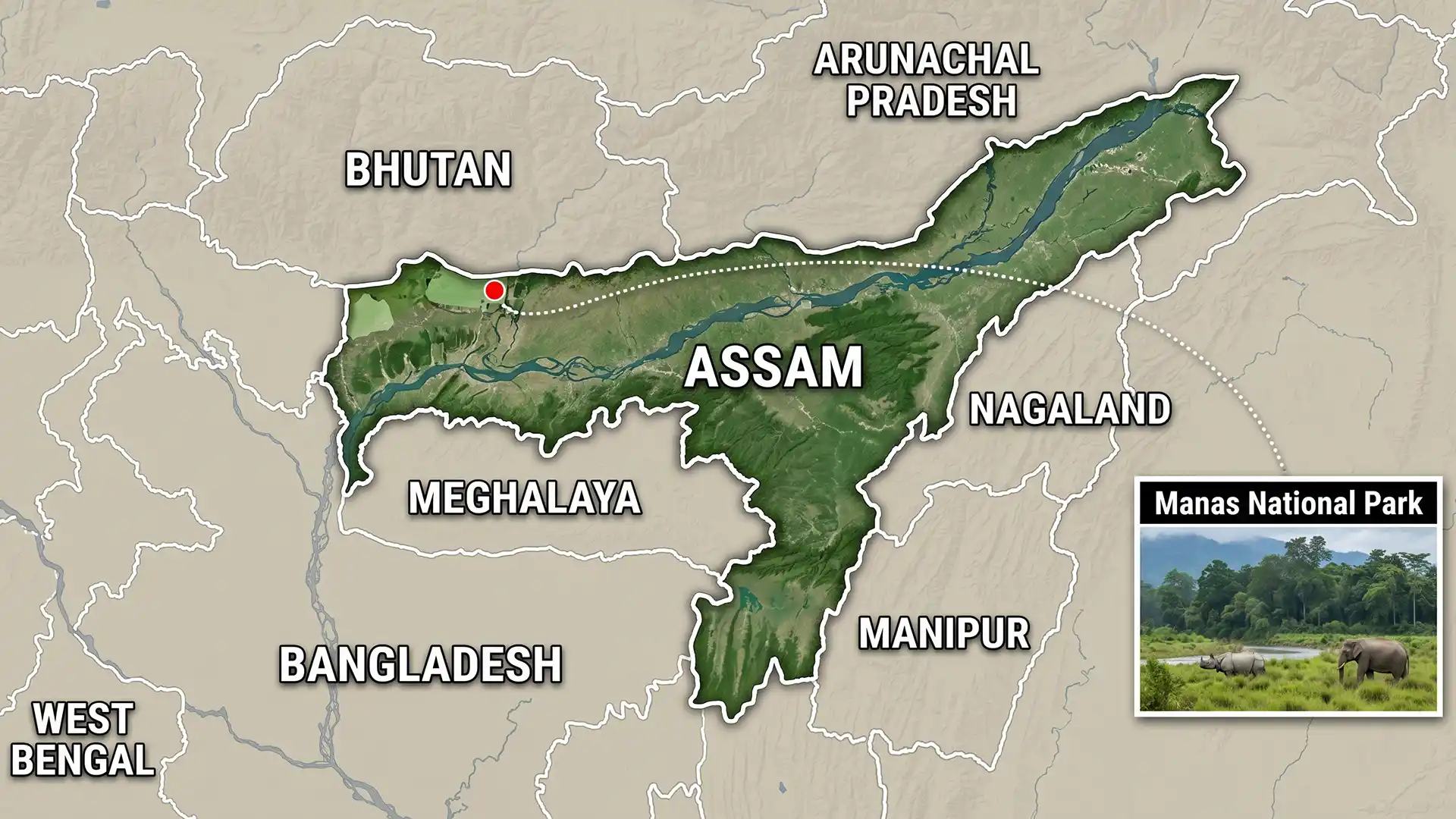
Why in news?
Manas National Park in Assam continues to draw attention for its success in conserving endangered species like the greater one‑horned rhinoceros and the pygmy hog. Recent surveys report stable or increasing populations of these animals, reflecting effective management after decades of unrest. The park’s World Heritage status and multi‑designation as a tiger reserve, biosphere reserve and elephant reserve make it a critical conservation area.
Background
Located along the foothills of the eastern Himalayas near the Bhutan border, the Manas Wildlife Sanctuary forms the core of Manas Tiger Reserve. The protected area covers about 39,100 hectares and is part of a larger 283,700‑hectare reserve. Established as a sanctuary in 1928, it was declared a national park in 1990 and joined the UNESCO World Heritage list soon after. The terrain ranges from bhabar savannah and terai grasslands to riverine forests and marshes along the Manas River. These diverse habitats support a wide variety of flora and fauna.
Ecological significance
- Species diversity: Manas hosts nearly 60 mammal species, 42 reptiles, seven amphibians and about 500 bird species. It is home to 22 of India’s most threatened mammals including tigers, Asian elephants, greater one‑horned rhinos, wild water buffalo, pygmy hogs and the hispid hare.
- Transboundary park: The reserve shares a boundary with Royal Manas National Park in Bhutan, creating an important landscape for migratory wildlife.
- Multiple designations: Manas is simultaneously a World Heritage Site, National Park, Tiger Reserve, Biosphere Reserve, Elephant Reserve and Important Bird Area.
- Conservation efforts: Community involvement, anti‑poaching patrols and species reintroduction programmes have helped restore wildlife populations after heavy poaching in the 1990s and early 2000s.
- Tourism: Eco‑tourism in Manas provides livelihoods for local people and funding for conservation. Visitors can take jeep and elephant safaris and explore the river by raft.
Conclusion
Manas National Park exemplifies how concerted conservation efforts can revive ecosystems. Protecting its mosaic of grasslands, forests and wetlands is essential for endangered species and the livelihoods of local communities. International recognition through UNESCO adds prestige but also responsibility to ensure that development pressures do not erode its ecological integrity.