

Why in news?
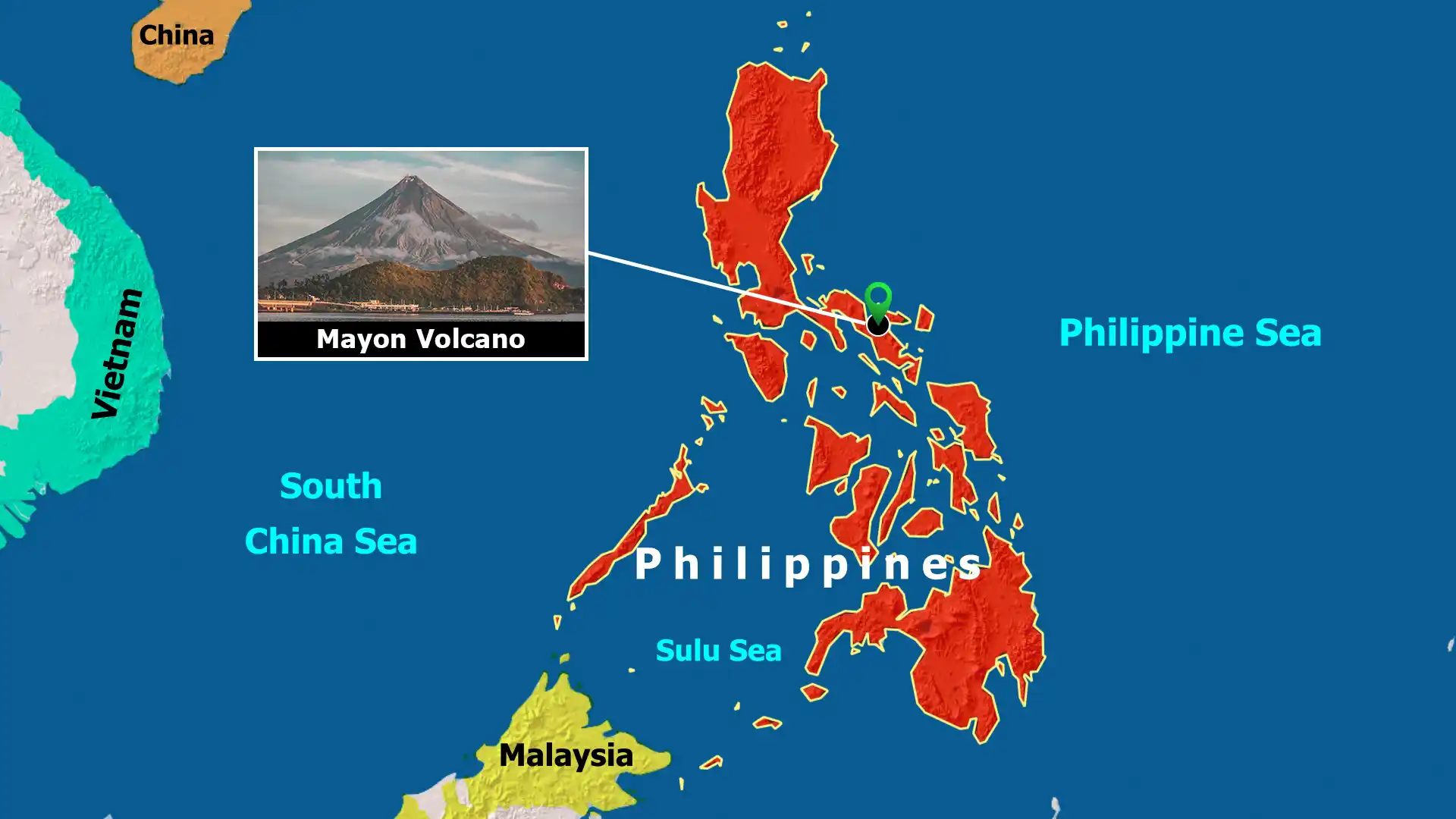
Philippine authorities raised the alert level of Mayon Volcano to Level 3 after increased rockfalls, lava accumulation and pyroclastic density currents were observed in early January 2026. Over three thousand residents were evacuated from villages near the volcano.
Background
Mayon Volcano, located in Albay province on the island of Luzon, is famous for its near‑perfect conical shape. Standing about 2,462 metres high, it is one of the most active volcanoes in the Philippines and forms part of the Pacific Ring of Fire. Historical records show more than 50 eruptions since 1616. A particularly devastating eruption in 1814 buried the town of Cagsawa under ash and lava, killing an estimated 1,200 people.
Recent activity
- Rockfalls and lava extrusion: Observers noted thousands of rockfalls and the gradual build‑up of lava around the summit crater. This indicates that magma is moving upward and solidifying near the surface.
- Pyroclastic density currents: Sudden collapses of lava accumulated at the summit generated hot avalanches of gas, ash and debris that cascaded down the slopes. These flows are extremely dangerous and can travel several kilometres.
- Gas emissions: Sulphur dioxide emissions increased compared with December levels, and rising degassing often precedes explosive eruptions.
- Evacuations: Authorities evacuated at least 3,476 residents from danger zones around the volcano, established permanent monitoring stations and closed off access to the summit area.
Safety measures and implications
- Alert level system: The Philippine Institute of Volcanology and Seismology (PHIVOLCS) uses a five‑tier alert scale. Level 3 indicates increased activity and a higher likelihood of hazardous eruption, warranting evacuations and restricted access.
- Risk reduction: Regular monitoring helps authorities issue timely warnings. Evacuation plans, hazard maps and community drills reduce the risk of casualties during eruptions.
- Tourism and agriculture: The volcano attracts tourists for its scenic beauty, but eruptions disrupt travel and damage crops. Prolonged activity can affect livelihoods in the surrounding region.
Conclusion
Mayon Volcano’s latest bout of activity serves as a reminder of the hazards posed by stratovolcanoes in the Ring of Fire. Continued vigilance, scientific monitoring and public preparedness are essential to safeguard lives and property around this iconic mountain.
Sources: Abc News