

Why in news?
Telangana Today reported that postal officials released a special cover and associated stamp for Medak Fort.
What was reported
The release took place at the fort on 17 August 2026. Officials linked the initiative with heritage awareness and local tourism. A special cover usually marks a place, institution or event.
It differs from a nationally issued commemorative postage stamp. The available report uses the expression “postal stamp”. This edition does not assign it a broader philatelic status without an official catalogue entry.
Recognition and conservation are different
A postal issue can widen public awareness. Physical conservation still needs skilled work, regular funding and responsible visitor management.
The fort and its setting
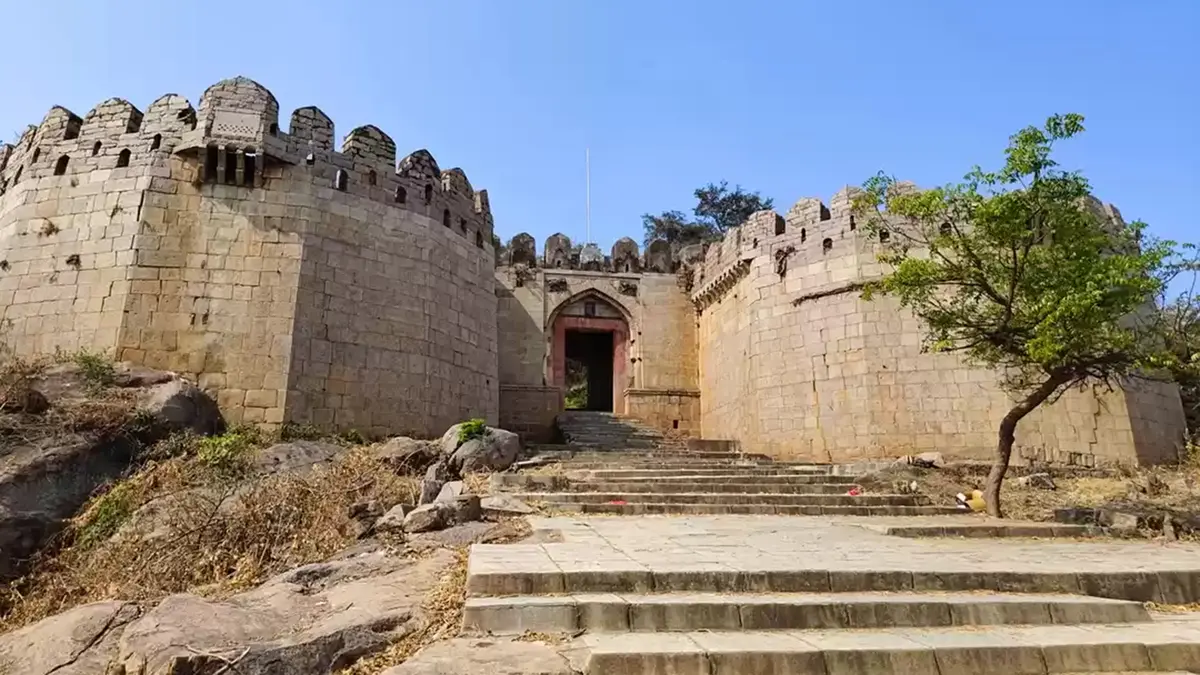
Medak Fort rises above Medak town in Telangana. Hyderabad lies about 96 kilometres away by road. The fort occupies a rocky hill around 90 metres above surrounding ground.
Its defensive complex spreads across roughly 100 acres. Visitors climb more than 500 steps through successive fortified levels. The height offers wide views over the Deccan landscape.
Medak district adjoins Kamareddy, Siddipet and Sangareddy districts. Its position connected inland settlements, routes and agricultural country.
A layered history
The Medak district administration places the fort’s origin in the Kakatiya period. It describes a twelfth-century foundation called Methuku Durgam. Later rulers altered the stronghold.
Qutb Shahi structures and military features show continuing use after the Kakatiya era. Three important gateways mark the ascent. They are commonly called Prathama Dwaram, Simha Dwaram and Gaja Dwaram.
Lion and elephant carvings appear around the named entrances. A large cannon and former storage spaces reflect the site’s military role. Popular accounts sometimes assign every feature to one ruler. Such claims require archaeological evidence because forts evolve across several periods.
Why the recognition matters
Philately can carry a regional monument beyond its locality. The cover may encourage historical interest and strengthen Medak’s tourism identity. Yet greater footfall brings risks.
Unregulated stalls, litter, surface wear and careless repairs can damage a hill fort. Conservation should begin with measured drawings and material studies.
Drainage, unstable masonry and vegetation growth need expert attention. Interpretive signs should distinguish verified history from local tradition. The site also needs safe access without erasing its historic character.
Publicity must support preservation
The postal issue can renew interest in Medak Fort. Its lasting value depends on careful conservation and accurate interpretation.
Conclusion
Medak Fort represents several centuries of Deccan history. The new cover should become a gateway to informed and sustainable stewardship.