
Why in news?
In May 2026 the Supreme Court dismissed Tamil Nadu’s review petition challenging the proposed Mekedatu balancing reservoir on the Cauvery River. Karnataka’s government welcomed the decision and stated that it would submit a revised Detailed Project Report (DPR), paving the way for construction to begin once regulatory clearances are obtained.
Background
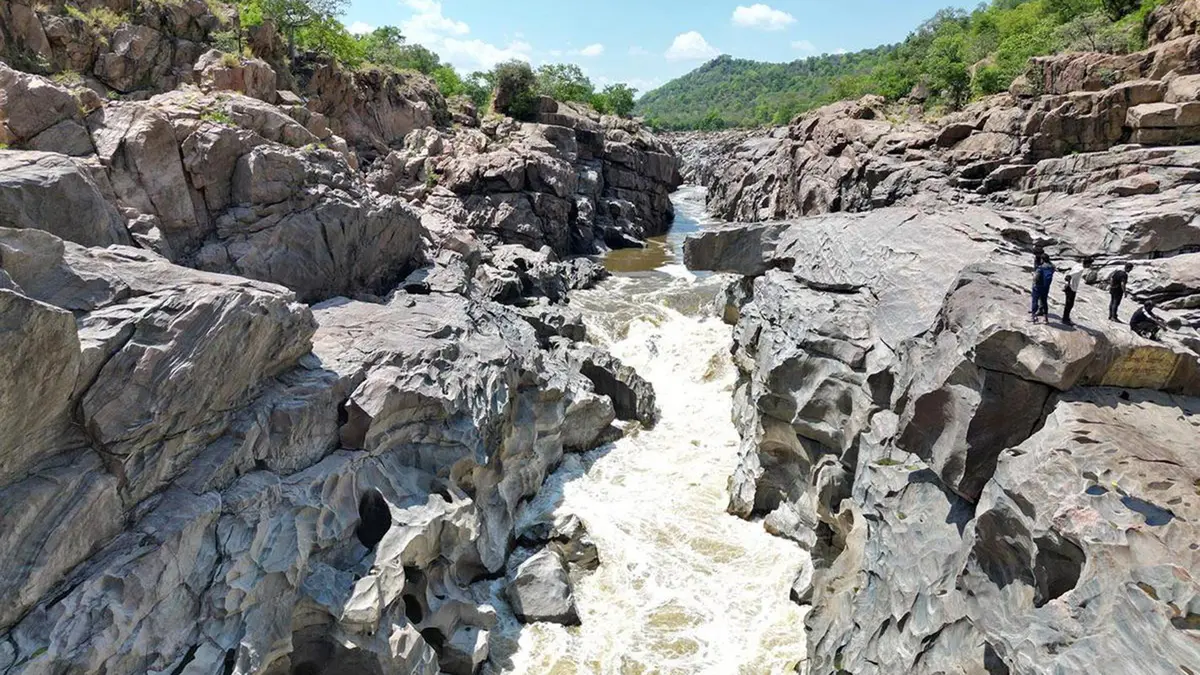
The Mekedatu project envisages building a balancing reservoir across the Cauvery River near the narrow gorge of Mekedatu (meaning “goat’s leap”) in Karnataka’s Ramanagara district, close to the Tamil Nadu border. Designed initially in 2013, the reservoir would have a storage capacity of about 67 thousand million cubic feet (tmc) of water. Karnataka argues that the project will supply around 4.75 tmc of drinking water annually to Bengaluru and surrounding towns and generate about 400 megawatts of hydropower. Tamil Nadu fears it will reduce flows downstream, affecting irrigation in the Cauvery delta.
Environmental and legal issues
- Wildlife sanctuary: The proposed reservoir site lies within the Cauvery Wildlife Sanctuary and would submerge approximately 7,800 acres of protected forests and 4,600 acres of reserve forest. Environmentalists warn that construction could displace wildlife, including elephants and endemic species, and fragment critical habitat corridors.
- Inter‑state dispute: Under the 2018 Cauvery water sharing verdict, Karnataka must ensure that downstream flows to Tamil Nadu are not adversely affected. Tamil Nadu filed a review petition arguing that the Mekedatu project would violate this order. The Supreme Court deemed the petition premature because statutory regulators (the Cauvery Water Management Authority and Regulation Committee) had not yet evaluated the DPR. Dismissing the review allows the regulators to examine the proposal on merits.
- Revised DPR: Following the court’s decision, Karnataka’s government announced that a revised DPR would soon be submitted to the Central Water Commission and wildlife authorities. The state plans to address concerns about environmental impact and downstream flows in the updated plan.
Conclusion
The Mekedatu project highlights the tension between urban water supply, interstate river sharing and conservation. Any construction must balance the drinking water needs of Bengaluru with the rights of downstream farmers and the protection of fragile forest ecosystems. Careful scrutiny by regulatory bodies and transparent dialogue between Karnataka and Tamil Nadu will be essential before work begins.