
Why in news?
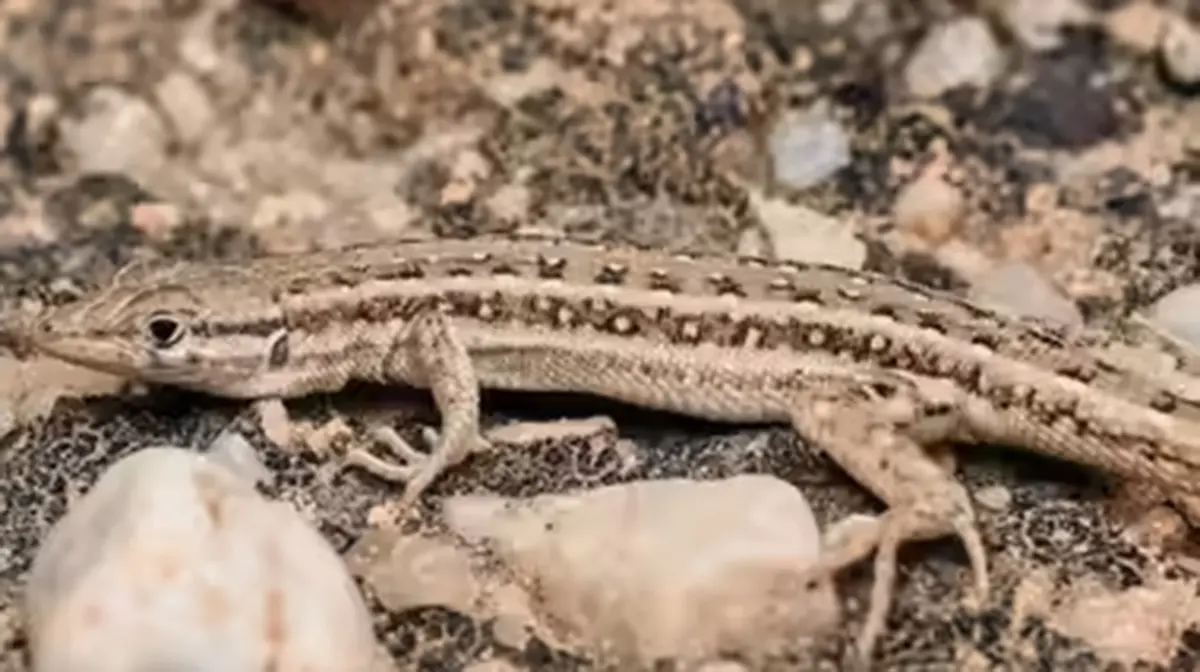
Researchers recently described Mesalina bishnoi, a species of sand lizard discovered near Gajner in Bikaner district of Rajasthan. It is the first confirmed record of the genus Mesalina in India and has been named in honour of the Bishnoi community for their long‑standing wildlife conservation efforts. The discovery highlights the unique biodiversity of the Thar Desert.
Background
The genus Mesalina comprises small, swift lizards adapted to arid environments across North Africa and the Middle East. Early twentieth‑century travellers mentioned a similar lizard from the Indian desert, but no specimen was collected. In August 2025 scientists from the Zoological Survey of India and regional universities surveyed rocky, shrub‑covered dunes near Gajner. They captured and examined a tiny lizard with an olive‑brown back and pale underside. Detailed morphological analysis and genetic sequencing confirmed that it was a previously unknown species of Mesalina.
Description and habitat
- Size and colour: The lizard has a snout‑to‑vent length of about 39 mm. Its back is greyish to olive‑brown with faint dorsolateral stripes and irregular dark blotches edged with white spots. A series of black markings behind each eye forms a semicircular band.
- Behaviour: Like other Mesalina species, it is diurnal and extremely agile, darting between rocks and sparse bushes to avoid predators. It feeds on insects and is active during the cooler morning and evening hours.
- Habitat: The species was found in a barren, stony landscape with scattered shrubs and grasses typical of the Thar Desert. Such microhabitats may harbour more undiscovered reptiles and arthropods.
- Naming: The specific epithet “bishnoi” acknowledges the Bishnoi community of Rajasthan, who have protected wildlife and trees for centuries. By naming the lizard after them, researchers hope to raise awareness of desert conservation.
Significance
- Biodiversity indicator: The discovery shows that the Thar Desert harbours unique vertebrate fauna that are poorly known. More surveys could reveal additional species and help delineate fragile ecosystems.
- Conservation message: Desert habitats are often overlooked in conservation planning. Recognising new species underscores the need to protect arid landscapes from overgrazing, mining and climate change.
- Cultural connection: Linking the new species to the Bishnoi community pays tribute to traditional ecological knowledge and reinforces the idea that local communities are key partners in wildlife protection.
Conclusion
Mesalina bishnoi reminds us that India’s deserts are living laboratories with creatures adapted to extremes of heat and drought. Documenting such species not only enriches our understanding of evolution but also encourages stewardship of fragile ecosystems.