

Why in news?
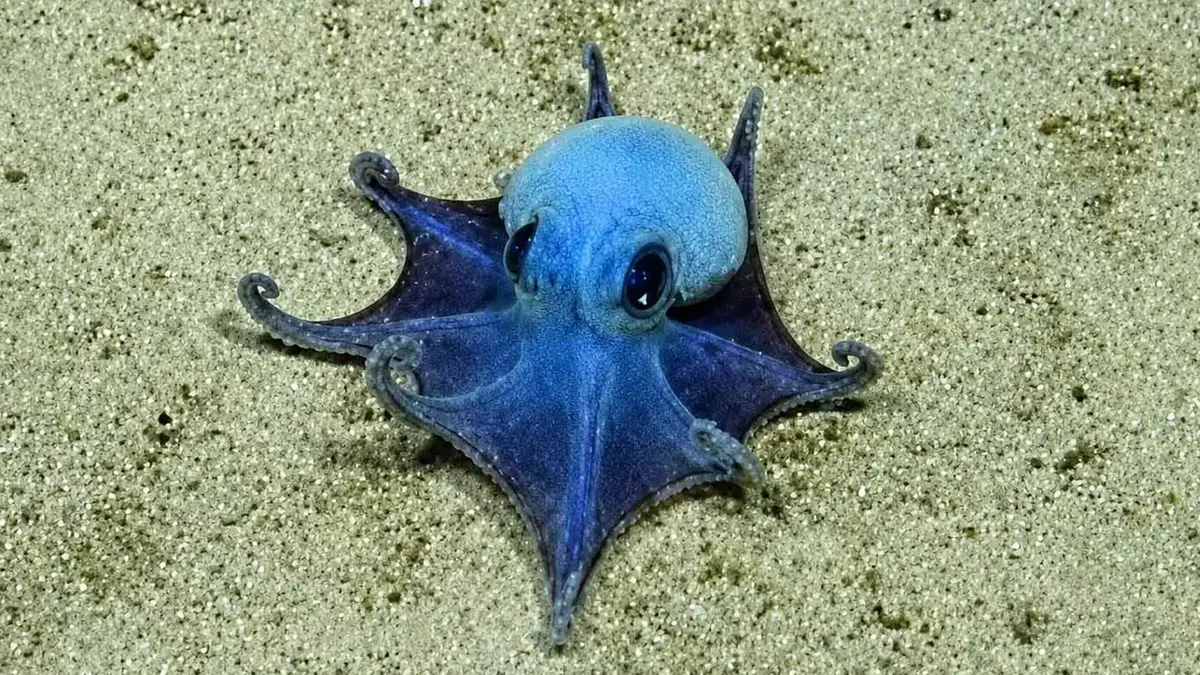
Scientists have described a new species of octopus, named Microeledone galapagensis, from the deep waters near Darwin Island in the Galapagos archipelago. The species was formally announced in May 2026, although the only known specimen was collected in 2015 during a deep‑sea expedition. The discovery highlights the rich and still largely unexplored biodiversity of the Eastern Pacific’s seamounts.
Background
The Galapagos Islands sit on the equator about 900 km west of Ecuador. They were formed by volcanic activity and are famed for their unique wildlife. Darwin Island and nearby Wolf Island rise from the Nazca tectonic plate and are surrounded by deep sea. During a research cruise in 2015, a remote‑operated vehicle collected a small octopus at a depth of around 1,770 m (5,800 ft). Because the specimen was so rare, researchers used micro‑CT scanning to examine its internal anatomy without cutting it apart.
Characteristics of the new species
- Size and appearance: The animal is about the size of a golf ball. It has smooth dorsal skin, a pale blue colour and a slightly translucent mantle. The head bears relatively few suckers on its arms compared to some relatives.
- Internal anatomy: Micro‑CT scans revealed a large radula (a tongue‑like structure with teeth), which may help the octopus feed on hard‑shelled prey. It lacks an ink sac, a trait common among deep‑water octopuses where darkness makes ink useless.
- Habitat: The species lives on the steep volcanic slopes of the Galapagos platform. Such environments are remote, cold and under high pressure. Many animals there are small and specialised.
Importance of the discovery
- Deep‑sea biodiversity: Very few deep‑water octopuses have been studied. Each new species adds to our understanding of evolution and adaptation in extreme environments.
- Conservation: The Galapagos Marine Reserve protects some of the world’s healthiest marine ecosystems, but deep slopes remain vulnerable to climate change and potential mining. The discovery underscores the need to preserve these habitats before exploitation begins.
- Research methods: Using non‑destructive scanning allowed scientists to study delicate internal features and conserve the only specimen for future analysis. This approach can be applied to other rare organisms.
Conclusion
Microeledone galapagensis reminds us that the oceans still harbour countless undiscovered species. Protecting deep‑sea environments and investing in exploration will continue to reveal surprising life forms and enhance our appreciation for Earth’s biodiversity.