
Why in news?
A research team from Auburn University, Nalanda University and other Indian institutions reported in June 2026 that microplastics are accumulating in the sediments of the Brahmani River in Odisha. These tiny particles act as “chemical sponges,” carrying toxic metals into the river and the nearby Bhitarkanika Wildlife Sanctuary. The study is the first to assess ecological risks posed by microplastics in this region.
Background
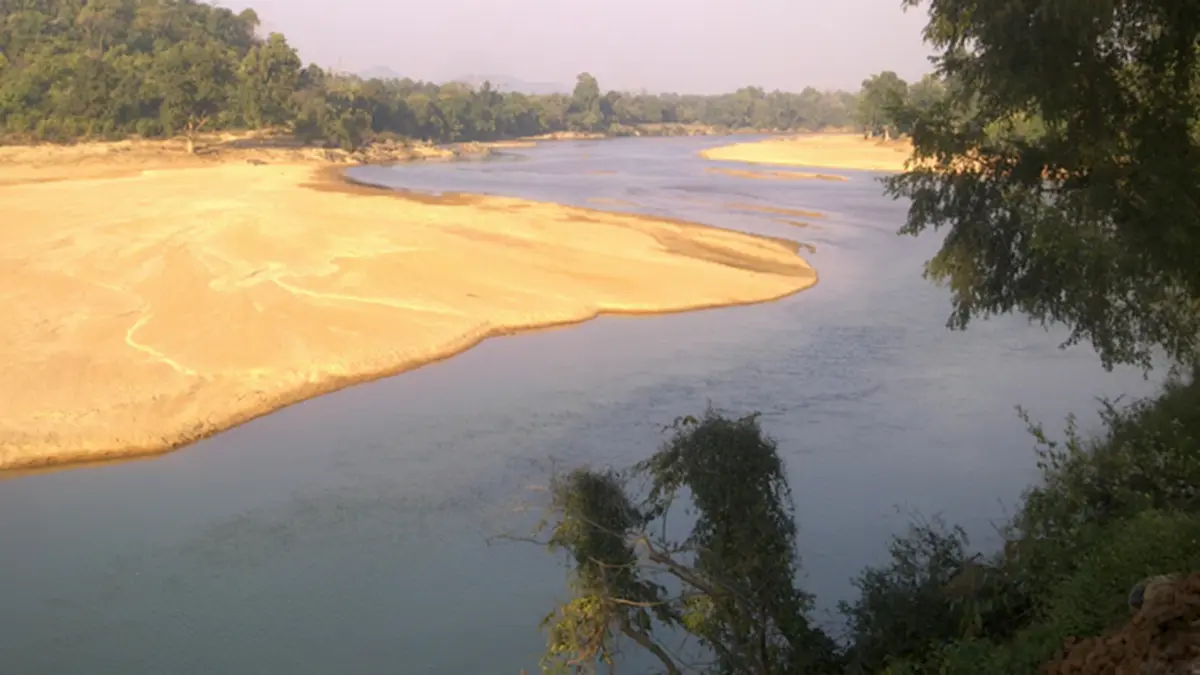
The Brahmani is an east‑flowing river formed by the confluence of the South Koel and Sankh rivers near Rourkela. It originates near Nagri village on the Chota Nagpur plateau at about 600 metres elevation. The river runs roughly 799 kilometres through Jharkhand, Chhattisgarh and Odisha, draining an area of 39,033 square kilometres before entering the Bay of Bengal. Its major tributaries are the Sankh, Tikra and Karo. The Brahmani merges with the Baitarani River to form a large delta near Dhamra. This delta contains the Bhitarkanika Wildlife Sanctuary, India’s second‑largest mangrove ecosystem and a habitat for saltwater crocodiles, Olive Ridley turtles and migratory birds.
Findings of the study
- Sampling and analysis: Researchers collected twenty sediment samples along a 22‑kilometre stretch of the Brahmani. They used zinc chloride solution to separate microplastics from the mud and Fourier‑transform infrared spectroscopy to identify the types of plastic.
- Types of plastics: Microscopic fibres made of polyamide (nylon) were the most common. The team also detected fragments and films of other polymers.
- Heavy metal contamination: Scanning electron microscopy revealed that the plastic particles carried toxic metals such as chromium, copper, zinc, arsenic, cadmium and lead. These metals adhere to the surface of plastics and can be transported long distances.
- Ecological risk: Microplastics and attached metals threaten the sensitive mangrove roots and the animals that feed or nest in the Bhitarkanika delta. The study emphasised that biofilms—slimy layers of bacteria—form on plastics and may influence metal binding.
- Need for baseline data: This research provides the first baseline for microplastic pollution in the Brahmani River. It will help policymakers design waste‑management strategies to protect the river and its wildlife.
Conclusion
The presence of microplastics and heavy metals in the Brahmani River is alarming. Even remote, protected areas like the Bhitarkanika sanctuary are receiving pollutants from upstream sources. Addressing this problem requires better waste management, reduced plastic use and public awareness. Regular monitoring will be vital to safeguard the health of the river, the delta and the communities that depend on them.