
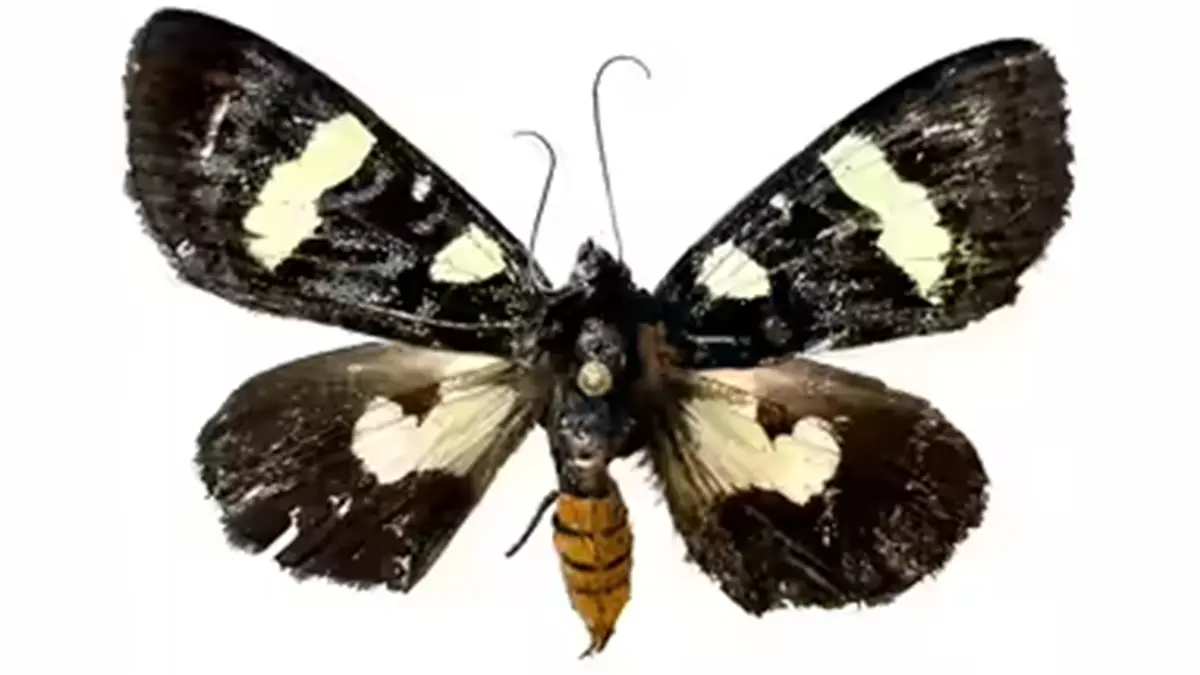
Why in news?
Researchers from the Zoological Survey of India’s western regional centre have identified a new species of forester moth in Karnataka’s Kali Tiger Reserve. The species, named Mimeusemia kali, is the first addition to the genus Mimeusemia in nearly thirty years【362999595843341†L346-L359】. News reports in June 2026 highlighted this discovery as an example of India’s rich insect biodiversity.
Background
Forester moths belong to the family Noctuidae and are known for their colourful wings and daytime activity. Scientists discovered Mimeusemia kali during surveys in the Kali Tiger Reserve, part of the Western Ghats【362999595843341†L344-L358】. The region is recognised as a biodiversity hotspot with moist deciduous and evergreen forests【362999595843341†L375-L389】. The new species was described by Aparna Kalawate of the Zoological Survey of India and Gyula László of the Natural History Museum, London. It was named in honour of the Kali River that flows through the reserve.
Key characteristics
- Distinct features: The moth differs from related species in its wing patterns, reproductive structures and genetic traits【362999595843341†L357-L359】. Its unique combination of colours and markings distinguishes it from other Mimeusemia species.
- Diurnal activity: Forester moths are typically active during the day, unlike many other moths【362999595843341†L355-L370】. Observations suggest that Mimeusemia kali follows this pattern.
- Habitat: Kali Tiger Reserve comprises moist deciduous, semi‑evergreen and evergreen forests and supports a wide range of flora and fauna【362999595843341†L375-L395】. The discovery underscores the importance of protecting such habitats.
Importance of moths
- Pollination: Many moths are pollinators, playing a vital role in the reproduction of wild and cultivated plants【362999595843341†L371-L373】.
- Biodiversity indicators: Moth diversity reflects the health of ecosystems. Discovering new species indicates that much of India’s insect fauna remains undocumented.
- Research value: Unique species like Mimeusemia kali help scientists understand evolutionary relationships within the Noctuidae family.
Conclusion
The discovery of Mimeusemia kali adds a new chapter to the study of India’s moths. It highlights the Western Ghats’ biodiversity and the need for continued exploration and conservation. Protecting habitats like the Kali Tiger Reserve will help safeguard many undiscovered species.