
Why in news?
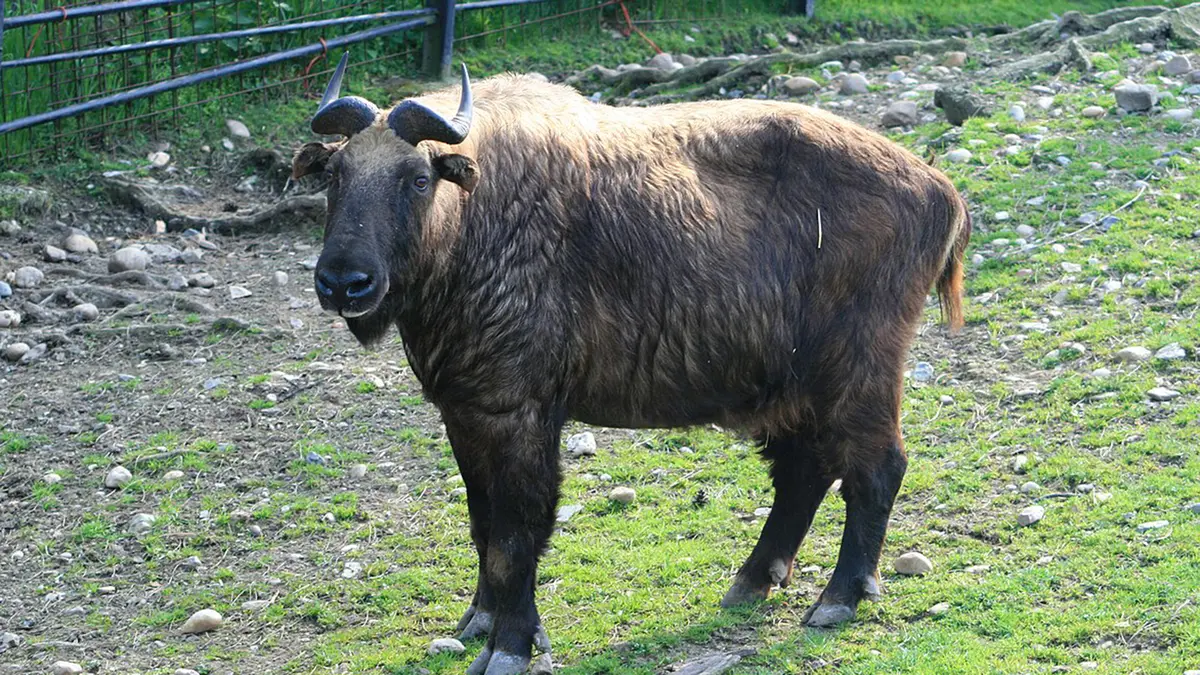
During a routine patrol in the Bakuchen area of the Tingda Reserve Forest, North Sikkim, forest officials filmed a herd of eight Mishmi Takins. This was the first confirmed video of the elusive goat‑antelope in Sikkim in over two decades and represented the largest group ever documented from the locality.
Background
Mishmi Takin (Budorcas taxicolor taxicolor) is one of four subspecies of the takin, a large ungulate found in the eastern Himalayas. It is classified as endangered under the International Union for Conservation of Nature (IUCN) Red List and protected under Schedule I of India’s Wildlife (Protection) Act 1972. The subspecies occurs in the Mishmi Hills of Arunachal Pradesh, northern Myanmar and south‑eastern Tibet. Sikkim marks the westernmost edge of its distribution.
Features and ecology
- Physical build: Mishmi Takins have a heavy build with short legs and a deep chest. Both sexes carry thick horns that curve outward and then sweep backward. Adults can stand about 120 cm at the shoulder and weigh between 150 and 400 kg.
- Coat and adaptation: Their shaggy coat ranges from brown to reddish brown with darker limbs. An oily secretion coats the fur, providing waterproofing against rain and fog. The animals are well adapted to cold, high‑altitude climates.
- Habitat: Mishmi Takins inhabit steep mountain forests and alpine meadows between 2,000 and 4,500 metres. They graze on bamboo, willow and other shrubs and migrate between higher and lower elevations with the seasons.
- Social behaviour: They form large herds in summer and smaller groups in winter. Older males may live solitary except during the breeding season. When threatened, the herd warns others with a coughing call and takes shelter in dense vegetation.
Significance of the sighting
Wildlife officials say the presence of a healthy herd signals the ecological integrity of Sikkim’s alpine ecosystems. The area lies along transboundary corridors linking India, Bhutan and China, which are vital for genetic diversity and movement of mountain species. Sustained conservation efforts and habitat protection have likely enabled this rare species to persist in Sikkim.
Conclusion
The recording of eight Mishmi Takins is a major conservation milestone. Continued monitoring, protection of migratory routes and collaboration with neighbouring states are essential to ensure the survival of this endangered mountain ungulate.