
Why in news?
The Union Government and Meghalaya launched Mission Golden Spice on 21 July 2026. The ₹175.45-crore project supports Lakadong turmeric. It covers production, processing, branding, traceability and exports.
Background
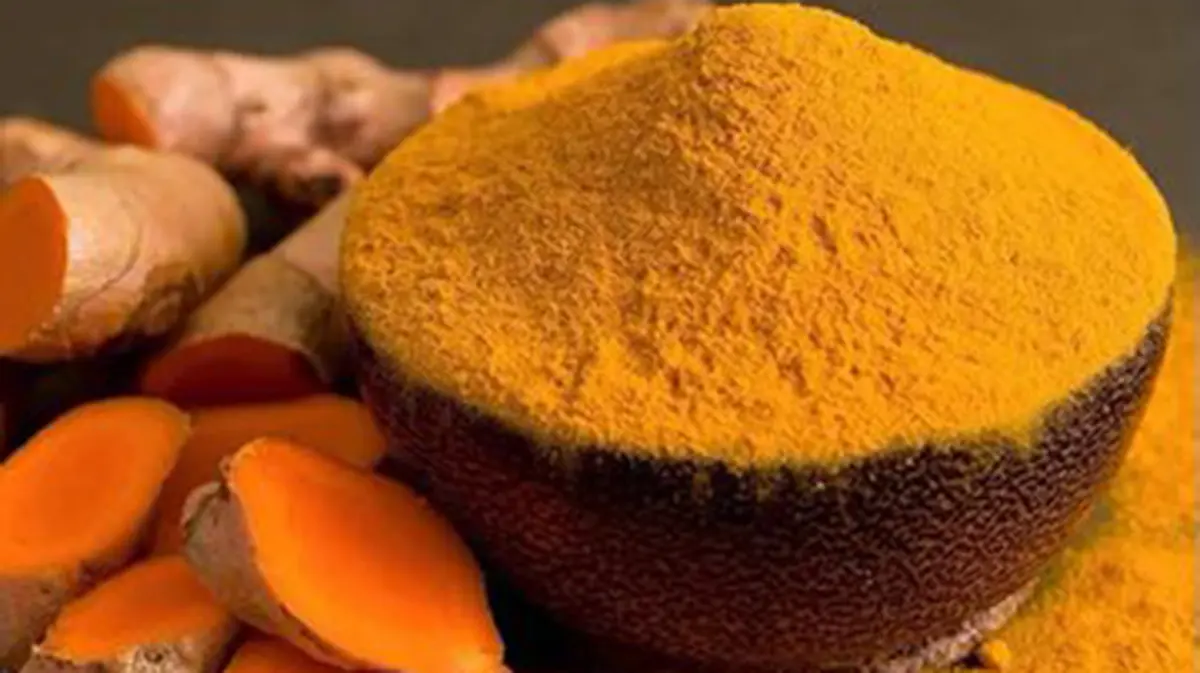
Lakadong turmeric is a premium variety cultivated mainly across Meghalaya’s East and West Jaintia Hills.
Its deep colour and strong aroma reflect its distinctive natural composition.
It contains around seven to ten per cent curcumin under official project estimates.
Curcumin is the principal yellow quality compound, and ordinary commercial varieties commonly contain much less.
Official superlative: The Union release describes this as the world’s highest naturally occurring curcumin content.
It also describes the level as nearly four times the global average.
What is a geographical indication?
A geographical indication identifies goods whose qualities or reputation come from their origin.
The term is commonly shortened to GI after its first explanation.
Registration protects the product name against misleading use but never grants ownership over turmeric cultivation everywhere.
This protection covers authorised use of the name, registered through certificate number 575 on 30 March 2024.
The Geographical Indications Registry records it under application number 741.
Why was a special mission needed?
Premium crops do not automatically create premium incomes for growers.
Farmers can lose value through weak storage, limited processing and distant buyers.
Selling raw turmeric also transfers most later profits to outside processors.
The mission therefore supports the entire value chain, not cultivation alone.
Value chain explained: It covers planting, aggregation, storage, processing, certification, packaging, marketing and final sale.
Official name, duration and phases
The formal name is the Integrated Lakadong Turmeric Value Chain Enhancement Project.
It follows a five-year roadmap covering 2025 to 2030.
- Phase One strengthens infrastructure, while Phase Two expands cultivation, processing capacity and market reach.
The Ministry of Development of North Eastern Region anchors the mission and is commonly shortened to MDoNER.
The North Eastern Council, known as NEC, serves as the other lead institution.
Major targets for 2030
- The project aims to benefit about 17,500 farming households.
- It plans ninety-nine per cent women’s participation in processing and institutions.
- It targets 7,000 additional hectares, taking total cultivation to about 9,581 hectares.
- It targets 49,400 additional metric tonnes, taking total annual output towards 60,000 tonnes.
- The plan also expects around 3,000 additional livelihood opportunities.
- Farmer returns should rise from about ₹40,000 to ₹83,700 for every 1,000 kilograms.
These are project targets, not achievements already completed during the launch.
Processing and local infrastructure
A ₹41.69-crore processing facility is planned for West Jaintia Hills.
It would become the North East’s largest integrated organic turmeric and curcumin-extraction facility.
The plant would process 7,000 metric tonnes of fresh turmeric yearly.
It would produce powder, curcumin extracts and oleoresins containing concentrated flavour and aromatic compounds.
The mission also proposes twenty-eight farmer-producer packhouses and twenty-eight cluster warehouses.
A Farmer Producer Organisation helps small growers aggregate produce and bargain collectively.
The mission provides ₹35 crore for quality planting material.
How is the project financed?
| Contributor | Share | Main purpose |
|---|---|---|
| MDoNER and NEC | ₹87.62 crore | Physical infrastructure and mission support. |
| Union Agriculture Ministry | ₹58.10 crore | Production growth and organic certification. |
| Government of Meghalaya | ₹29.73 crore | Branding, working capital, traceability and exports. |
The contributions total ₹175.45 crore, while MDoNER had sanctioned ₹43.24 crore for Phase One.
What does convergence mean here?
Convergence combines money and expertise from several existing institutions.
The Agriculture, Food Processing and Commerce ministries support different value-chain stages.
The Agricultural and Processed Food Products Export Development Authority supports export readiness.
The Spices Board and National Turmeric Board provide specialised crop and market support.
Research includes the Indian Council of Agricultural Research, while finance includes the National Bank for Agriculture and Rural Development.
Digital support involves the Ministry of Electronics and Information Technology.
The Small Farmers’ Agribusiness Consortium can strengthen producer organisations and market connections.
Digital traceability can verify origin and reduce false use of the Lakadong name.
Expected impact
Local processing can retain community value, while warehouses can reduce distress sales immediately after harvesting.
Certification and traceability can improve buyer confidence in genuine products.
Women’s producer groups may gain stronger roles in processing and enterprise management.
However, results will depend upon stable markets, quality control and fair payments.
Conclusion
Mission Golden Spice treats Lakadong turmeric as an economic ecosystem, not merely a crop.
Its success must finally appear through reliable demand and higher farmer earnings.