
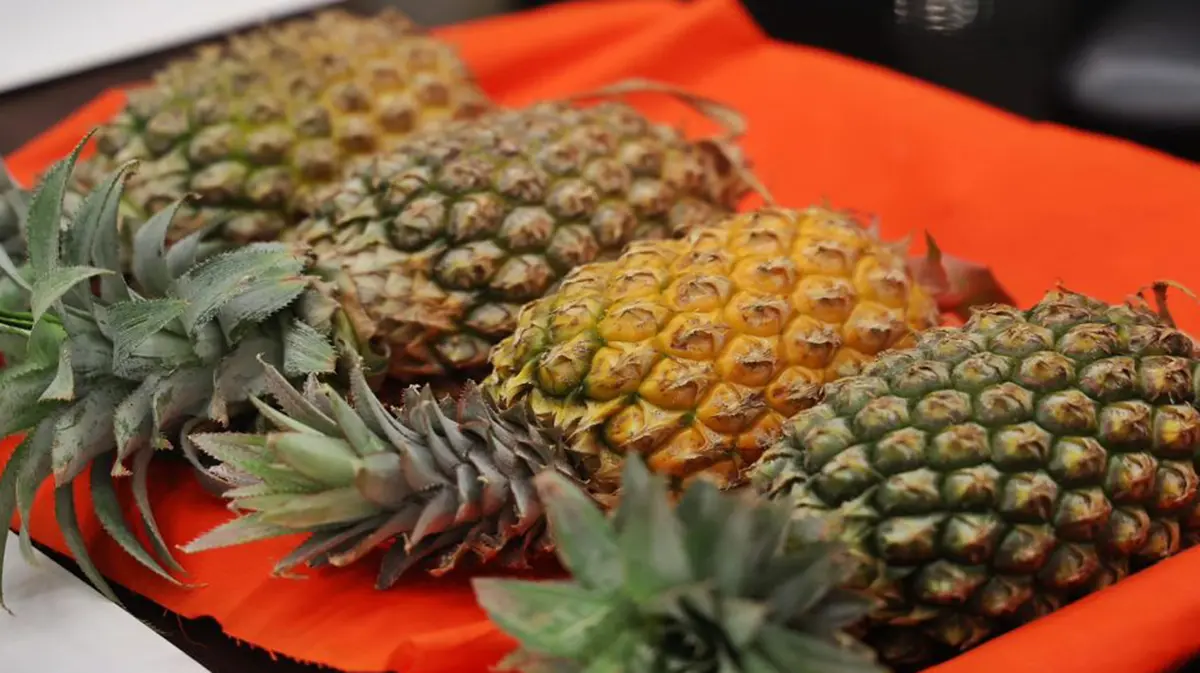
Why in news?
The Union Civil Aviation Minister launched the ₹236 crore “Mission Queen Pineapple” in late May 2026 to develop a farm‑to‑market value chain for Tripura’s celebrated Queen pineapple. The mission aims to enhance production, processing, branding and exports of the state’s Geographical Indication (GI)‑tagged fruit over the next three years.
Background
Tripura’s Queen pineapple is prized for its sweetness, aroma and golden flesh. It received a GI tag in 2015, recognising its uniqueness and protecting it from imitation. The fruit has traditionally been grown by tribal farmers on small plots and has found markets across India and the Gulf. However, inadequate storage, processing and marketing infrastructure have limited farmers’ income.
Mission objectives
- Integrated value chain: The mission charts a roadmap from the second quarter of 2026–27 to the fourth quarter of 2028–29. It will build a hub‑and‑spoke network of collection centres, pack‑houses, ripening chambers and cold storage facilities across Tripura. A central processing hub will handle large consignments and support exports.
- Waste utilisation: Projects will convert pineapple peels and core into value‑added products such as juice, vinegar, fibre and animal feed. This reduces waste and creates additional income streams.
- Branding and market linkage: The mission envisages a national and international branding campaign. Buyer–seller meets and GI logo promotion will help farmers access premium markets. There will also be training for farmers on good agricultural practices and certification.
- Farmer benefits: The scheme aims to improve farmers’ earnings through better farm‑gate prices, reduced post‑harvest losses and direct engagement with processors and exporters. It encourages women’s self‑help groups and cooperatives to take up pineapple cultivation and processing.
Conclusion
By building infrastructure and linking producers to global markets, Mission Queen Pineapple seeks to turn Tripura’s flagship fruit into a driver of rural prosperity. Effective execution will be crucial for transforming a perishable crop into a sustainable source of income for the state’s farmers.