

Why in news?
Disease prevention in mithun herds received fresh attention after a farmer programme in Siang district, Arunachal Pradesh. The July programme discussed foot-and-mouth disease, vaccination and conflicts between free-ranging herds and wildlife.
What is mithun?
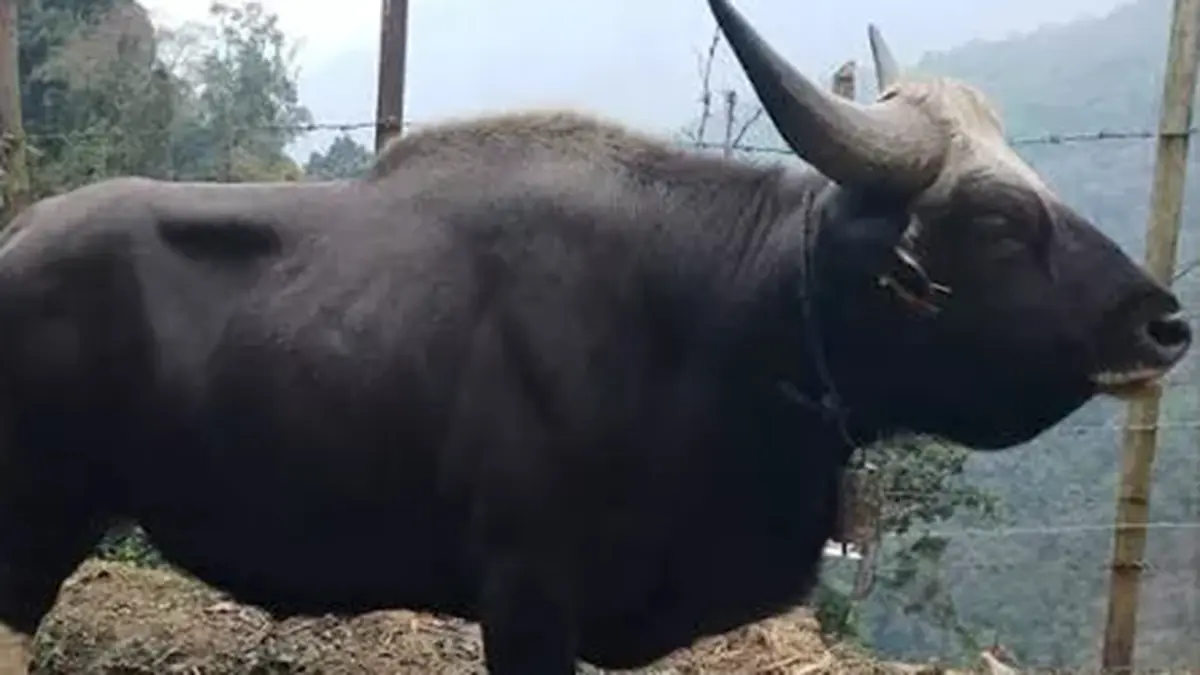
Mithun is a large bovine found in India’s north-eastern hills. Its accepted scientific name is Bos frontalis. Communities rear it mainly under free-range forest systems. Ownership carries social value and supports customary exchanges, meat production and household security.
The species is especially important in Arunachal Pradesh, Nagaland, Manipur and Mizoram. Nagaland recognises mithun as its state animal.
In December 2025, the Indian Council of Agricultural Research registered Nagami as the first recognised mithun breed.
The disease risk
Foot-and-mouth disease is a highly contagious viral infection of cloven-hoofed animals; it can cause fever, mouth lesions and lameness. Deaths are uncommon among healthy adults, but production and mobility can fall sharply. Young or weakened animals face greater risk.
Free-ranging mithun may travel across village and forest boundaries. This complicates identification, vaccination schedules and early isolation of sick animals.
Wild and domestic animals may also share grazing areas and water; such contact makes coordinated surveillance more important.
What experience shows
An Indian Council of Agricultural Research programme at Porba introduced semi-intensive management after a severe 2015 disease episode. The model combined identification, vaccination, health care, mineral supplementation and improved breeding. Reported herd numbers subsequently recovered.
Semi-intensive management does not require complete stall feeding. It creates dependable care points while retaining access to suitable forest grazing.
A practical protection strategy
Each animal needs durable identification and a village-level health record. Vaccination should follow veterinary advice and regional disease schedules. Farmers also need quick reporting channels, quarantine space and trained local workers. Laboratory confirmation should guide outbreak control.
Forest and livestock departments must coordinate grazing plans; conservation measures should respect customary institutions and community knowledge.
Better markets can reward responsible husbandry. However, commercial expansion must not weaken genetic diversity or encourage unsustainable forest pressure.
Conclusion
Mithun protection requires more than emergency vaccination. Community-based surveillance and regular veterinary access can secure both culture and livelihoods.