
Why in news?
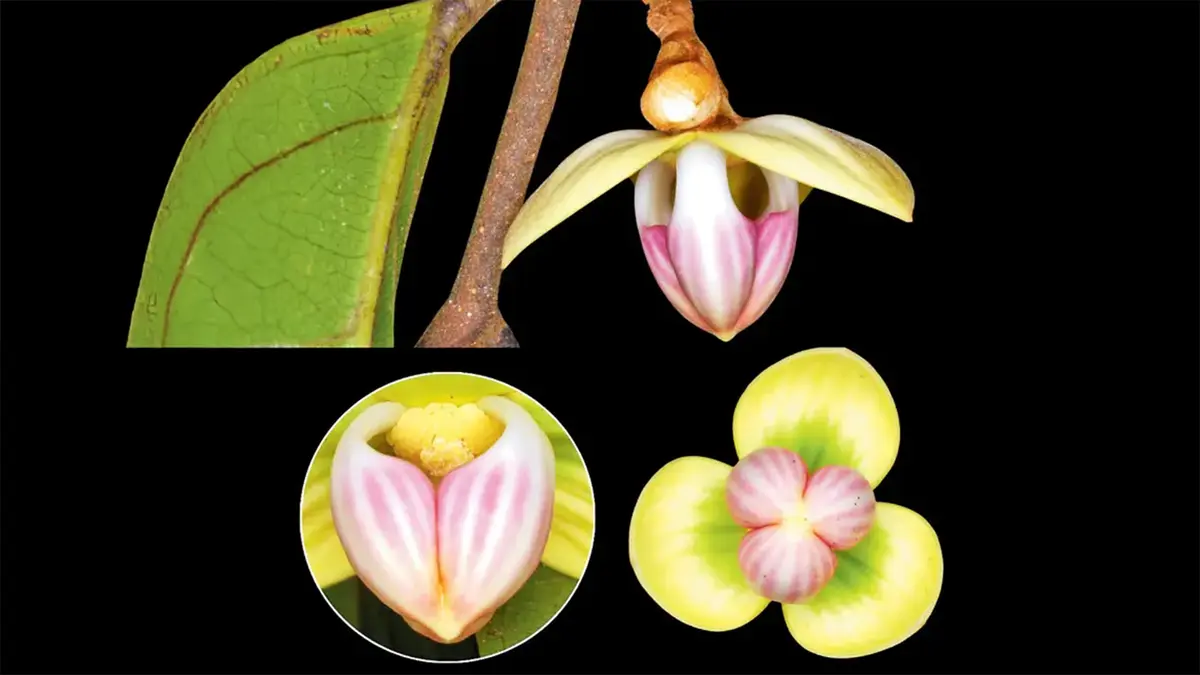
Researchers described a new flowering tree from Arunachal Pradesh, and they named it Mitrephora rashmiae. Only one wild tree is currently known, and the discovery is also the first record of andromonoecy within this genus.
Background
Scientists regularly survey forests to document plant diversity, and they compare collected material with known species and museum specimens.
A new species requires a formal scientific description, and researchers must show how it differs from close relatives. A reference specimen is then preserved as a type specimen.
The findings undergo expert review before publication, and this process gives the proposed scientific name formal standing under botanical rules.
Where was the tree found?
Researchers surveyed forests near Daporijo in Upper Subansiri district, and this district lies in central Arunachal Pradesh.
The known tree grows beside a stream in a degraded forest patch. It is around seven metres tall, and no second individual has yet been located.
Arunachal Pradesh forms part of the Eastern Himalayan region, and steep terrain and varied rainfall support exceptional biological diversity.
Taxonomic position
- The species belongs to the plant family Annonaceae, and this family includes custard apple, soursop and several forest trees.
- The genus is Mitrephora, and the new species name is Mitrephora rashmiae.
- The paper appeared in the peer-reviewed journal Feddes Repertorium.
The species honours Rashmi Thackeray, and the authors recognised her support for nature study and the researchers’ conservation work.
Who described the species?
Navendu V. Page, Shivam Kishwan and Tejas U. Thackeray authored the formal paper. Their institutions include the Thackeray Wildlife Foundation.
How can the species be recognised?
- The tree retains evergreen leaves, and its unbranched flower clusters can carry up to eight flowers.
- The pale-yellow flowers have distinct purple stripes, and inner petals form a narrow dome or mitre.
- The fruit units are stalked, cylindrical and beaked.
The dome shape helped distinguish the tree from related species. The genus name itself refers to this mitre-like floral structure.
What is andromonoecy?
Andromonoecy means one plant bears both male flowers and bisexual flowers. A bisexual flower has male and female reproductive parts.
This is the first known andromonoecious species in the genus Mitrephora, and other known members generally bear bisexual flowers.
The discovery also represents only the second record of this genus from the Himalayan Biodiversity Hotspot.
Do not confuse the terms: Monoecious plants bear separate male and female flowers. Andromonoecious plants bear male and bisexual flowers.
Conservation concern
A species known from one tree may face extreme local risk. Flooding, tree-felling or road work could remove the only known individual.
However, one sighting does not prove that only one tree exists, and remote forests around Upper Subansiri remain incompletely surveyed.
The authors treated the species as Data Deficient because information remains inadequate. This does not automatically mean a formal IUCN Red List assessment already exists.
Further surveys must identify more trees, flowering seasons and habitat needs, and seed collection may also support future conservation.
Conclusion
Mitrephora rashmiae shows how much Himalayan plant diversity remains undocumented, and its unusual flower system is scientifically important. Immediate field surveys are necessary before assigning a firmer risk category.