
Why in news?
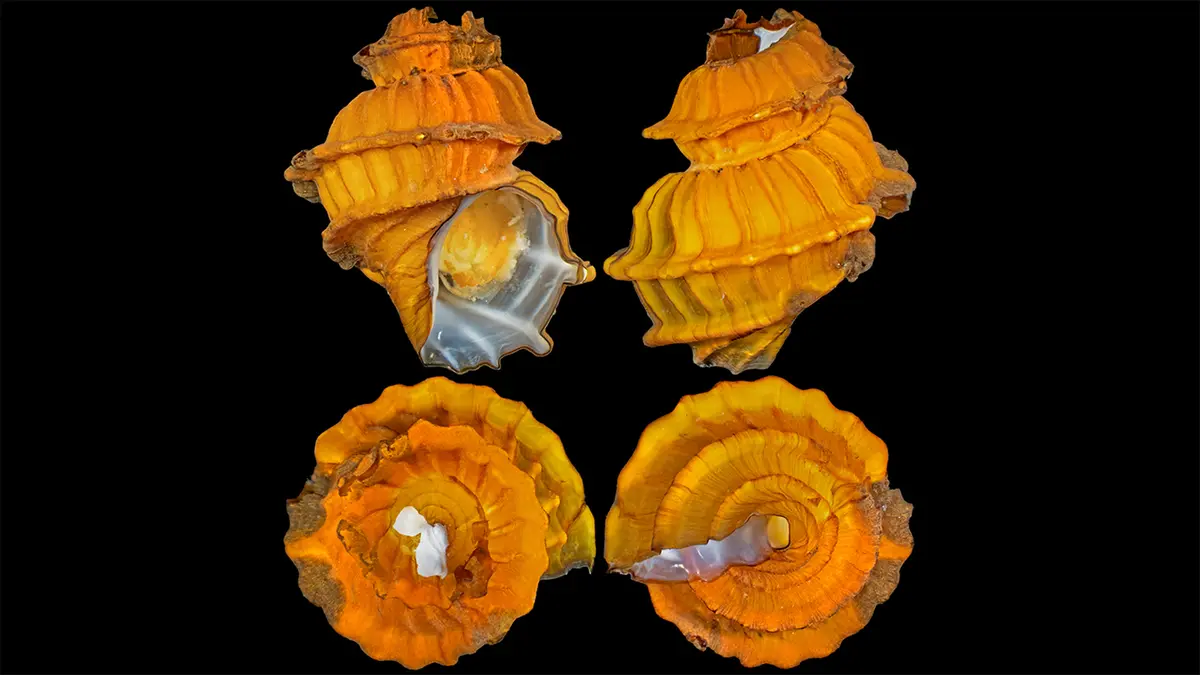
A global conservation assessment examined molluscs found only around deep-sea hydrothermal vents. It classified 125 of 201 assessed species as threatened. Proposed seabed mining is their main future danger. The finding covers vent-endemic molluscs, not every mollusc worldwide.
Background
Molluscs are soft-bodied invertebrate animals belonging to the phylum Mollusca, and they live in oceans, freshwater habitats and on land.
Most have a muscular foot, a visceral mass and a mantle, and the visceral mass holds the main internal organs.
The mantle is a tissue layer covering the body, and in many molluscs, it produces a hard shell.
Most molluscs also possess a scraping structure called the radula. Bivalves are an important exception because they filter food from water.
Major groups of molluscs
- Gastropods include snails and slugs, and they form the largest mollusc group.
- Bivalves include clams, mussels and oysters, and their shells usually have two hinged parts.
- Cephalopods include octopuses, squids, cuttlefish and nautiluses, and they have well-developed eyes and nervous systems.
- Polyplacophorans, commonly called chitons, usually carry eight shell plates.
- Scaphopods, or tusk shells, live mostly buried in seabed sediment.
Molluscs form roughly one-quarter of described marine animal species, and they support food webs, fisheries and nutrient cycling.
What is a hydrothermal vent?
Scientists first discovered deep-sea hydrothermal-vent ecosystems near the Galápagos Islands in 1977. The discovery changed understanding of life’s energy sources.
- Seawater enters cracks in the oceanic crust.
- Hot rock or magma heats that water below the seabed.
- The water dissolves minerals from surrounding rocks.
- Hot, mineral-rich fluid then rises through seabed openings.
- Minerals precipitate when this fluid meets cold ocean water.
Vent fluid can exceed 450 degrees Celsius under immense pressure, and animals live in cooler mixing zones around it.
Do not confuse the temperature: Vent animals do not live inside the hottest fluid. They occupy nearby water where hot and cold flows mix.
How can life survive without sunlight?
Sunlight cannot reach these deep ecosystems, and their food chain begins with chemosynthesis, instead of photosynthesis.
Special microbes use chemical energy from hydrogen sulphide and other compounds, and they convert carbon dioxide into organic matter.
Many vent molluscs eat these microbes, and others house helpful microbes inside their bodies and receive nutrients from them.
Why are hydrothermal vents valuable?
Hot vent fluids deposit copper, cobalt, zinc and other minerals, and these deposits have attracted commercial mining interest.
Vent organisms also have unusual biological adaptations, and researchers study them for medicine, materials science and industrial technology.
For example, the scaly-foot snail builds iron-rich protective structures, and its biological process may inspire new engineered materials.
What did the new assessment find?
The International Union for Conservation of Nature (IUCN) maintains the Red List of Threatened Species. It evaluates extinction risk using standard categories.
- Scientists assessed 201 mollusc species restricted to hydrothermal-vent systems.
- They placed 125 species, or 62 per cent, in threatened categories.
- These categories are Vulnerable, Endangered and Critically Endangered.
- Lirapex felix was listed as Critically Endangered.
- More than thirty species were of Least Concern in protected areas.
Read the statistic carefully: The 62 per cent figure concerns assessed vent-endemic molluscs. These species form less than one per cent of global mollusc diversity.
The updated Red List contains 175,909 assessed species, and among them, 49,505 are presently classified as threatened.
How can deep-sea mining harm them?
- Machines may directly remove mineral deposits that provide habitat.
- Suspended sediment can settle over animals and smother them.
- Noise, light and vibration can disturb otherwise dark environments.
- Waste plumes may alter water chemistry beyond the mined location.
- Many vent species occur at only one known vent field.
Therefore, destruction at one small site can remove an entire species, and natural recovery may also be extremely slow.
Who regulates mining beyond national jurisdiction?
The International Seabed Authority (ISA) was created under the United Nations Convention on the Law of the Sea.
It came into existence on 16 November 1994, and it became fully operational in June 1996.
It regulates mineral activities in “the Area”. This term covers seabed beyond national jurisdiction, not the water above it.
The Area and its mineral resources are humanity’s common heritage, and the Authority must balance resource use with marine protection.
By February 2026, the Authority had 172 members. The Area covers about 54 per cent of the world’s oceans.
The conservation union supports a mining moratorium until risks are understood. A moratorium means a temporary pause, not a permanent legal ban.
Its members first called for that moratorium in 2021. The Authority meets in Kingston from 13 to 31 July 2026.
Conclusion
Hydrothermal vents support rare life through chemical energy rather than sunlight. Their molluscs face serious risk from proposed mining, and regulation should follow strong evidence and the precautionary principle.