Why in news?
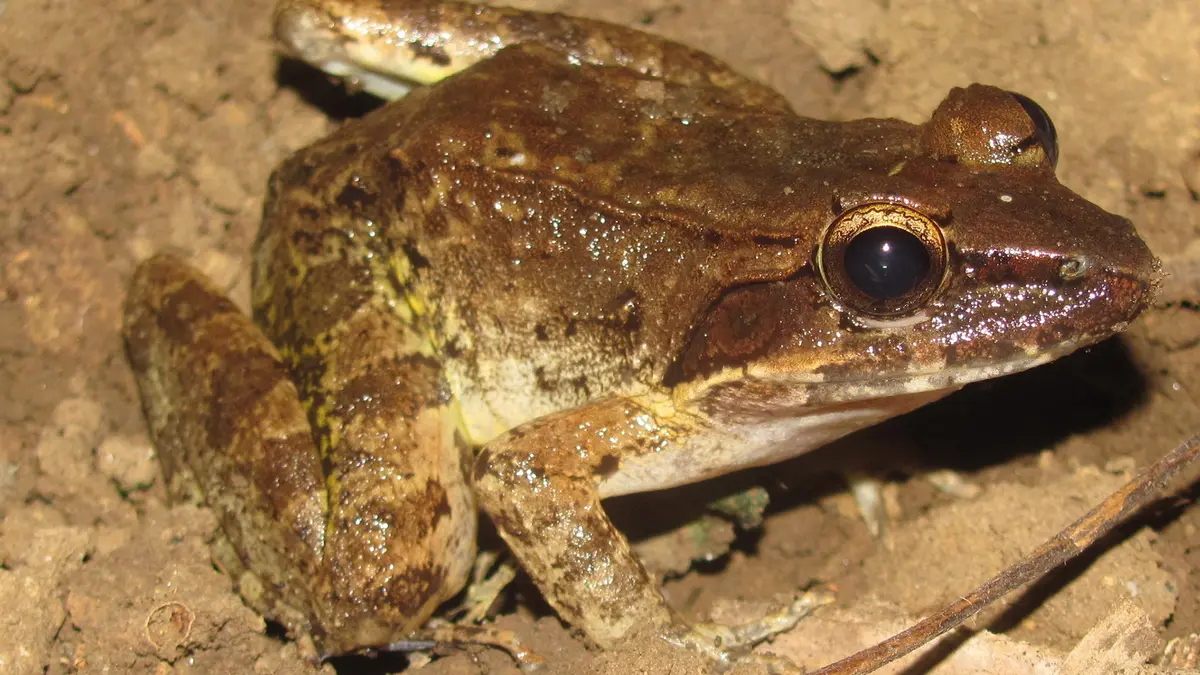
Indian researchers have discovered a rare amphibian in the Namdapha Tiger Reserve of Arunachal Pradesh. The fanged frog, named Limnonectes motijheel after the Motijheel lake near the discovery site, caught attention because it digs underground nests to protect its eggs. The find adds to the rich but hidden diversity of North‑East India.
Background
The Motijheel fanged frog belongs to the genus Limnonectes, a group of frogs known for the bony outgrowths on the lower jaw that resemble fangs. These amphibians are generally found in Southeast Asia, but this species was uncovered deep within the evergreen forests of the Namdapha Tiger Reserve. Researchers observed that the frogs construct burrows in moist soil, where the females lay eggs and guard the developing tadpoles—behaviour that helps the offspring survive in a region with heavy rainfall and many predators.
Key characteristics
- Medium size: Adults measure roughly 2.3–3.5 cm in length. Males have more pronounced “fangs” on the lower jaw that they use for defence and digging.
- Distinct markings: A dark‑brown stripe runs between the eyes, and an inverted V‑shaped ridge extends along the back. The body has broken folds and mottled patterns that help camouflage the frog on the forest floor.
- Mud‑nesting behaviour: Unlike most frogs, this species excavates small cavities in the ground. The female lays eggs inside the nest and seals the entrance with soil and leaf litter to hide the clutch from predators.
- Hidden habitat: The species is found along shaded streams in dense evergreen forest. Its secretive nature and remote habitat explain why it remained undiscovered despite frequent surveys.
Significance
- Biodiversity highlight: The discovery underlines how much remains unknown about amphibian life in North‑East India. Each new species sheds light on evolutionary adaptations and the need for habitat protection.
- Conservation alert: Forest clearing, road building and climate change threaten fragile ecosystems. Identifying new species helps justify conservation measures in biodiversity hotspots such as Namdapha.
- Cultural recognition: Naming the frog after Motijheel lake honours the local geography and the communities who live near the discovery site.
Source: Moneycontrol