

Why in news?
On 17 January 2026, Russian authorities deliberately triggered a controlled avalanche on Mount Elbrus to release built‑up snow after heavy snowfall. The avalanche swept over car parks and buildings but caused no injuries. This event drew attention to Europe’s highest mountain and its volcanic history.
Background
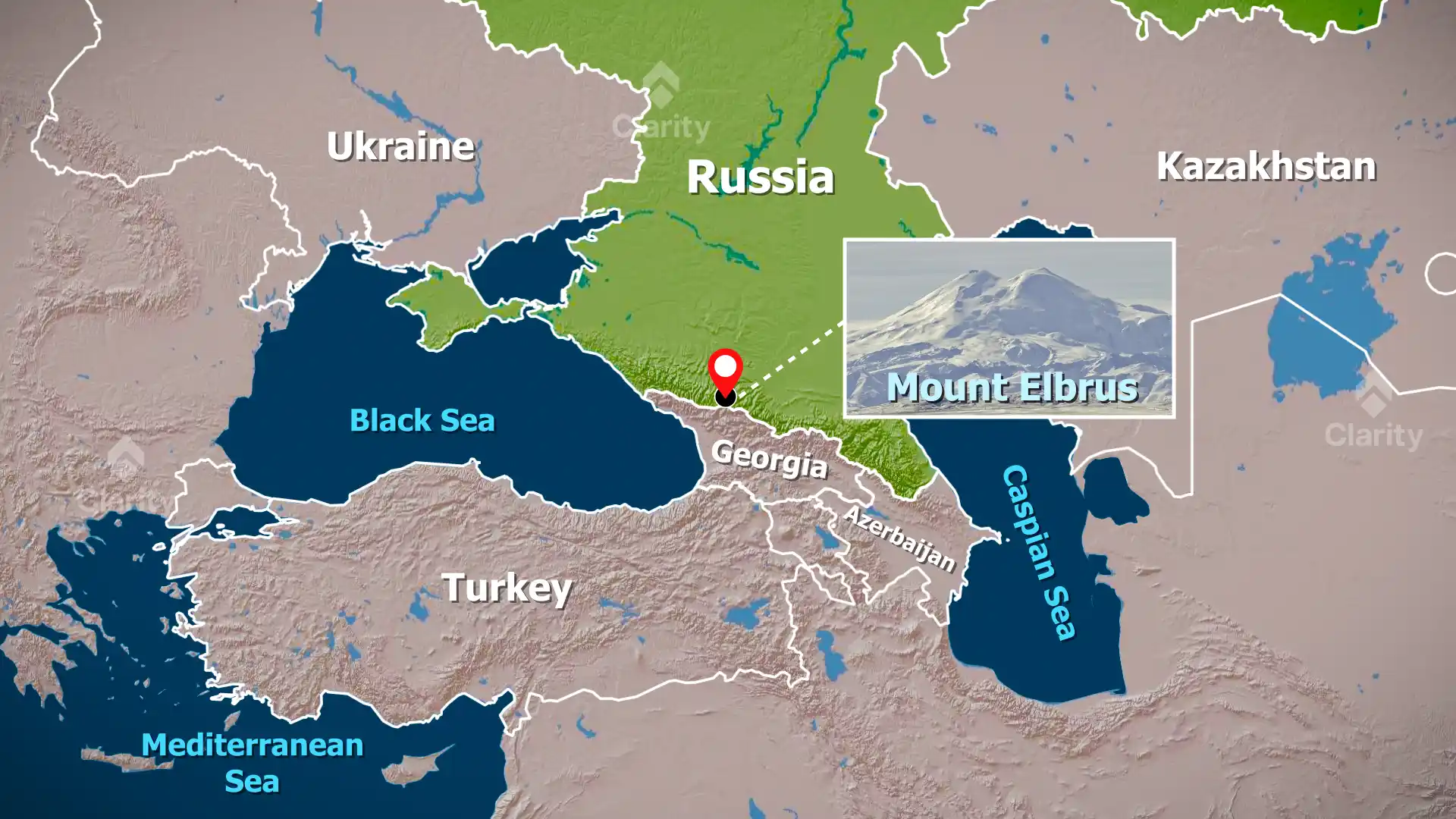
Mount Elbrus is a dormant stratovolcano in the Caucasus Mountains of southern Russia. It has twin volcanic cones—the western summit rising 5,642 metres and the eastern summit 5,621 metres. The volcano formed more than 2.5 million years ago and last erupted about 2,000 years ago. Its slopes are heavily glaciated, with 22 glaciers covering roughly 53 square miles and feeding the Kuban and Terek rivers.
Geological features
- Oldest stratovolcano in Europe: Elbrus is considered the highest mountain in Europe and the highest stratovolcano in Eurasia. It is part of the Greater Caucasus range near the border with Georgia.
- Two summits: The western summit (5,642 m) is slightly higher than the eastern one (5,621 m). Both peaks are extinct volcanic cones.
- Glaciers and emissions: Sulphurous gases still emanate from vents on the eastern slopes, indicating residual volcanic activity. Numerous glaciers make the mountain a source of freshwater and a hazard for avalanches.
- Mountaineering history: Local Circassian guide Khillar Khashirov led the first recorded ascent of the eastern peak in 1829, while a British expedition climbed the western summit in 1874.
Controlled avalanche
After heavy snowfall, authorities often use explosives to trigger controlled avalanches to prevent uncontrolled slides. On 17 January, an avalanche was set off intentionally on Elbrus; it travelled down known run‑off channels, burying car parks but causing no casualties. Such measures are part of routine safety management in mountainous regions.
Conclusion
Mount Elbrus is both a geological wonder and a popular mountaineering destination. Controlled avalanches remind us of the need for hazard management in glaciated regions. Meanwhile, the mountain’s volcanic past and rich glacial environment continue to fascinate scientists and climbers alike.
Sources: BBC