
Why in news?
During her visit to New Delhi in May 2026, Italian Prime Minister Giorgia Meloni received two distinctive silk stoles from Prime Minister Narendra Modi: one woven from Assam’s famed Muga silk and another inspired by the Shirui Lily of Manipur. The gesture showcased India’s rich handloom heritage and highlighted cultural connections between India and Italy.
Background on Muga silk
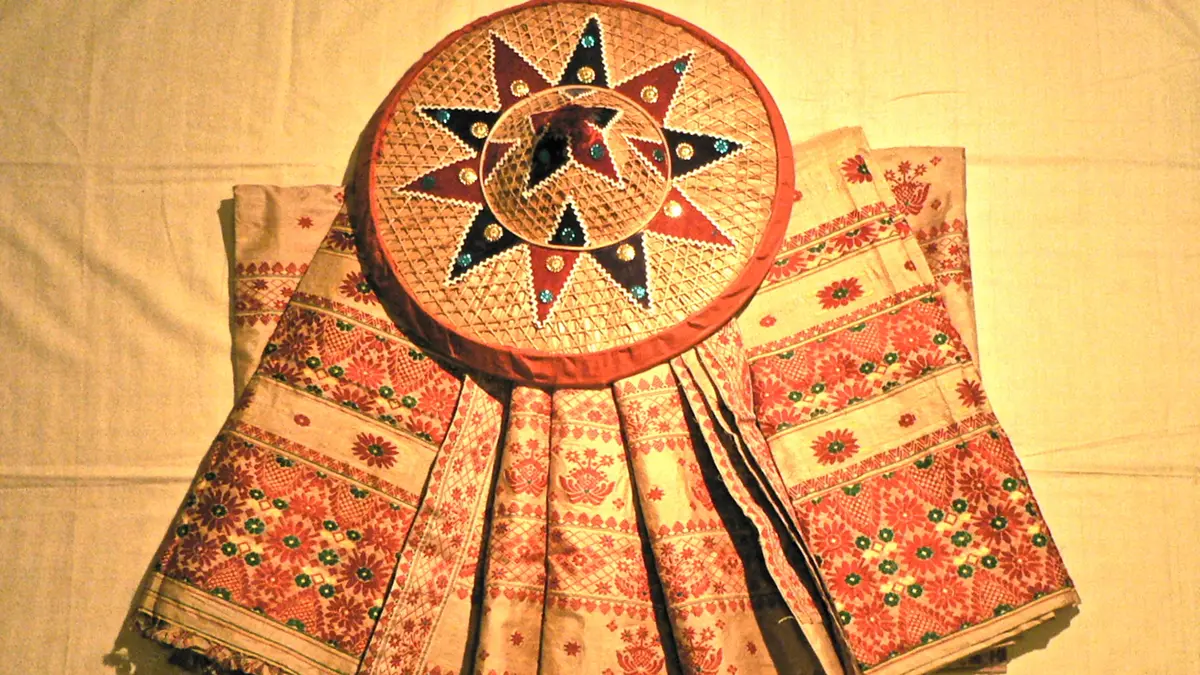
Muga silk is produced from the larvae of the Antheraea assamensis silkmoth, which feeds on the leaves of Som and Sualu trees in the Brahmaputra Valley. The silk has a natural golden tint and is famed for its strength and lustre. Historically, Muga cloth was reserved for royalty during the Ahom dynasty (1228–1826) and remains a symbol of Assamese identity. In 2007 Muga silk received a protected Geographical Indication (GI) tag, and in 2014 a GI logo was introduced to certify authentic products. The Central Silk Board inspects products and authorises producers to use the logo, helping protect the industry from adulteration.
Features of Muga silk
- Golden hue: Unlike other silks, Muga threads have a natural yellowish‑gold colour that deepens with age and washing.
- Durability: The fibre is exceptionally strong and resistant to wear. Traditional Muga garments can last for decades and are often handed down through generations.
- Cultural significance: Muga is woven into mekhela chadors and saris worn during festivals and weddings. The craft supports numerous weaver families in Assam and is deeply tied to local rituals.
- Ecological factors: Muga silkworms cannot survive pollution, so rearing takes place in pristine environments. This makes Muga production inherently eco‑friendly.
Shirui Lily and its symbolic silk
The Shirui (or Siroi) lily (Lilium mackliniae) is an endangered bell‑shaped flower that grows only on the Shirui hill ranges in Ukhrul district of Manipur at elevations of 1,730–2,590 metres. It has pale bluish‑pink petals that reveal multiple colours under a microscope and blooms during May and June. The lily is the state flower of Manipur and holds spiritual value for the Tangkhul Naga community, symbolising purity, identity and cultural pride. Folklore links the flower to local legends of love and protection.
The special stoles and their significance
- Design inspiration: The Shirui Lily silk stole incorporates motifs of the rare flower, reflecting Tangkhul folklore and Northeast India’s textile artistry. Its gifting underscores the community’s connection with the lily and raises awareness about conservation.
- Cultural bridge: Lily symbols also resonate in Italy where the flower appears in Renaissance art and represents purity and grace. Presenting a lily‑inspired stole thus creates a cross‑cultural link between India and Italy.
- Eri silk companion: Alongside the Shirui stole, an Eri silk piece was gifted. Eri silk is produced in Assam without killing the silkworm, earning it the name “peace silk.” Its soft texture and warmth make it a valued, sustainable textile.
Why this matters
- The gifts highlight India’s diverse silk heritage and promote handloom products on the international stage.
- They celebrate indigenous craftsmanship and encourage efforts to conserve both the Muga silkworm habitat and the endangered Shirui lily.
- Such cultural diplomacy reinforces soft‑power ties and builds awareness of lesser‑known Indian traditions.
Conclusion
By presenting Muga and Shirui Lily silk stoles to the Italian Prime Minister, India wove together history, ecology and diplomacy. The gesture honoured centuries‑old weaving traditions, drew attention to endangered flora and underscored the role of textiles in building bridges between cultures.

