
Why in news?
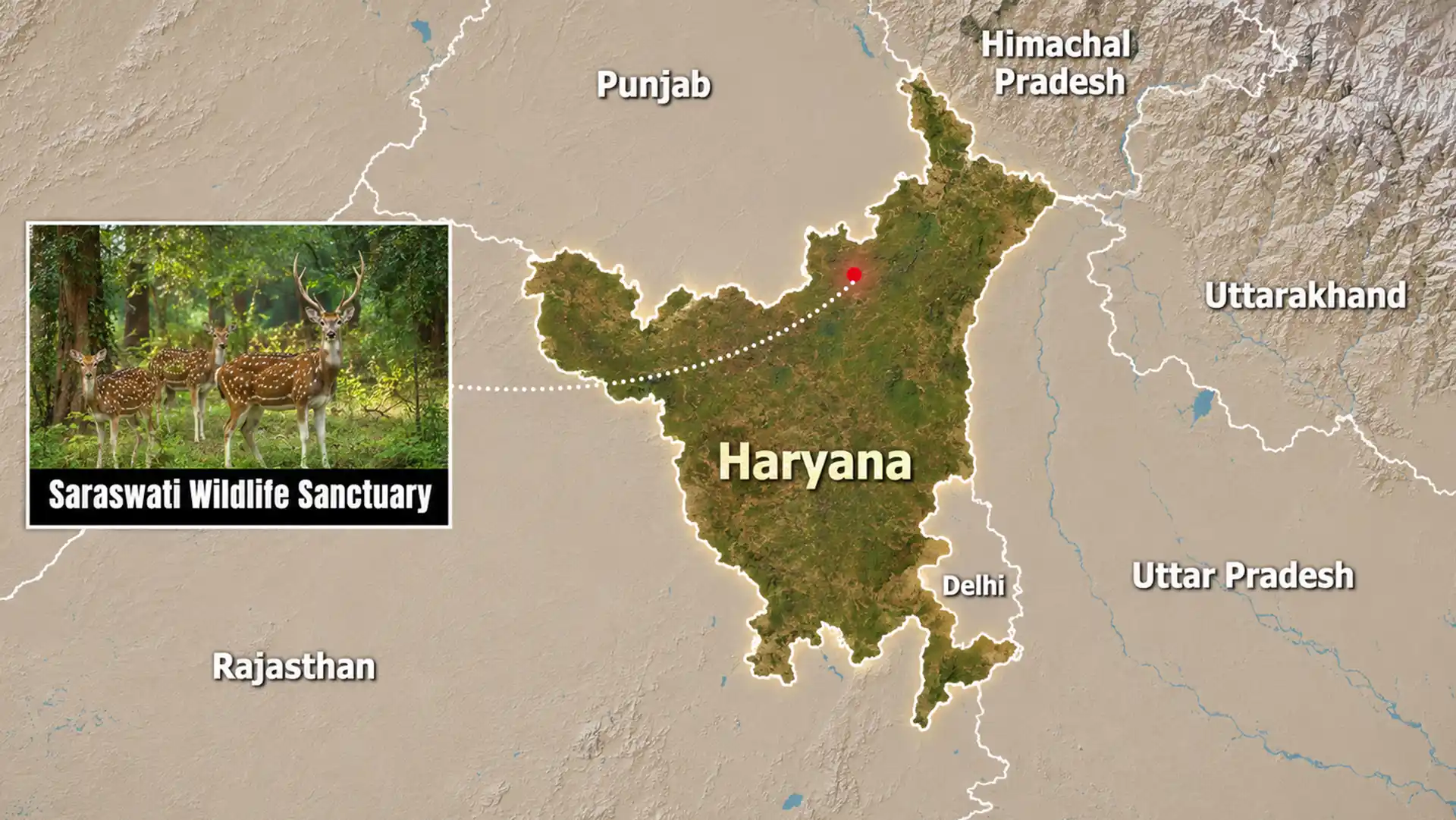
Haryana inaugurated its first Nakshatra Vatika (constellation garden) at the Saraswati Wildlife Sanctuary in Pehowa on the occasion of Van Mahotsav. The garden, also called the “constellation park,” features trees associated with each of the 27 lunar mansions and aims to connect visitors with both nature and traditional astronomy.
Background
Saraswati Wildlife Sanctuary, also known as Saraswati Conservation Reserve or Seonsar Forest, lies in Kaithal district of Haryana and spans about 4,453 hectares. It was notified as a wildlife sanctuary in July 1988 and declared a conservation reserve in October 2007. The area contains archaeological remains from the Kushan and Gupta periods and a four‑centuries‑old Mughal well. The forest is dominated by tropical deciduous species such as Kikar, Neem, Shisham and Peepal, along with planted eucalyptus and mulberry. Wildlife includes nilgai, spotted deer, wild boar and over 250 species of birds.
About the Nakshatra Vatika
- Concept: The garden features 27 plots, each planted with tree species traditionally linked to one of the 27 nakshatras (lunar mansions) in Indian astrology. For example, a Peepal tree represents Rohini, while a Banyan tree represents Krittika.
- Development: It was developed by the Haryana Sarasvati Heritage Development Board with support from the Forest Department and local villagers. A semi‑safari pathway and interpretation panels help visitors learn about the cultural significance of each tree.
- Educational purpose: By associating constellations with plants, the garden encourages younger generations to appreciate astronomy, ecology and traditional knowledge. Authorities plan to replicate similar gardens in other districts.
Significance
- Promotes conservation by emphasising the sacred value of trees and linking them with celestial bodies in Indian tradition.
- Offers a novel eco‑tourism attraction that can generate income for local communities while raising awareness about biodiversity.
- Revives traditional ecological wisdom, illustrating how ancient beliefs can align with modern environmental education.
Conclusion
The constellation garden at Saraswati Wildlife Sanctuary blends mythology, astronomy and ecology. By celebrating the link between stars and trees, it provides a unique space for visitors to connect with nature and inspires respect for both cultural heritage and biodiversity.

