
Why in news?
Assam’s Forest and Environment Minister announced that the number of tigers in Nameri Tiger Reserve has risen from three in 2022 to twelve by the end of 2025. The Wildlife Institute of India validated this fourfold increase, calling it a major conservation milestone. The minister also reported the return of two tigers to the reserve’s satellite core after decades.
Background
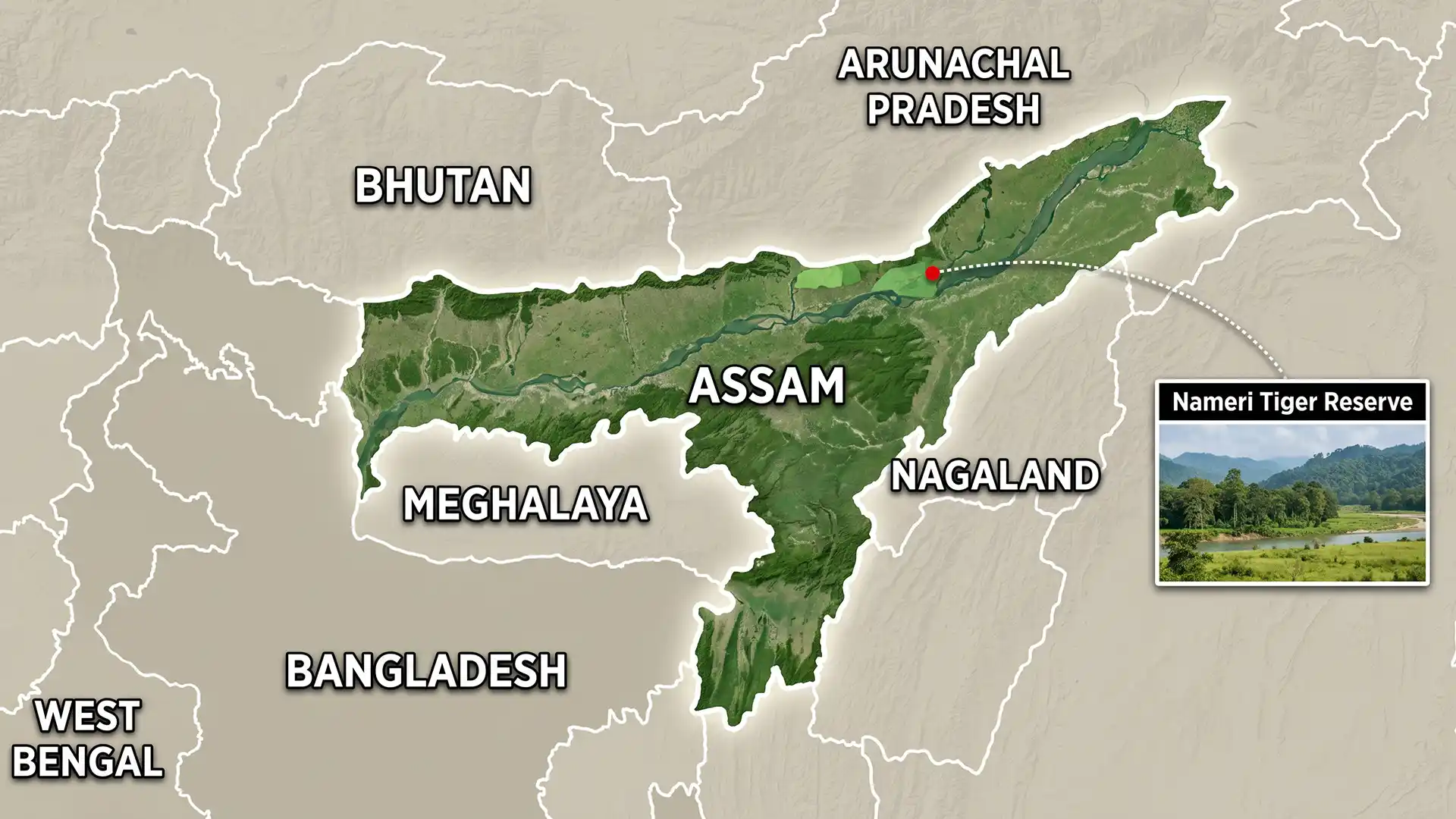
Nameri Tiger Reserve lies in Sonitpur district of Assam along the foothills of Arunachal Pradesh. The reserve was created in March 2000 under Project Tiger by merging Nameri National Park with adjacent reserve forests. The core area covers about 200 square kilometres, while buffer areas from Naduar and Balipara forests bring the total area to 344 square kilometres. In 2015 the 120 square kilometre Sonai‑Rupai Wildlife Sanctuary was declared a satellite core. The landscape forms part of the north‑east Brahmaputra valley and hosts elephants, wild dogs and over 300 species of birds.
Key points
- Between 2022 and 2025 the tiger count increased from three to twelve, indicating improved prey base and habitat protection.
- Anti‑poaching patrols, relocation of villages and controlled grazing have reduced human‑wildlife conflict, creating safer conditions for big cats.
- Two tigers were recorded in the Sonai‑Rupai satellite core after decades, showing that corridors are functioning and animals are reclaiming former ranges.
- The reserve is contiguous with Pakke Tiger Reserve in Arunachal Pradesh, allowing genetic exchange between tiger populations.
- Nameri is also home to the white‑winged wood duck and other endangered species; conservation measures benefit the entire ecosystem.
Conclusion
Nameri’s success demonstrates that sustained conservation investment yields tangible results. Continued monitoring, community engagement and habitat connectivity will be essential to maintain the rising population and prevent a rebound of threats such as poaching and encroachment.