
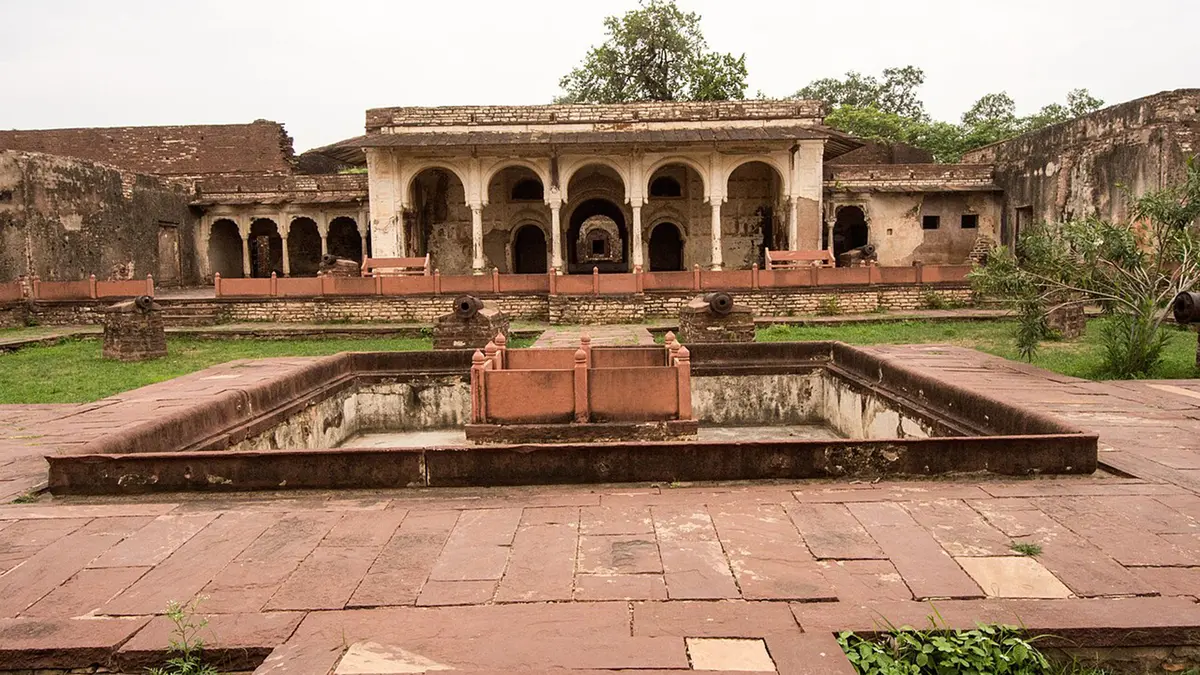
Why in news?
A very heavy historic cannon disappeared from Narwar Fort in Madhya Pradesh. The theft occurred during the night of 15–16 July 2026. Police formed special teams and examined surveillance footage. Conflicting reports describe the cannon’s age, weight and exact theft method.
Background
Narwar Fort overlooks the surrounding plains from a hill in Madhya Pradesh’s Shivpuri district.
Its elevated position helped rulers watch routes and defend the settlement.
Local tradition connects ancient Narwar with King Nala’s Nalapura, but archaeological proof remains unsettled.
Madhya Pradesh Tourism says Kachhwaha Rajputs rebuilt the fort during the tenth century, before other Rajput houses controlled Narwar.
Mughal and Maratha power later influenced Narwar, which eventually entered the Scindia-ruled Gwalior state.
Buildings inside display layered Rajput and later architectural influences.
What happened to the cannon?
Police learned that a displayed cannon, reportedly almost four centuries old, was missing.
It formed part of a fourteen-cannon collection, from which thirteen remained after the theft.
Police suspect an organised group and examined roads, surveillance recordings and possible antiquities networks.
Published accounts differ about the guards’ presence and the machinery allegedly used for removal.
Verified position: No official measurement was publicly available. Reports placed the weight between about one tonne and 3.5 tonnes. Calling it simply a very heavy historic cannon is more accurate.
Why can a heritage object be difficult to replace?
A historic weapon’s metal and markings reveal technology, while its location explains the fort’s defensive plan.
Removal destroys part of that context even when police recover the object.
A replica can copy appearance but cannot restore original historical evidence.
How does heritage theft usually operate?
- Offenders identify an object with weak physical protection.
- They remove it during a quiet period or security gap.
- Middlemen may hide its origin through false ownership stories.
- The object can then enter an illegal domestic or foreign market.
Which laws can apply?
Historic cannons can qualify as antiquities when their age and circumstances meet the national law’s definition.
The Antiquities and Art Treasures Act, 1972 regulates export and certain dealings in cultural objects across India.
Separate monument laws protect sites, while criminal law covers theft, damage and illegal possession of objects.
Investigators need documented custody whenever recovered objects are examined or returned to their monument.
Scientific conservation may address corrosion, cutting marks or damage caused during transport and concealment by offenders.
Heavy objects need vehicles, tools and several people, creating useful evidence for investigators.
What protections are needed at historic forts?
- Every movable object needs photographs, measurements and a unique inventory number.
- Large objects require secure anchoring without damaging their historic fabric.
- Lighting and cameras must cover gates, displays and approach roads.
- Authorities need trained guards during nights and public holidays.
- Local police must receive updated lists of valuable objects.
- Emergency reporting should begin immediately after any security breach.
Digital records help identify recovered objects, but they cannot replace daily protection at monuments.
Why does the incident matter beyond Narwar?
Many Indian forts contain cannons, sculptures and architectural fragments in open spaces.
Their large size can create a false belief that theft is impossible.
Narwar shows that weight offers little protection against organised offenders using vehicles and lifting equipment.
Conclusion
The theft shows why heritage inventories, local vigilance and physical security must work together.