
Why in news?
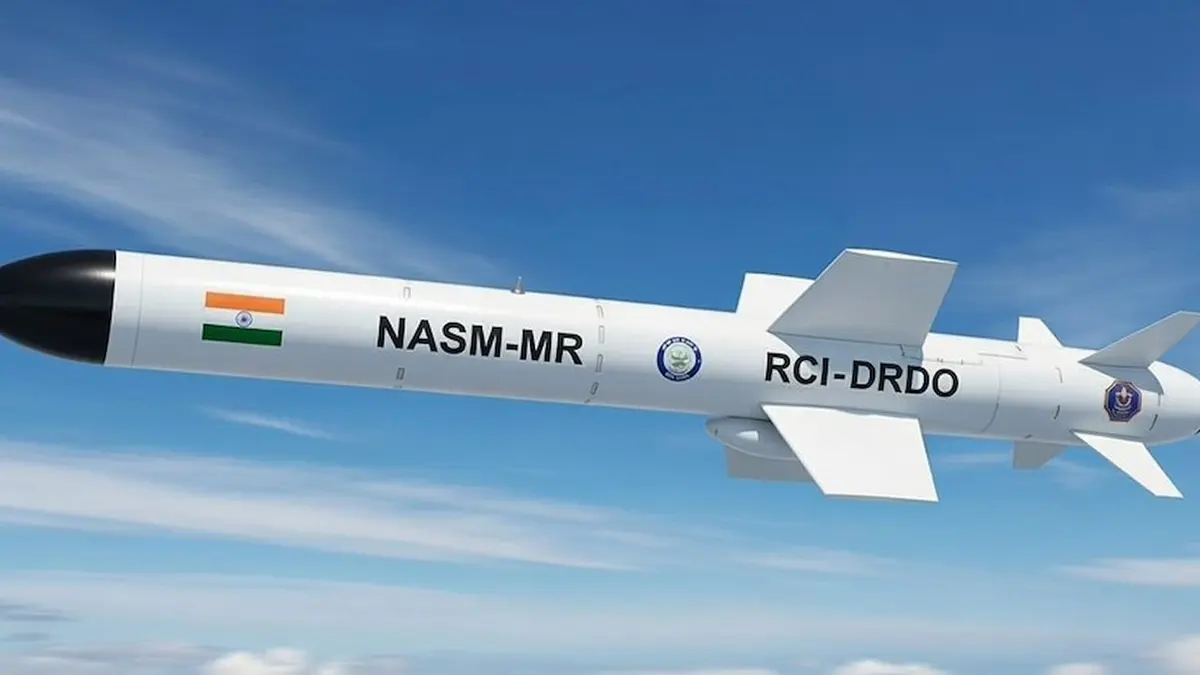
On 10–11 June 2026 India successfully conducted a series of flight tests of its multi‑layered ballistic missile defence (BMD) system. The trials included the maiden flight of the Naval Anti‑Ship Missile – Medium Range (NASM‑MR). Defence officials hailed the tests as a milestone for maritime and strategic deterrence.
Background
India has been developing a two‑layer BMD system since the early 2000s. The lower tier uses surface‑to‑air missiles to intercept incoming ballistic missiles inside the atmosphere. The upper tier employs high‑altitude interceptors to destroy threats outside the atmosphere. NASM‑MR is an all‑weather cruise missile designed by DRDO to engage enemy warships at ranges of about 350 kilometres.
Key details
- The NASM‑MR weighs around 600 kilograms and measures 5.2 metres long. It carries a 150 kilogram warhead.
- The missile is powered by a solid rocket booster and a turbofan engine, giving it a subsonic speed of about Mach 0.9.
- It can be launched from warships, submarines and carrier‑based aircraft such as the MiG‑29K.
- During the June tests, BMD interceptors destroyed target missiles both inside and outside the Earth’s atmosphere.
- Successful trials pave the way for induction of NASM‑MR and strengthen India’s layered air defence capability.
Conclusion
The combined BMD and NASM‑MR tests demonstrate India’s commitment to developing indigenous defence technology. A robust anti‑ship missile and multi‑layered shield will enhance deterrence, protect coastal assets and support maritime operations.
Source: Republic