

Why in news?
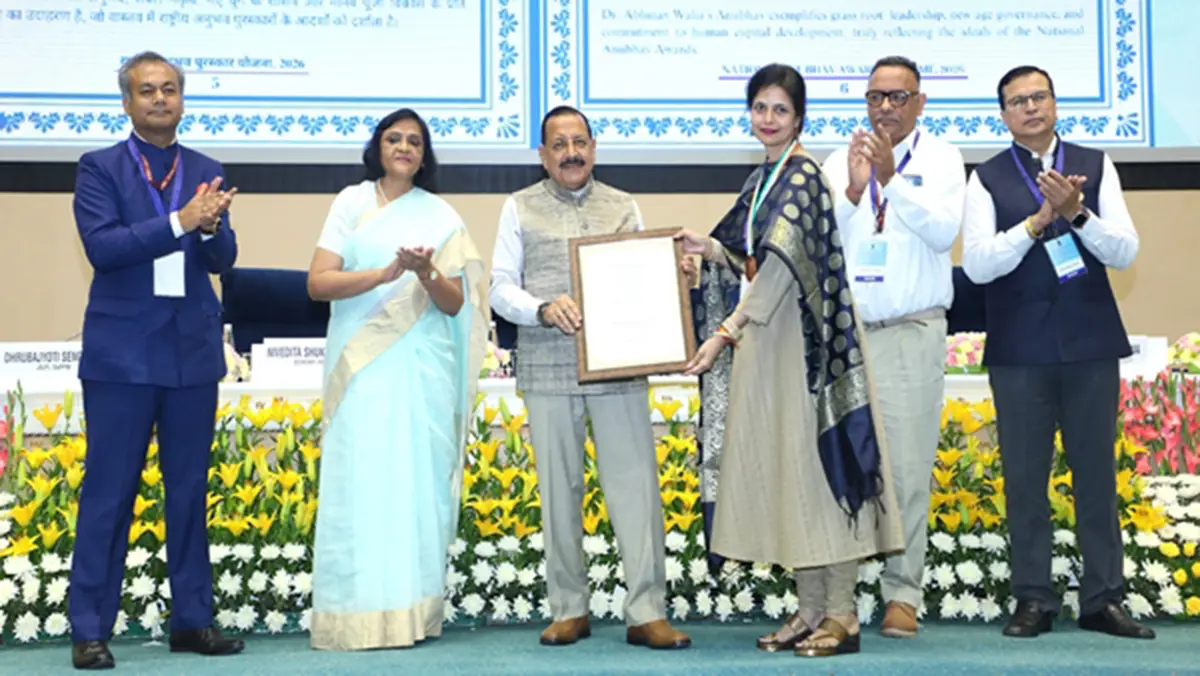
Fifteen people received National Anubhav Awards 2026 honours at a ceremony in New Delhi.
The 2026 recognition
Minister of State Jitendra Singh presented the honours on 17 August. He handles Personnel, Public Grievances and Pensions among other portfolios. The cited public broadcaster described 15 selected awardees.
The scheme separately provides Anubhav Awards and Jury Certificates. The 2026 plan allowed five main awards and ten Jury Certificates. Each category recognises a published service-experience write-up.
What is the Anubhav initiative?
The Department of Pension and Pensioners’ Welfare launched Anubhav in March 2015. It operates under the Union personnel ministry. The online platform collects accounts from retiring and retired officials.
These accounts record useful experience gained across public administration. Topics include good governance, process redesign and information technology. They also cover research, simplified procedures and lessons from failure.
Eligible authors included Central Government and Central Public Sector Enterprise employees. Public-sector bank staff were also covered. Retiring employees could submit during their final eight months.
People retired within the preceding three years could also participate. Write-ups published between 1 April 2025 and 31 March 2026 entered the award cycle.
More than a retirement memoir
Anubhav seeks usable administrative knowledge. Its public value depends on candid detail, sound curation and follow-up within departments.
Why administrative memory matters
Government often loses practical knowledge when experienced officers retire. Files preserve decisions but may omit negotiations, setbacks and local solutions. A searchable repository can reduce repeated mistakes.
It can also help younger officials understand why a procedure evolved. The initiative gives recognition to reflective public service. A record 2,141 write-ups were submitted during the 2026 cycle.
Quantity alone cannot ensure useful learning. Entries need verification, clear indexing and connections with training programmes.
Limits and safeguards
Officials may avoid frank criticism when former colleagues remain in service. Awards can also favour polished narratives over difficult operational lessons. Editors must protect personal data and confidential material.
They should still retain enough detail for the account to remain instructive. Departments should publish responses to applicable recommendations. That would show whether collected experience changed rules, training or service delivery.
Experience becomes valuable when reused
The awards encourage knowledge sharing. Their deeper success lies in converting published lessons into better administrative practice.
Conclusion
Anubhav can bridge retirement and institutional learning. Strong selection and visible implementation will determine its long-term relevance.