
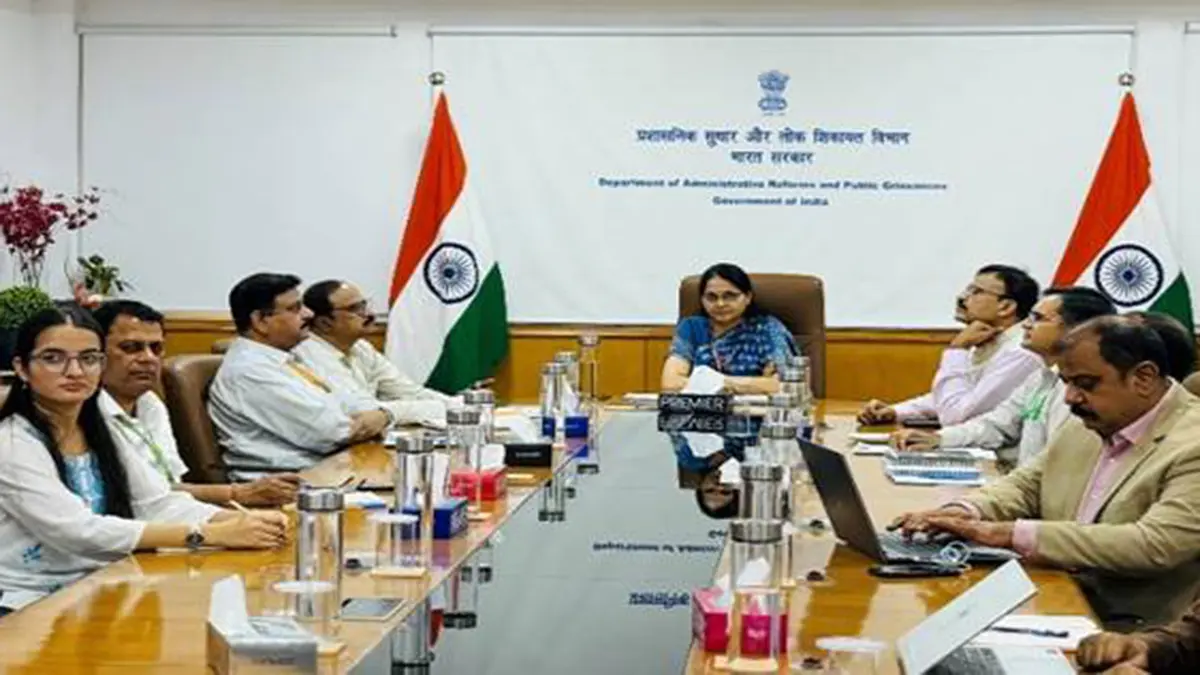
Why in news?
On 25 May 2026 the Department of Administrative Reforms and Public Grievances launched a dedicated portal for the National e‑Governance Service Delivery Assessment (NeSDA) 2025. The portal will collect data from states, union territories and central ministries for the upcoming biennial survey of digital service delivery. NeSDA measures the maturity of e‑governance across sectors and guides improvements in online public services.
Background
NeSDA was introduced in 2018 and is conducted every two years. It draws inspiration from the Online Service Index of the United Nations e‑Government Survey. Earlier editions in 2019 and 2021 assessed how states and ministries deliver services online and encouraged the creation of integrated portals. The 2023 report added parameters such as open government data and emerging technologies. The 2025 cycle continues this evolution.
Framework of NeSDA 2025
- Portal categories: The assessment covers state/UT portals, state service portals, municipal portals and central ministry portals. It distinguishes between general government‑to‑citizen (G2C) and government‑to‑business (G2B) services.
- Sectors and services: Services in finance, labour, education, local governance, social welfare, environment, tourism, public grievance redressal, transport and travel are evaluated. The 2025 edition proposes adding corporate services provided by the Ministry of Corporate Affairs. States and UTs must provide data for 59 mandatory services, while central ministries report on 43 services.
- Assessment parameters: NeSDA examines accessibility (including multi‑language support), content availability, ease of use, information security and privacy, end‑to‑end service delivery, integrated services, status tracking, open government data, e‑participation and adoption of emerging technologies. Scores help identify gaps and best practices.
Significance
By benchmarking digital service delivery, NeSDA encourages governments to modernise and integrate their portals. Citizens benefit from faster, more transparent services, while states compete to improve their rankings. The 2025 portal allows real‑time data submission and will make the assessment process more transparent.
Conclusion
NeSDA 2025 will serve as an important gauge of India’s progress in e‑governance. The new portal and expanded parameters show a commitment to citizen‑centric digital services and continuous improvement in government performance.