

Why in news?
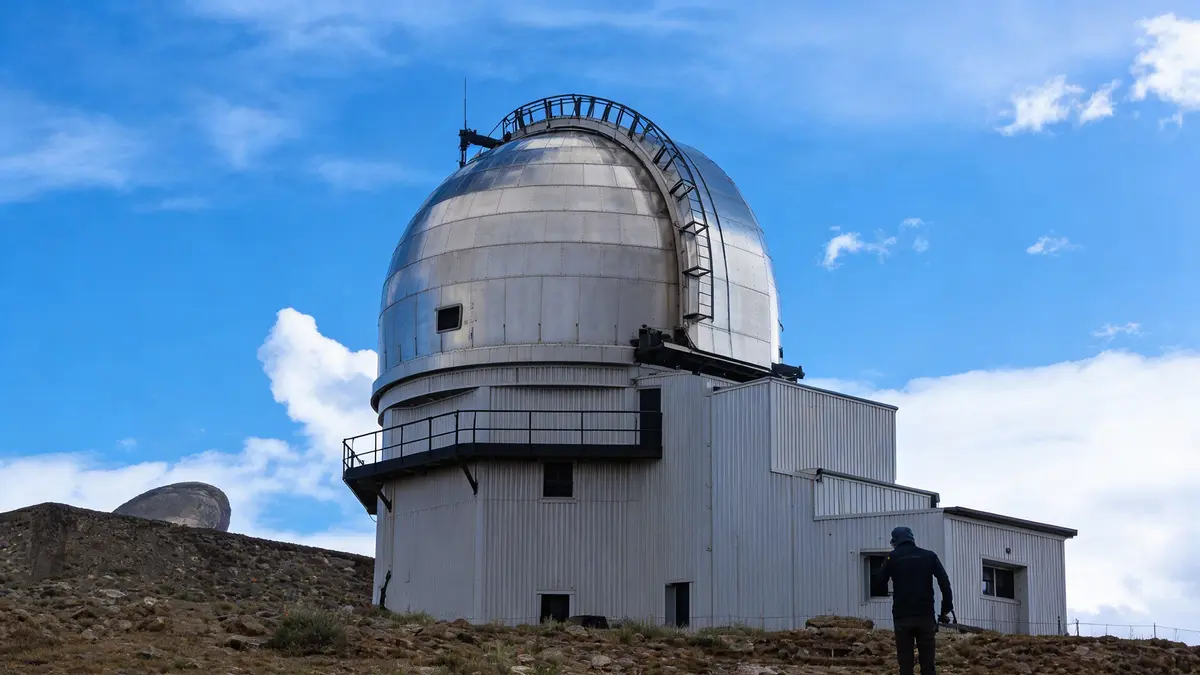
India announced plans to build two major astronomical facilities in Ladakh: the National Large Solar Telescope (NLST) and the National Large Optical–Near Infrared Telescope (NLOT). These projects were highlighted in February 2026 news reports for their potential to boost Indian research in solar physics and cosmology. Both telescopes will be located at high‑altitude sites to take advantage of clear skies and minimal atmospheric disturbance.
Background
The NLST project aims to construct a 2‑metre aperture solar telescope near Merak village on the shore of Pangong Tso. It will operate in visible and near‑infrared wavelengths, allowing researchers to study sunspots, solar flares, coronal mass ejections and the Sun’s magnetic field with high spatial and temporal resolution. India currently has two major solar observatories at Kodaikanal (established in 1899) and Udaipur (established in 1972); NLST will significantly enhance observational capabilities.
The NLOT is a separate project to build a 13.7‑metre segmented mirror telescope at Hanle in Ladakh, a site already hosting the 2‑metre Himalayan Chandra Telescope. Comprising 90 hexagonal mirror segments, NLOT will operate in optical and near‑infrared wavelengths. It is expected to be completed over the next decade and will be among the world’s largest telescopes.
Key features
- NLST: A 2‑metre solar telescope designed for high‑resolution imaging and spectroscopy. Its location near Pangong Tso offers clear skies and minimal atmospheric turbulence, enabling precise observations of solar phenomena.
- NLOT: A 13.7‑metre optical–infrared telescope with a segmented primary mirror similar to those used in the Thirty Metre Telescope. The project will deepen India’s experience with advanced mirror technologies and will support studies of exoplanets, star formation, galactic structure and the early universe.
- Scientific objectives: NLST will help scientists understand solar magnetism and predict space‑weather events that affect satellites and power grids. NLOT will enable research on diverse topics, from the atmospheres of distant planets to supernovae and dark matter.
- Timeframe: NLST is expected to be operational within five to six years, while NLOT will take longer, with completion anticipated in the next decade. Both projects will be located in the high‑altitude, low‑pollution environment of Ladakh.
Significance
- Boosting Indian astronomy: These facilities will give Indian scientists access to world‑class instruments, reducing reliance on foreign observatories and fostering domestic expertise.
- International collaboration: The projects will likely involve global partnerships and training programmes, enhancing India’s role in international astronomy.
- Inspiring young scientists: High‑profile research infrastructure can inspire students to pursue careers in science, technology and engineering.
Source: The Indian Express