

Why in news?
The nebular hypothesis gained renewed attention in February 2026 when several news portals discussed its historical context while explaining recent advances in planetary science. The hypothesis describes how the Sun and planets formed from a giant cloud of gas and dust roughly 4.57 billion years ago. Understanding this classical theory helps students grasp how our Solar System evolved and why planets have different compositions.
Background
The nebular hypothesis was first articulated in the mid‑18th century to explain the origin of the Solar System. In 1755, German philosopher Immanuel Kant proposed that a slowly rotating cloud of gas and dust collapsed under its own gravity to form a star at the centre and a flattened disk around it. Later, in 1796, French mathematician Pierre‑Simon Laplace expanded on this idea. He suggested that as the proto‑Sun contracted and spun faster, rings of material were thrown off from the equator; these rings condensed to become the planets. Modern astronomy has refined these early notions, but the basic picture of a collapsing nebula remains at the heart of planetary science.
How the Solar System formed
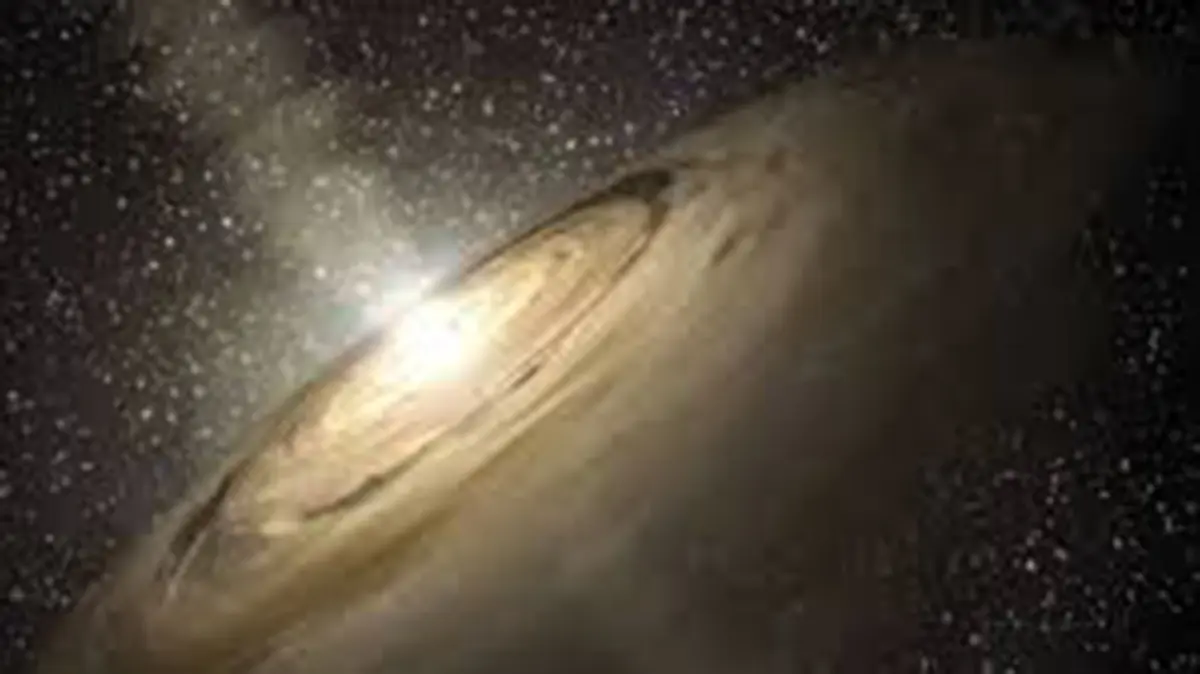
- Collapse of a molecular cloud: About 4.57 billion years ago, a region within a giant molecular cloud began to collapse under gravity, possibly triggered by shock waves from nearby supernovae. As it collapsed, conservation of angular momentum caused it to spin faster and flatten into a rotating disk.
- Formation of the Sun: Most of the mass gathered at the centre to form a dense protostar. As pressure and temperature increased, nuclear fusion ignited in the core, giving birth to the Sun.
- Planetary disk: The remaining material formed a protoplanetary disk around the young Sun. Within this disk, dust grains stuck together to form planetesimals. These bodies collided and grew into the planets, moons and asteroids we know today.
- Composition gradient: Near the Sun, the heat caused volatile materials to evaporate, so rocky planets formed from metals and silicates. Farther out, ices could condense, allowing gas and ice giants to accumulate large amounts of hydrogen, helium and water ice.
Legacy and significance
- Historical contribution: Kant and Laplace’s nebular ideas laid the foundation for modern astrophysics. Although details have been updated, the concept of a collapsing nebula remains central to how scientists explain star and planet formation.
- Explaining planetary diversity: The hypothesis accounts for differences between the inner rocky planets and outer gas giants by considering temperature variations in the protoplanetary disk. It also helps explain why planets orbit roughly in a plane and in the same direction.
- Guiding modern research: Observations of protoplanetary disks around young stars and computer simulations continue to refine our understanding of planet formation, building upon the nebular hypothesis.
Source: Universe Today