

Why in news?
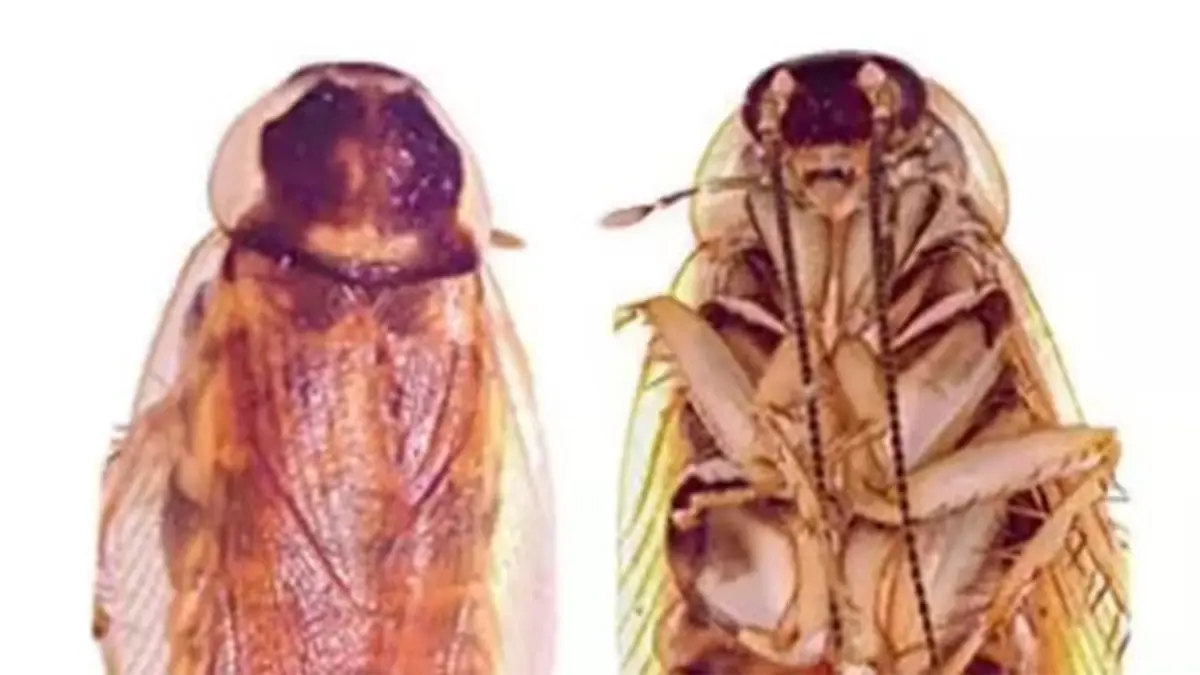
Researchers from the Zoological Survey of India (ZSI) and Prof. Ramkrishna More College, Pune, announced the discovery of a new cockroach species named Neoloboptera peninsularis in the Deccan Peninsula. The species was described in a March 2026 study that combined traditional morphology with DNA sequencing.
Background
Cockroaches belong to the order Blattodea and are among the most resilient insects on Earth. The genus Neoloboptera had previously only two recognised species in India: N. indica, described in 1865, and N. chakrabortyi from 1995. Identifying new species in this genus is challenging because subtle differences in anatomy often require microscopic examination and genetic analysis. The latest discovery adds to our understanding of insect diversity in peninsular India.
Characteristics of N. peninsularis
- Appearance: The cockroach has a glossy yellowish‑brown body with fully developed wings. Males have a distinctive whip‑like genital structure, while the cerci (tail‑like appendages) are asymmetrical.
- Habitat: Specimens were collected from Nathachi Wadi near Daund in Maharashtra, a region characterised by scrubby vegetation and rocky terrain. The species is likely nocturnal and may live under leaf litter or stones.
- Taxonomy: Scientists used an integrative approach, comparing external morphology and internal genital structures and sequencing mitochondrial DNA. This combined method confirmed that the specimens represent a distinct species.
Why the discovery matters
India faces what biologists call the “Linnaean”, “Wallacean” and “Darwinian” shortfalls—gaps in knowledge about the names, distributions and evolutionary relationships of species. Documenting new species like N. peninsularis helps address these gaps. It also underscores the importance of conserving habitats in the Deccan Plateau, which harbour unique and understudied fauna.
Sources: Indian Express