
Why in news?
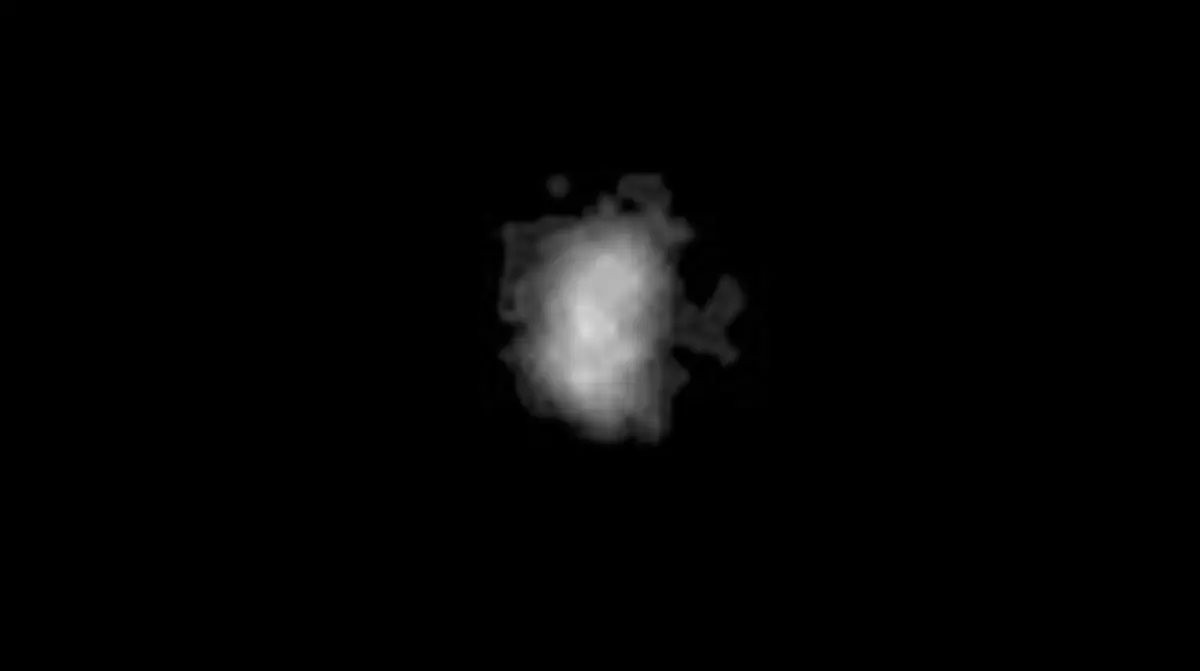
A study published in May 2026 using data from the James Webb Space Telescope (JWST) and computer simulations suggests that Neptune’s moon Nereid did not originate from the Kuiper Belt as previously thought. Its composition and orbital history imply that it formed around Neptune and was later displaced into its current wide, elongated orbit when the giant moon Triton was captured.
Background
Nereid is the third‑largest moon of Neptune and measures about 170 kilometres across. Dutch astronomer Gerard Kuiper discovered it on 1 May 1949 and named it after the sea nymphs in Greek mythology. Unlike most satellites, Nereid follows an extremely eccentric path, taking about 360 days to circle Neptune. For decades, astronomers debated whether Nereid was a captured Kuiper Belt object or a remnant of Neptune’s original moon system.
New findings
- Spectral evidence: JWST’s near‑infrared spectrograph revealed that Nereid’s surface contains large amounts of crystalline water ice and a spectral signature unlike that of typical Kuiper Belt objects. Instead it resembles the moons of Uranus【490267542443709†L294-L303】.
- Simulations: Researchers simulated Neptune’s past and found that when Triton — a Pluto‑sized moon with a retrograde orbit — was captured, it could have disrupted smaller moons, throwing one into an eccentric orbit matching Nereid’s【490267542443709†L304-L307】.
- Implications: Nereid likely formed around Neptune and is a survivor from the original system. Its current orbit preserves evidence of the chaotic events that reshaped Neptune’s moons billions of years ago.
Why it matters
Understanding Nereid’s origin helps astronomers reconstruct the history of the outer solar system. The findings show how giant planets can capture large bodies like Triton and still retain some original satellites. They also demonstrate the power of JWST in studying distant, faint objects that were previously barely resolved.

