

Why in news?
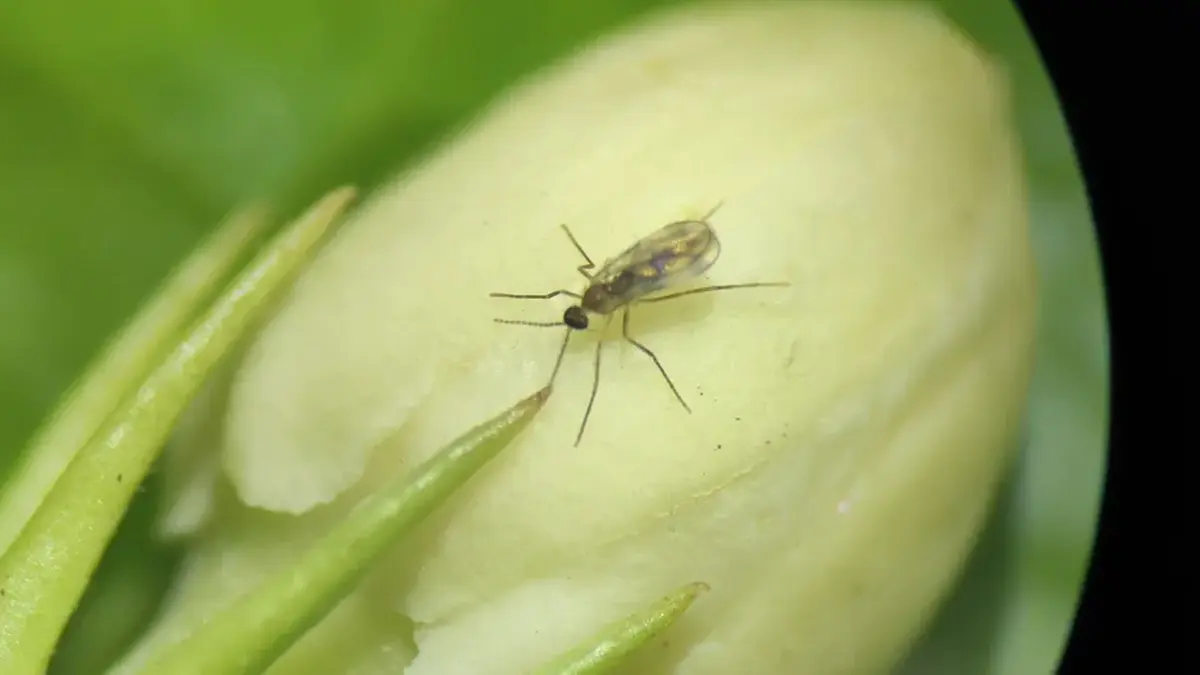
Indian scientists have discovered a new species of blossom midge, named Contarinia icardiflores. The tiny fly was found infesting the buds of Jasminum sambac (common jasmine) and is causing economic losses to floriculture farmers. The species honours the Indian Council of Agricultural Research – Directorate of Floricultural Research (ICAR‑DFR) and was formally described in February 2026.
Background
Blossom midges belong to the genus Contarinia within the insect family Cecidomyiidae. These tiny flies lay eggs in flower buds; the larvae feed on developing tissues, causing buds to drop or produce deformed blossoms. The newly identified species was collected from jasmine fields in Pune, Maharashtra. A team led by Dr. D.M. Firake used an integrative taxonomic approach combining morphology and DNA barcoding of the mitochondrial COI gene to distinguish it from the closely related Contarinia maculipennis. The life cycle of Contarinia icardiflores spans about 16–21 days from egg to adult, and heavy infestations can destroy up to 80 percent of flower buds.
Characteristics and impact
- Morphology: Adults are only about 2 mm long. The species differs from other blossom midges by the shape of the male genitalia and the pattern of spots on the wings.
- Feeding behaviour: Larvae tunnel into unopened jasmine buds and feed on internal tissues, causing them to turn yellow and fall prematurely.
- Genetic distinctiveness: DNA sequencing of the cytochrome oxidase I gene confirms that Contarinia icardiflores is genetically distinct from other species such as C. maculipennis.
- Economic threat: Jasmine is widely grown for religious offerings and the perfume industry. Severe infestations reduce yields and quality, affecting farmers’ incomes.
- Research significance: Identifying the species allows scientists to develop targeted management strategies such as pheromone traps, biocontrol agents or cultural practices to disrupt the midge’s life cycle.
Conclusion
The discovery of Contarinia icardiflores highlights the importance of taxonomic research in protecting crops. By understanding the life cycle and genetic makeup of this pest, agricultural scientists can devise effective control measures and prevent further losses in jasmine cultivation.