
Why in news?
On 5 June 2026 scientists from the Agharkar Research Institute in Pune announced the discovery of a new species of foraminifera named Portatrochammina bharatensis. The microscopic organism was found in the sediments of Jaitapur Creek on Maharashtra’s Konkan coast.
Background – what are foraminifera?
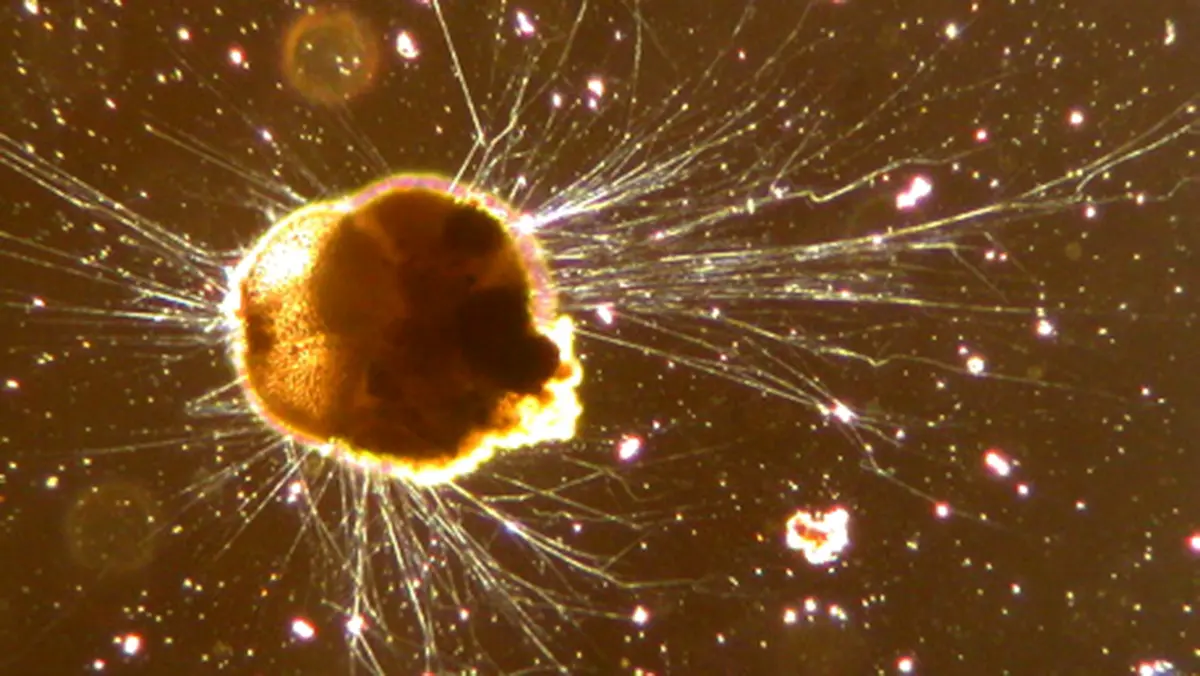
Foraminifera, often called “forams,” are single‑celled marine organisms that have lived in the world’s oceans for over 500 million years. Most forams are the size of a sand grain (between 50 and 500 micrometres), although a few species grow larger. Many build intricate shells, called tests, by agglutinating mineral particles from their environment. Tiny holes in the shell allow threadlike pseudopodia to protrude, helping the organism move and capture food. Forams eat organic detritus, diatoms and algae, and their fossilised shells are used by geologists to reconstruct past climates, date sedimentary rocks and locate oil reserves.
Discovery of P. bharatensis
- Location and collection: Researchers led by Dr Tushar Kaushik collected marine sediment samples from Jaitapur Creek in Ratnagiri district, Maharashtra. The creek lies near a proposed nuclear power project and supports mangroves, mudflats and sandy beaches.
- New species characteristics: The new species measures about 0.3–0.5 millimetres across and constructs its shell by cementing quartz sand grains. It is named “bharatensis” in honour of Bharat, the ancient name for India.
- Molecular confirmation: Scientists sequenced the 18S ribosomal RNA gene of the tiny creature and compared it with known species. Phylogenetic analysis placed it close to Portatrochammina pacifica and Portatrochammina antarctica, but genetic differences confirmed that it was a new species.
- Quartz armour: Using scanning electron microscopy and energy‑dispersive X‑ray spectroscopy, the team discovered that the shell comprises mainly quartz, which offers protection against the chemically harsh, monsoon‑driven coastal waters.
Ecological importance
- Nutrient recycling: Forams recycle organic matter on the sea floor and form a vital part of the food chain for tiny predators.
- Palaeo‑climate indicators: Fossil forams provide key information about past ocean temperatures and chemistry, helping scientists understand climate change.
- Undiscovered diversity: India has a long coastline, yet its microscopic marine life remains poorly studied. Discoveries like P. bharatensis highlight the need to explore estuaries and coastal waters using both classical microscopy and modern DNA techniques.
Conclusion
The discovery of Portatrochammina bharatensis reminds us that even tiny organisms contribute to Earth’s biodiversity and scientific knowledge. Documenting such species enriches our understanding of marine ecosystems and may reveal insights into environmental change.