
Why in news?
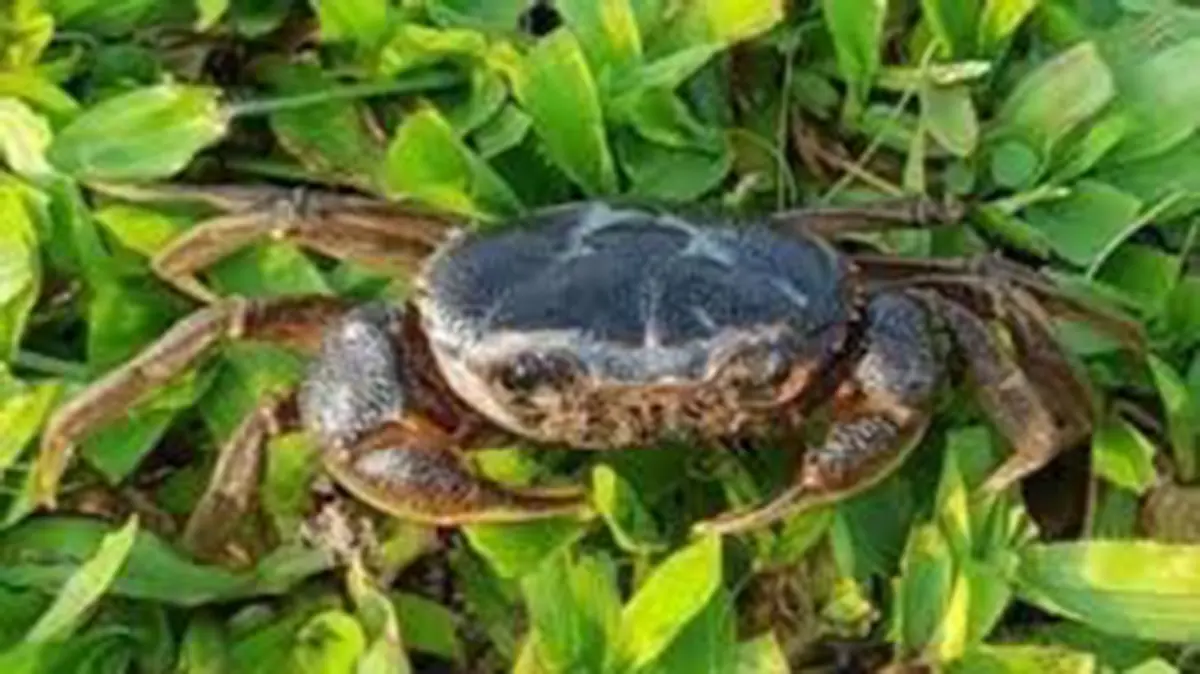
Researchers from the Zoological Survey of India identified a new species of freshwater crab, Indopotamon alipurduarense, in the paddy fields of Alipurduar district, West Bengal. The discovery marks only the second species in the Indopotamon genus and adds to the rich diversity of Indian crustaceans.
Background
India is home to more than 180 species of freshwater crabs, many of which live in narrow habitats such as mountain streams, forests and wetlands. These crabs play a vital role in ecosystems by recycling nutrients and serving as prey for birds and mammals. The newly described Indopotamon alipurduarense was discovered during field surveys in Uttar Rampur village, where researchers noticed unusual burrows in flooded rice fields.
Unique features of the species
- Habitat: The crabs dig deep burrows, sometimes extending 1.5 metres underground, and emerge mainly during the monsoon. Farmers rarely see them because they spend much of their life inside the soil.
- Appearance: Adults have a greyish carapace edged with orange‑red markings. Compared with their closest relative (Indopotamon garoense), their shell is broader and deeper.
- Reproductive organs: Males possess distinctive structures on their first gonopod (a limb used for transferring sperm) that differ markedly from other species. Such features help taxonomists confirm that the species is new.
- Ecological role: As detritus feeders, freshwater crabs break down leaf litter and recycle nutrients. Their presence indicates healthy wetlands and paddy ecosystems.
Why this discovery matters
The finding highlights how little is known about India’s aquatic invertebrates. With rapid land‑use change and pesticide use in agriculture, many small species disappear before they are documented. Recording new species allows scientists to advocate for habitat protection and to monitor environmental health.

