
Why in news?
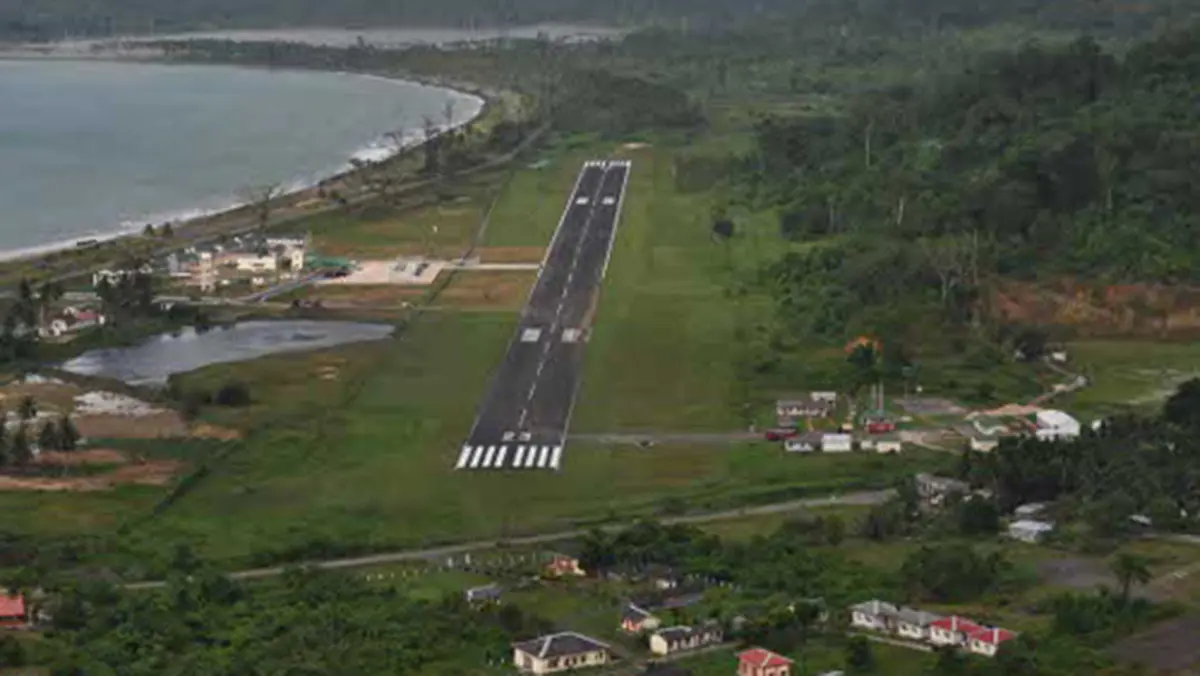
The central government has decided not to lengthen the runway at the Indian Navy’s INS Baaz air station on Great Nicobar Island. Instead it will build a new civil‑military airport near Chingen village under the Great Nicobar Island development project. The announcement in early June 2026 sparked debate about the island’s strategic role and its fragile ecology.
Background
INS Baaz is a naval air station at Campbell Bay in the southern Nicobar group. It was commissioned on 31 July 2012 and became the southernmost air base of the Indian armed forces. The base has a short 3.5‑kilometre runway and supports maritime patrol aircraft and unmanned aerial vehicles. Its location near the Six Degree Channel and the Strait of Malacca gives India surveillance over one of the busiest shipping lanes in the world. Authorities earlier planned to extend the runway to about 10 kilometres so that larger aircraft could operate, but engineers found that the terrain and existing infrastructure made expansion impractical.
New airport proposal
The government will now build a greenfield airport at Galathea Bay. The project will cost around ₹13,000 crore and form part of the ₹81,000‑crore Great Nicobar Island development plan. The new facility will have a 10‑kilometre runway capable of handling wide‑body commercial aircraft and military planes. It is expected to take five years to complete. The airport will remain under naval control but will handle civilian flights as well. Authorities say the dual‑use airport will improve connectivity to Great Nicobar and boost tourism while strengthening India’s maritime security. Critics warn that large infrastructure could damage rainforests and disrupt the Shompen and Nicobarese tribal communities. Environmental activists highlight that the Great Nicobar project involves a port, township and power plant that may threaten rare species and coral reefs.
Strategic significance
- Gateway to the Malacca Strait: Great Nicobar lies close to the mouth of the Malacca Strait. A long runway improves the ability of the Indian Navy and Air Force to monitor shipping and respond to emergencies.
- Dual‑use infrastructure: A civil‑military airport will support tourism and logistics while preserving a naval presence. It may reduce the need for future land acquisition at INS Baaz.
- Balancing development and ecology: Decisions about infrastructure on a remote island must consider fragile ecosystems and the rights of indigenous people. Project planners face the challenge of combining national security with sustainable development.
Conclusion
The move to build a new airport rather than expand INS Baaz reflects practical engineering constraints and strategic thinking. If the project uses environmentally sensitive design and includes local communities, Great Nicobar could gain both connectivity and a strong defence posture. Monitoring of ecological impacts will be critical as construction progresses.