
Why in news?
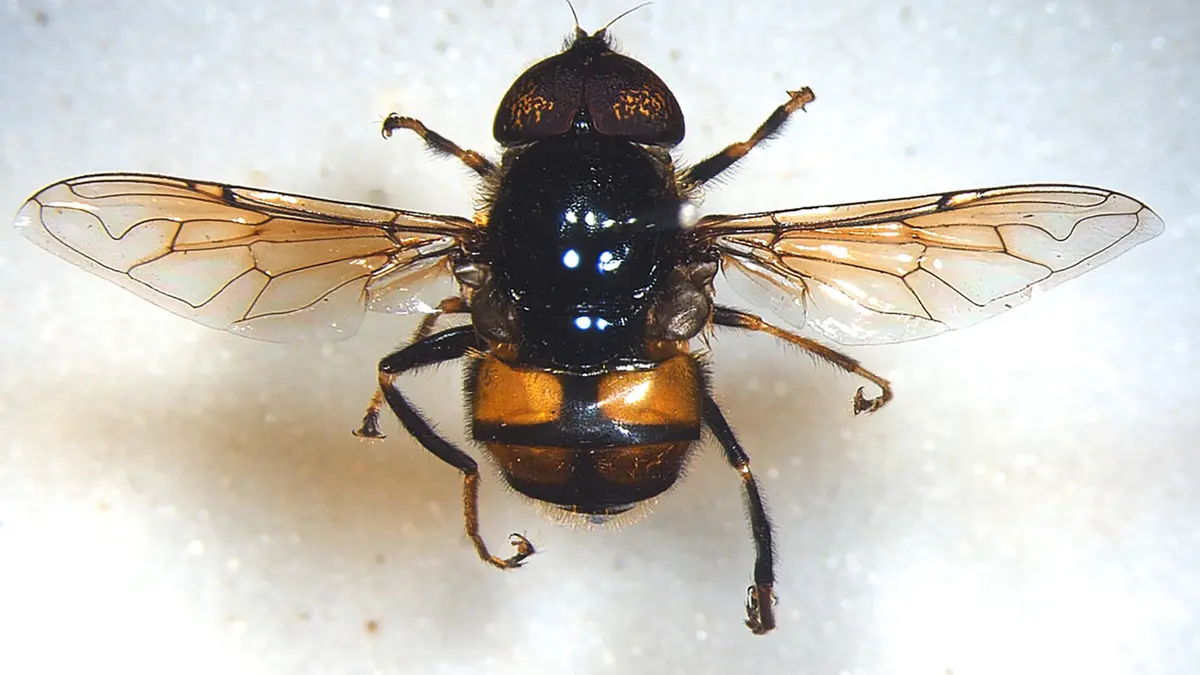
On 3 June 2026, researchers from the Zoological Survey of India announced the discovery of two new species of hoverfly, Eristalinus sapphirinus and Eristalinus brunettii, in the Gangetic plains of West Bengal. The species were identified using a modern combination of detailed morphological study and DNA bar‑coding. It is the first time in more than a century that the Indian species list of this group has been updated.
Background
Hoverflies belong to the family Syrphidae and are often mistaken for bees because of their banded bodies and buzzing flight. Unlike bees, hoverflies cannot sting; they play two important roles in ecosystems. As adults they feed on nectar and pollinate wild and cultivated plants, while their larvae, commonly called “rat‑tailed maggots,” live in water and recycle organic matter. The genus Eristalinus includes brightly coloured species with speckled eyes. The last recorded additions to the Indian list of this genus were made in 1923, so the new discoveries close a long gap in our knowledge.
Key findings of the study
- Two unique species: Eristalinus sapphirinus is named for its metallic blue appearance, while Eristalinus brunettii honours early dipterist Enrico Brunetti. Both were collected from agricultural fields and wetlands between 2022 and 2025.
- Integrative taxonomy: The team used a combination of physical characters and mitochondrial DNA bar‑codes to confirm that the specimens represented new species. Advanced methods such as ABGD, GMYC and PTP were applied to delimit species boundaries.
- Dual ecological roles: Adult hoverflies pollinate flowers, whereas their aquatic larvae break down decaying matter and help recycle nutrients. Discovering new species highlights the unseen biodiversity in human‑modified landscapes like the Gangetic plains.
- Significance: The findings remind us that many pollinating insects remain unrecorded. Documenting these species can improve our understanding of pollinator networks and support conservation planning in both protected and agricultural areas.
Conclusion
The discovery of Eristalinus sapphirinus and Eristalinus brunettii shows that even well‑studied regions like the Gangetic plains harbour unknown life. By combining traditional taxonomy with modern DNA techniques, scientists can reveal this hidden diversity and emphasise the need to protect pollinators that underpin food security and healthy ecosystems.