
Why in news?
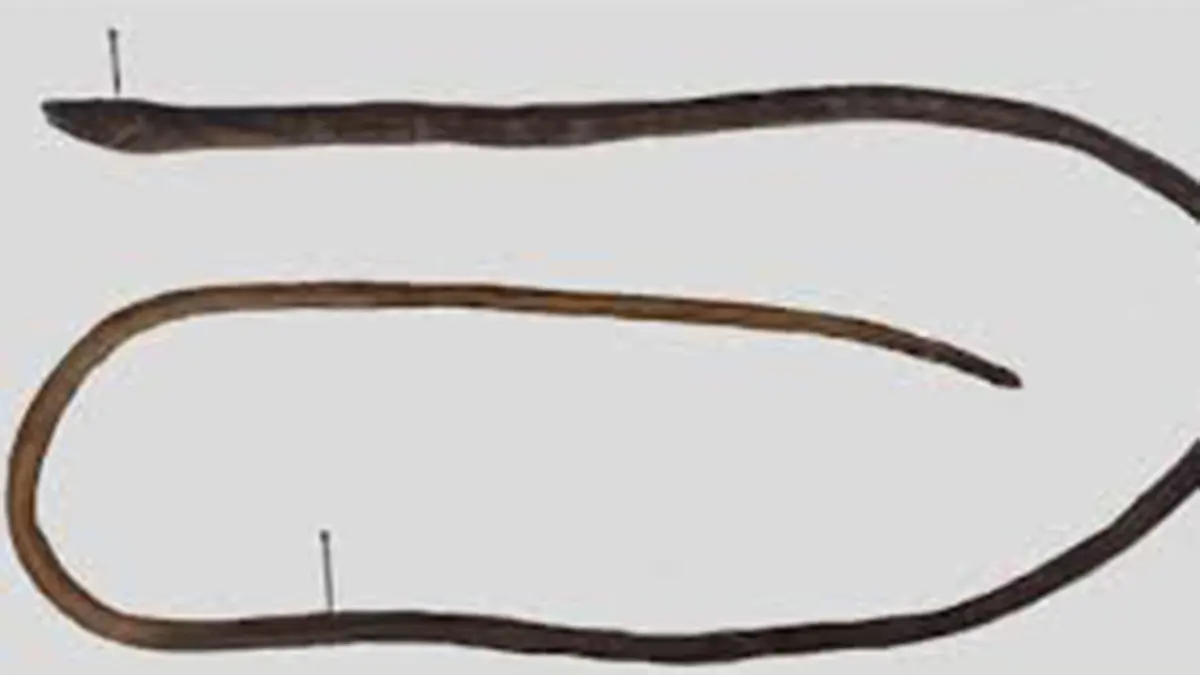
Marine scientists from the ICAR‑National Bureau of Fish Genetic Resources, Kerala University of Fisheries and Ocean Studies and the Zoological Survey of India have described a new species of snake‑eel collected from fishing by‑catch off the coasts of Andhra Pradesh and Odisha. The species has been named Bascanichthys chepakakiensis after the Telugu words for “fish” (chepa) and “Kakinada” (kaki), the port near which the holotype was found.
Background
The genus Bascanichthys belongs to the Ophichthidae family of snake‑eels. Prior to this discovery, only one species from this genus (Bascanichthys deraniyagalai) was recorded in Indian waters. During routine surveys in 2024–25, researchers collected two specimens from the Kakinada fishing harbour (Andhra Pradesh) and Arjyapalli landing centre (Odisha). Detailed morphological analysis revealed that the fish did not match any known species. Their findings were published in the journal Ichthyological Exploration of Freshwaters in May 2026.
Distinctive features
- Body shape and colour: The eel has an extremely long and slender body with a pale brownish back that fades to an olive‑grey mid‑section and a lighter belly. The snout is dusky brown and shorter than that of its closest relatives.
- Dorsal fin position: The dorsal fin originates slightly behind the gill opening, whereas in Bascanichthys deraniyagalai it begins further back. This, along with the tail length, helps distinguish the new species.
- Vertebrae and teeth: It has fewer vertebrae before the anal fin and a unique arrangement of teeth compared to other members of the genus.
- Pectoral fins: The pectoral fins are tiny and paddle‑shaped, another distinguishing characteristic of this species.
- Etymology: The name honours the local fishing community by combining the Telugu word for fish with the nickname of Kakinada. The discovery raises the number of known Bascanichthys species worldwide to 20.
Conclusion
The discovery of Bascanichthys chepakakiensis highlights the rich yet understudied marine biodiversity of the Bay of Bengal. Documenting new species is essential for conservation planning and sustainable fisheries management. Continued exploration may reveal more hidden diversity along India’s coasts.