
Why in news?
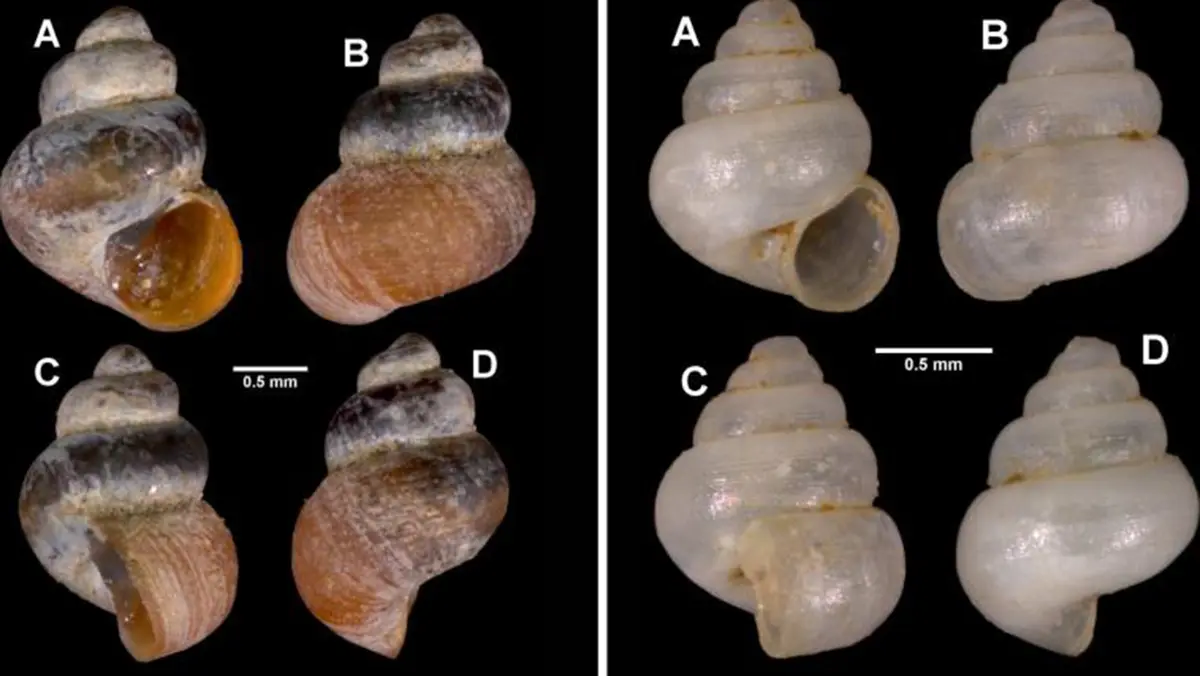
Researchers from India and Europe have discovered two tiny snail species, Georissa meghalayaensis and Acmella bensoni, in the limestone caves of Meghalaya. The finds were announced in mid‑2026 and underline the rich yet fragile subterranean biodiversity of Northeast India.
Background
The Indo‑Burma biodiversity hotspot encompasses northeastern India, Myanmar and parts of Southeast Asia. Its karst landscapes host numerous caves that remain poorly explored. Micro‑snails belong to families like Hydrocenidae and Cyclophoridae and often have shells just a few millimetres across. They play an important role in nutrient cycling and are sensitive indicators of habitat health.
Discoveries
- Georissa meghalayaensis: Found near the entrance of Krem Puri cave, this species has a vivid orange‑red shell with a dense mesh of ridges. Its closest relatives have yellow shells with simple spiral lines. The new species is named after its home state.
- Acmella bensoni: Discovered deep inside Krem Puri and Arwah caves, this micro‑snail has a tiny transparent‑white shell with deeply impressed grooves and fine ribs that make it appear smooth. It honours William H. Benson, a 19th‑century British malacologist regarded as a pioneer of Indian mollusc studies.
- Conservation message: The researchers urge caution when developing caves for tourism. Many cave species have very restricted distributions and can disappear if their microhabitats are disturbed by lighting, foot traffic or pollution.
Conclusion
The discovery of Georissa meghalayaensis and Acmella bensoni highlights how much remains to be learned about India’s cave fauna. Protecting limestone ecosystems and balancing tourism with conservation will ensure these miniature creatures continue to thrive.