Why in news?
New Zealand’s Prime Minister Christopher Luxon announced that his country would sign a comprehensive free trade agreement (FTA) with India in New Delhi on 27 April 2026. The pact will eliminate tariffs on all Indian goods entering New Zealand and remove or reduce tariffs on 95 % of New Zealand exports to India.
Background
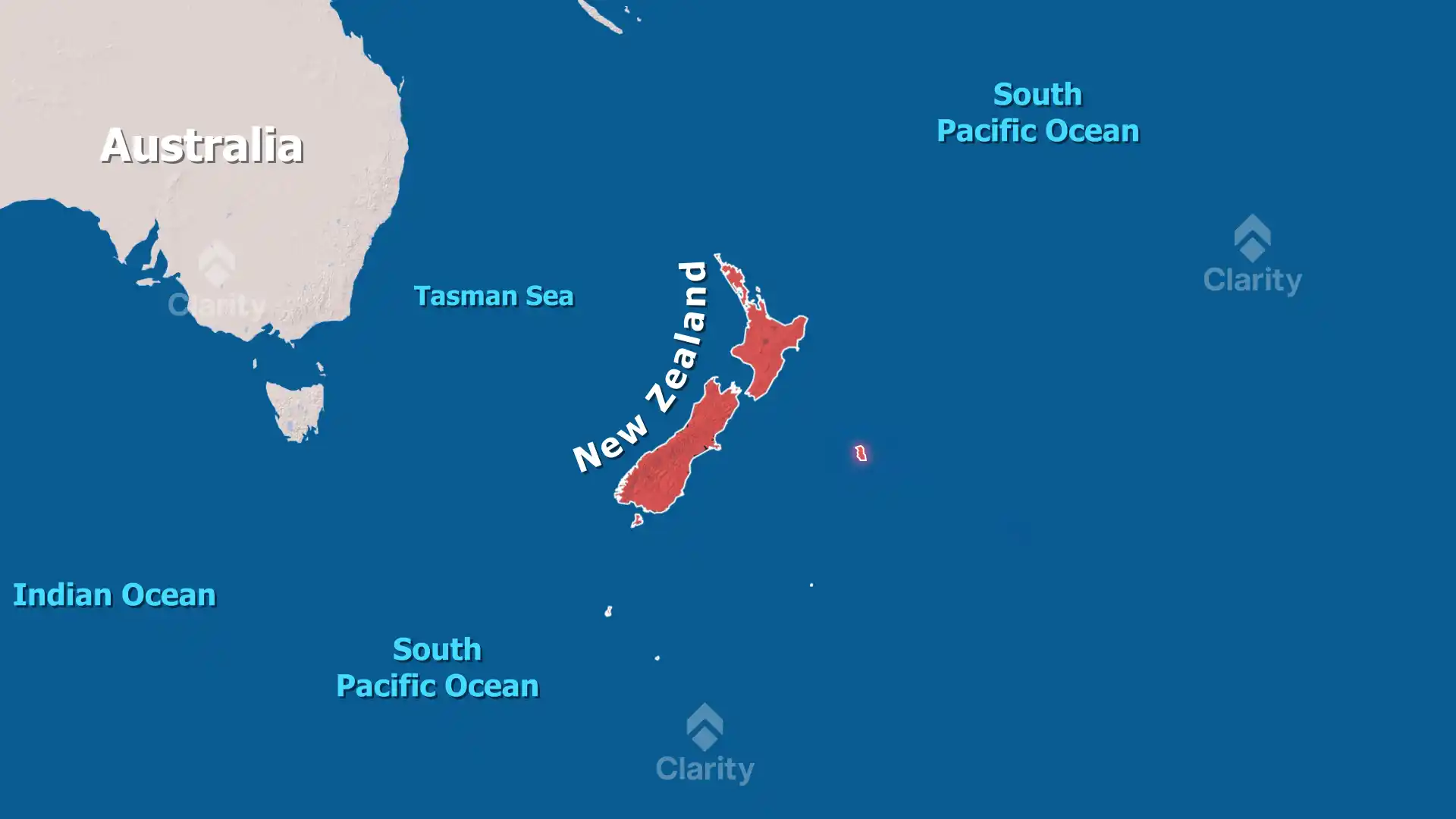
New Zealand is an island nation in the south‑western Pacific Ocean, located roughly 1,600 km southeast of Australia. It consists of two main islands—the North Island and the South Island—separated by the Cook Strait. With snow‑capped mountains, active volcanoes and temperate rainforests, the country is renowned for its varied landscapes. Wellington is the capital, while Auckland is the largest city.
Geographical features of New Zealand
- Part of the Ring of Fire: Earthquakes and volcanic eruptions are common because New Zealand lies along the circum‑Pacific seismic belt. Mount Ruapehu on the North Island is an active volcano.
- Mountain ranges and glaciers: The Southern Alps dominate the South Island and include Aoraki/Mount Cook, the country’s highest peak at 3,724 m. The Tasman Glacier is New Zealand’s largest glacier.
- Lakes and rivers: Lake Taupō, formed in the caldera of a supervolcano, is the largest lake. Rivers such as the Waikato provide hydropower and irrigation.
- Natural resources: The islands possess gold, silver, iron sands, limestone and phosphates, though agriculture, forestry and tourism dominate the economy.
Main provisions of the proposed FTA
- Zero duty on Indian exports: All Indian goods entering New Zealand will enjoy zero customs duty, giving manufacturers and farmers greater access to the Kiwi market.
- Tariff elimination for New Zealand products: About 95 % of exports from New Zealand—including wool, coal, timber, wine, avocados and blueberries—will have their duties removed or reduced. However, India will retain tariffs on sensitive items such as dairy products (milk, yoghurt, cheese), onions, sugar, edible oils and rubber to protect local farmers.
- Trade targets: The partners aim to double bilateral trade to US $5 billion within five years. Current merchandise trade is about US $1.3 billion, with total trade in goods and services around US $2.4 billion.
- Investment and jobs: The agreement is expected to attract an estimated US $20 billion in investment over 15 years and generate employment in sectors such as renewable energy, horticulture and technology.
Significance
The FTA reflects New Zealand’s renewed focus on India after years of stalled negotiations. For India, the pact offers an opportunity to diversify its export markets and deepen engagement with a high‑income Pacific economy. By excluding dairy and certain agriculture products, negotiators have attempted to balance liberalisation with protection of small farmers and domestic industries.
Sources: The Hindu