Why in news?
The Tamil Nadu and Kerala Forest Departments jointly conducted the third synchronised survey of the Nilgiri Tahr from 24 to 27 April 2026. The census aims to provide an accurate population estimate of this endemic mountain goat and to guide conservation efforts.
Background
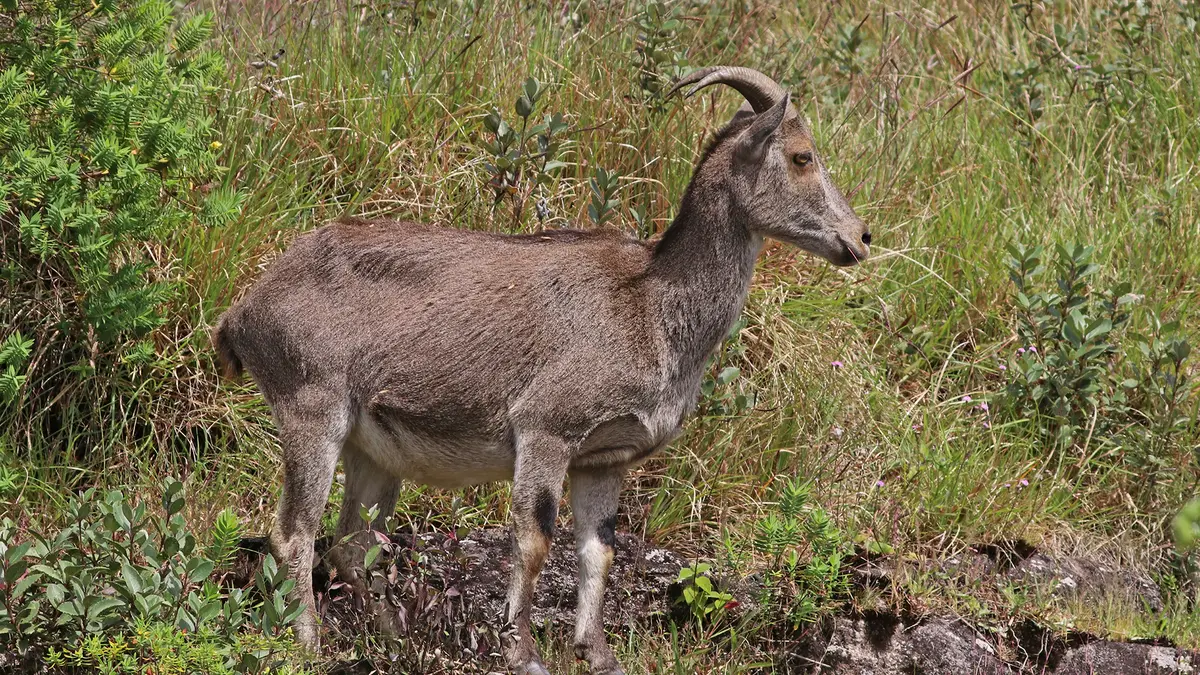
The Nilgiri Tahr (Nilgiritragus hylocrius) is the state animal of Tamil Nadu and is endemic to the Western Ghats. It is a mountain ungulate adapted to steep grasslands and rocky cliffs. Project Nilgiri Tahr, launched in 2022, aims to conserve the species through habitat restoration, scientific surveys and awareness programmes. The first synchronised survey in 2024 estimated about 1,031 Nilgiri tahrs in Tamil Nadu; the second in 2025 recorded 1,303 individuals. Combining data from Kerala and Tamil Nadu, the 2025 census estimated 2,668 animals across both states.
Details of the 2026 survey
- Comprehensive coverage. The four‑day census covered 177 locations across 14 forest divisions and 10 districts in Tamil Nadu, including Anamalai, Kalakad Mundanthurai and Srivilliputhur Megamalai tiger reserves as well as Mukurthi National Park. Kerala coordinated concurrent counts in adjoining areas.
- Methods. Teams used direct sightings and drone surveillance to count animals. They also collected vegetation and pellet samples for laboratory analysis to assess health and habitat quality.
- Technology. A mobile application called “Varudai” was introduced to record sightings with GPS coordinates. Data were fed into a web‑based system for near‑real‑time analysis.
About the Nilgiri Tahr
- Habitat and distribution. The species inhabits the high‑elevation grasslands and montane forests of the Western Ghats, particularly the Nilgiri hills and the Anamalai–Palani range. Populations are fragmented and sensitive to habitat loss.
- Physical characteristics. Adult males (called bucks) have curved horns and a darker saddle patch on the back; females are smaller and lighter. They graze on grasses and herbs along steep slopes.
- Conservation status. Listed as Endangered on the IUCN Red List due to a small population size and habitat fragmentation. Threats include illegal hunting, invasive species and climate change.
Significance
Synchronised surveys help avoid double counting of animals moving between states and provide reliable data for conservation planning. The 2026 exercise demonstrates interstate cooperation and the use of technology in wildlife monitoring. Accurate population estimates will inform habitat restoration under Project Nilgiri Tahr and support policies to safeguard this unique mountain goat.
Source: The Hindu