
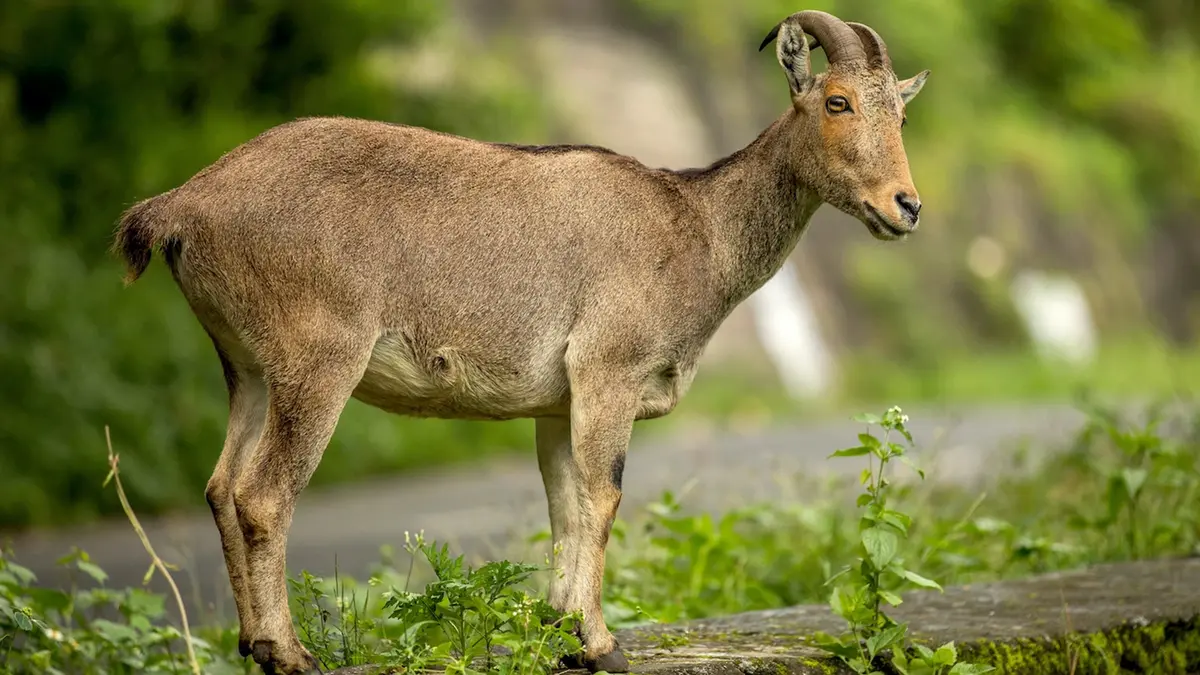
Why in news?
The Government of Tamil Nadu released findings from the third synchronised population survey of the endangered Nilgiri Tahr in April 2026. The survey estimated 1,364 individuals, up from 1,303 recorded in 2025. The increase is attributed to concerted conservation efforts under Project Nilgiri Tahr.
Background
The Nilgiri Tahr (Nilgiritragus hylocrius) is a goat‑like ungulate endemic to the high elevation grasslands of the Western Ghats in Tamil Nadu and Kerala. Males have a stocky build and backward‑curving horns, while females are smaller and usually hornless. Historically their population may have exceeded 10,000 individuals, but habitat loss, hunting and competition with livestock have reduced numbers drastically. The species is classified as “Endangered” on the IUCN Red List. In December 2022 the Tamil Nadu government launched Project Nilgiri Tahr, a five‑year initiative with a budget of around ₹25 crore to conserve the state animal. The project draws on cultural references to the animal in Sangam literature and aims to restore and reconnect fragmented habitats.
Survey findings
- Population growth: The April 2026 survey counted 1,364 animals, a 4.68 percent increase from 1,303 in 2025 and a 32 percent increase from 1,031 in 2024.
- Distribution: Field teams covered 177 survey blocks in 14 forest divisions across the Anamalai, Nilgiri and Palani landscapes. The Anamalai Hills held nearly 45 percent of the population, while the Nilgiri landscape accounted for about 29 percent.
- Demographic ratios: The male‑to‑female ratio was roughly 55:100, and the female‑to‑young ratio was 100:66, indicating healthy recruitment.
- Monitoring tools: Researchers used the VARUDAI mobile application for real‑time data entry and georeferencing. Participation of forest staff and volunteers improved the accuracy of counts.
Project Nilgiri Tahr
- Habitat restoration: The project restores montane grasslands, removes invasive species and re‑creates corridors between isolated populations.
- Scientific management: Plans include radio collaring animals to study movement, establishing a potential captive‑breeding programme and reintroducing Tahrs into historical ranges where they have disappeared.
- Community engagement: The project promotes eco‑tourism, awareness campaigns and involvement of local communities in fire prevention and habitat protection.
Conclusion
The positive trends from the synchronised survey show that sustained conservation measures and monitoring are paying off. To ensure the long‑term survival of the Nilgiri Tahr, authorities must continue habitat restoration, control forest fires and engage local communities.