

Why in news?
A new scientific study warns that climate change could shrink the habitat of the Nilgiri Wood Pigeon, a bird endemic to India’s Western Ghats. Researchers modelled how rising temperatures might alter suitable habitat for this species and found that high‑quality areas could be reduced to scattered pockets by the end of the century. The findings have spurred calls for climate‑resilient conservation strategies.
Background
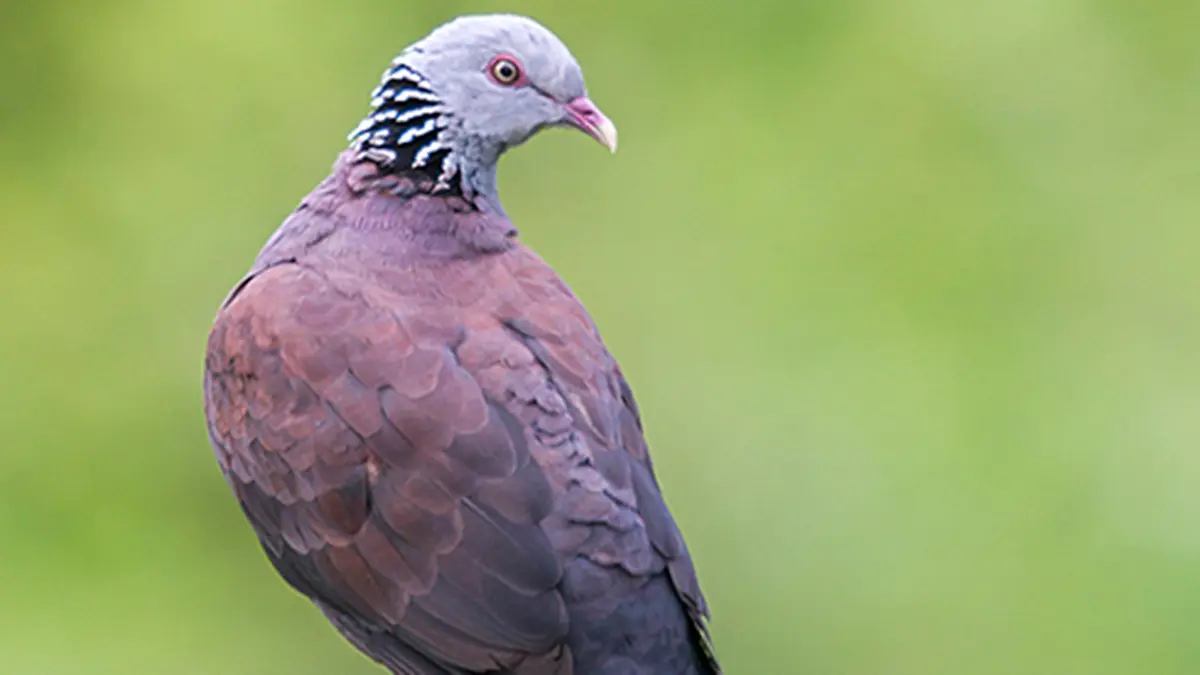
The Nilgiri Wood Pigeon (Columba elphinstonii) is a large, dark pigeon distinguished by a checkerboard pattern on its nape. It inhabits high‑elevation wet evergreen and moist deciduous forests, especially in the Nilgiri and Anamalai hills of Tamil Nadu and Kerala. Smaller populations occur in places such as the Biligirirangan and Nandi hills and northern Maharashtra. The pigeon feeds mainly on forest fruits and forages in the canopy. Although the International Union for Conservation of Nature (IUCN) presently classifies it as “Least Concern,” its restricted range and dependence on undisturbed canopy make it vulnerable to habitat loss.
What the study found
- Extensive data: Scientists used 9,757 bird sighting records from the citizen‑science database eBird to identify 117 unique presence points for the species. They applied a modelling tool called MaxEnt to project habitat suitability under different climate scenarios.
- Non‑linear response: The model predicts a slight increase in suitable habitat between 2021–2040 as lower montane areas become more hospitable, but by 2081–2100 suitable areas sharply decline. Warming initially allows the bird to move upslope, but continued temperature rise leads to range contraction.
- High vulnerability: The bird’s restricted elevational range, patchy distribution and dependence on undisturbed canopy make it particularly susceptible to deforestation, agriculture, infrastructure expansion and climate change.
- Need for better data: Authors note that the species’ population is assumed to exceed 10,000 mature individuals, but this figure lacks rigorous field surveys. They call for systematic demographic studies and long‑term monitoring to reassess its conservation status.
Significance
The study underscores the importance of conserving high‑altitude forests in the Western Ghats, which support many specialised species. Protecting contiguous canopy, curbing deforestation and accounting for future climate shifts will be crucial to ensuring the survival of the Nilgiri Wood Pigeon and other endemic birds. Proactive planning is needed before habitat loss becomes irreversible.
Source: The Hindu