

Why in news?
Marine scientists have reported that a prolonged marine heatwave has killed or severely bleached a large portion of coral at Western Australia’s Ningaloo Reef. Surveys conducted across northern lagoon sites revealed that roughly 70 percent of corals died after months of abnormally warm water and low oxygen levels. The die‑off highlights how climate‑driven heatwaves can devastate even relatively healthy reef systems.
Background
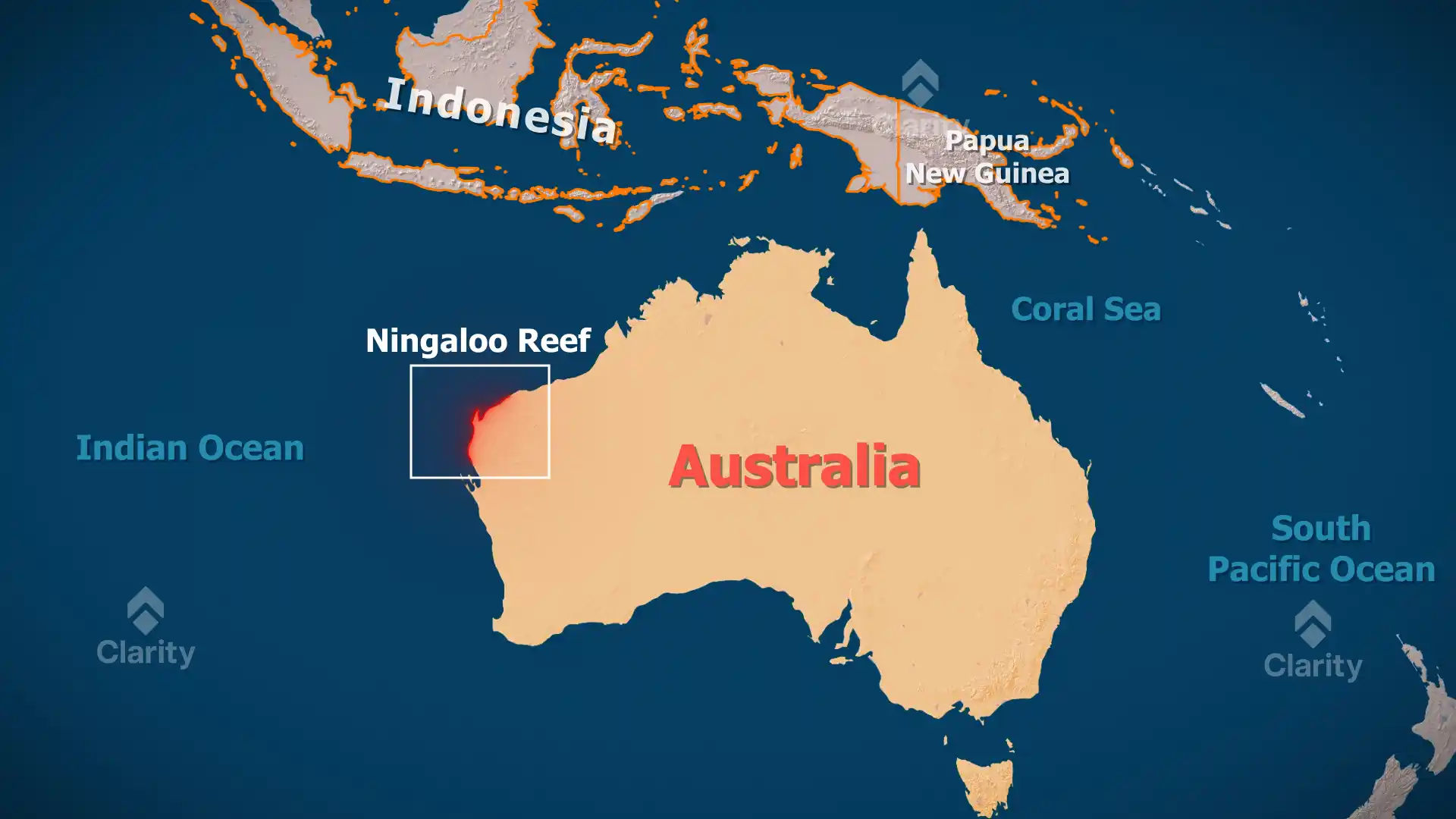
Ningaloo Reef stretches for about 300 kilometres along the coast of Western Australia and is the world’s largest fringing coral reef. Unlike barrier reefs, which grow far offshore, fringing reefs sit close to land; Ningaloo lies just metres from the sandy shoreline in places and covers roughly 50 square kilometres. The reef became a UNESCO World Heritage Site in 2011 for its biodiversity, which includes more than 500 species of coral, 700 species of reef fish and seasonal gatherings of whale sharks and manta rays.
Heatwave and bleaching event
- Record temperatures: During the summer of 2024–25, an unprecedented marine heatwave kept water temperatures above 30 °C for months. Corals, which are sensitive to heat, expelled the symbiotic algae that provide them with food and colour, leading to bleaching.
- High mortality: Surveys by Curtin University found that by October 2025 more than half of the corals at eight northern lagoon sites had died. Dominant species such as branching acropora suffered particularly heavy losses.
- Mixed resilience: Some coral species, including certain porites and massive corals, showed greater tolerance and survived the heatwave, suggesting that reef composition may shift toward more heat‑tolerant organisms.
Implications
The mass bleaching at Ningaloo underscores how rising sea‑surface temperatures are stressing reefs worldwide. Reefs provide coastal protection, support fisheries and draw tourists; their decline has economic and ecological consequences. Researchers warn that unless global greenhouse‑gas emissions are reduced, heatwaves will become more frequent, putting even resilient reefs at risk.
Sources: Down To Earth ·