
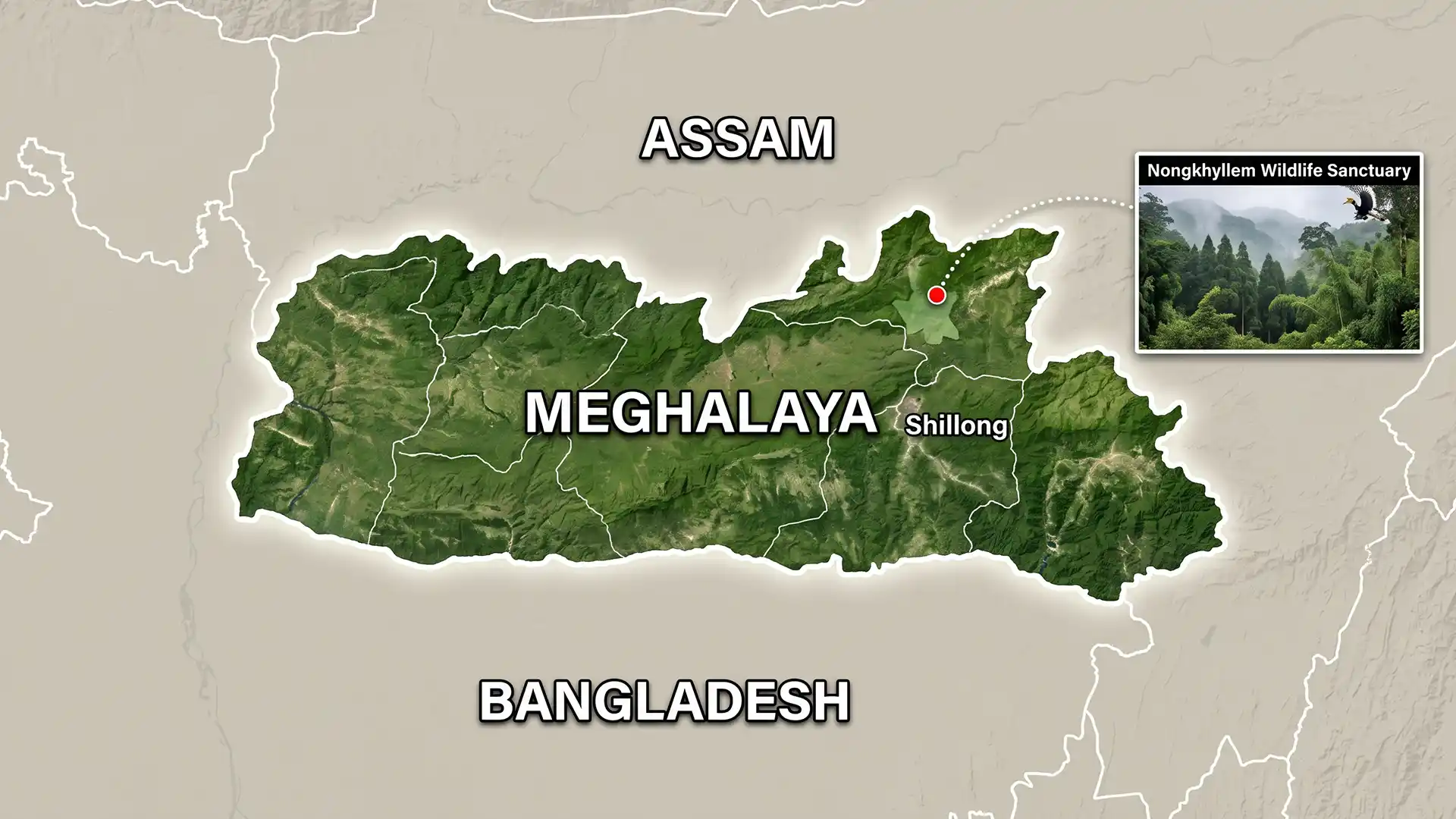
Why in news?
Environmental groups have opposed a proposed ₹23.60 crore ecotourism project inside the Nongkhyllem Wildlife Sanctuary in Meghalaya. They argue that new infrastructure could harm the sanctuary’s fragile ecosystems and threaten its rare wildlife.
Background
Nongkhyllem Wildlife Sanctuary lies in the Ri‑Bhoi district of Meghalaya within the Eastern Himalayan biodiversity hotspot. It was notified in 1981 under the Wildlife Protection Act and covers about 29 square kilometres. The landscape consists of undulating plains and low hills, with the Umtrew River forming its western boundary. The area was declared an eco‑sensitive zone in 2017, limiting construction activity.
Ecological significance and concerns
- Rich biodiversity: The sanctuary hosts over 400 bird species, including the endangered rufous‑necked hornbill. Mammals such as the clouded leopard, Asian elephant and Himalayan black bear also inhabit the forest.
- Small size: At roughly 29 sq km, the sanctuary is too small to absorb large tourist facilities without disturbing habitats.
- Eco‑sensitive status: Because the area was declared eco‑sensitive, development should occur around rather than within the protected zone. Opponents say funds should be invested in nearby villages for homestays and community infrastructure.
- Management quality: Nongkhyllem was rated the best‑managed protected area in North‑East India under the 2021 Management Effectiveness Evaluation. Conservationists fear that construction could undermine this achievement.
- Petition and demands: The Green‑Tech Foundation petitioned the tourism minister to cancel the project. They ask the government to develop sustainable livelihoods for local people without building inside the sanctuary.
Conclusion
Ecotourism can create jobs but must not compromise fragile ecosystems. The debate over Nongkhyllem highlights the need for careful planning that balances conservation with community development.