

Why in news?
Oil from the grounded tanker Caroline Bezengi reached Al Qibliyah Island. The incident threatened the sensitive Hallaniyat marine environment.
What was known by 12 August
The sanctioned Suezmax tanker grounded in June while carrying nearly one million barrels. Satellite analysis later detected a wide oil sheen.
The Associated Press reported an estimated sheen of about 800 square kilometres on 7 August. This estimate described surface spread, not recovered volume.
Omani agencies deployed teams to contain pollution and examine environmental effects. Weather and currents could still move oil between islands and open water.
Geography of the islands
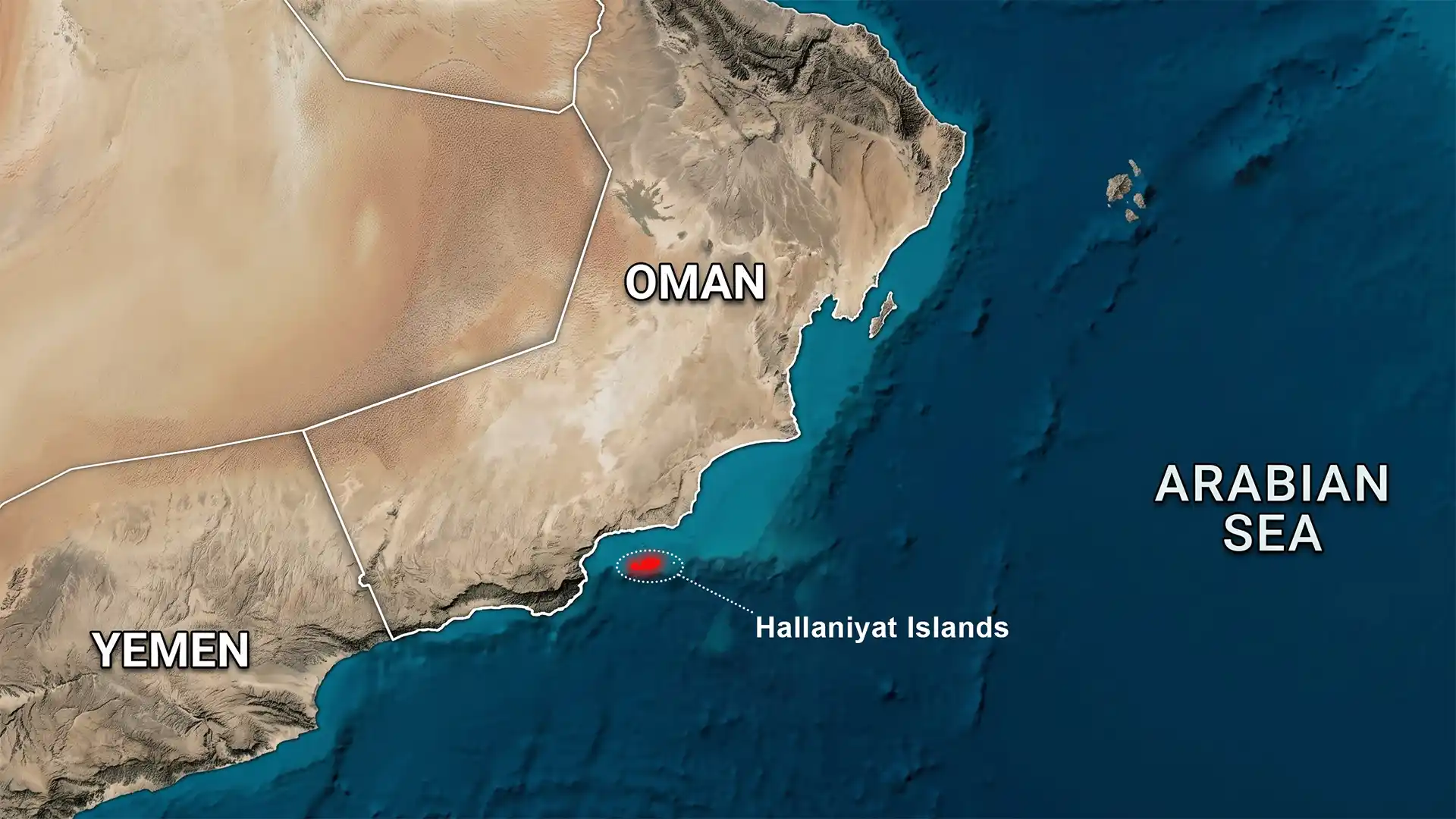
The Hallaniyat archipelago lies off Dhofar in southern Oman, within the Arabian Sea. It falls under Shalim and the Hallaniyat Islands wilayat.
The group contains five islands and lies roughly 50 kilometres from the Hasik coast. Hallaniyah is the largest and permanently inhabited island.
The waters support coral communities, seabirds, turtles, dolphins and whales. Oman created a marine buffer nature reserve around the islands in 2025.
Response priorities
Authorities first need to stop further leakage and stabilise the vessel. Shoreline protection should then follow current forecasts and habitat sensitivity maps.
Cleanup methods can themselves disturb reefs or nesting areas. Decisions should therefore compare ecological harm rather than simply maximise visible oil removal.
Long-term monitoring should measure water, sediment and wildlife effects. Transparent sampling is essential because visual cleanup does not prove ecological recovery.
Governance beyond the shoreline
Authorities need a common incident record covering satellite images, field samples and vessel data. Conflicting estimates can otherwise weaken response priorities.
Wildlife rehabilitation needs trained personnel and safe disposal systems. Poor handling can spread contamination from affected animals to new locations.
Fishing communities should receive timely safety advice and evidence-based reopening decisions. Lost access may require documented compensation beside ecological restoration.
The case also exposes risks from ageing or sanctioned fleets. Port-state controls and emergency cooperation remain necessary despite difficult ownership structures.
Public updates should separate confirmed leakage from modelled movement. That distinction helps coastal communities judge changing risks accurately.
Regional shipping authorities can learn from the response. Contingency plans should reflect remote islands, limited access and ecologically sensitive coastlines. Exercises can expose equipment and coordination gaps before another spill.
Liability must follow evidence
Ship ownership, sanctions and insurance complicate recovery. Verified spill data will be central to compensation, enforcement and restoration.
Conclusion
The grounding is both a shipping emergency and an ecological test. Containment must be followed by independent monitoring and accountable restoration.