Why in news?
Wildlife officials reported that tagged Olive Ridley turtles from Tamil Nadu have begun migrating towards the Sri Lanka Dome, an upwelling zone in the Indian Ocean. The observation reveals the turtles’ vast migratory routes and the need for cross‑border marine conservation.
Background
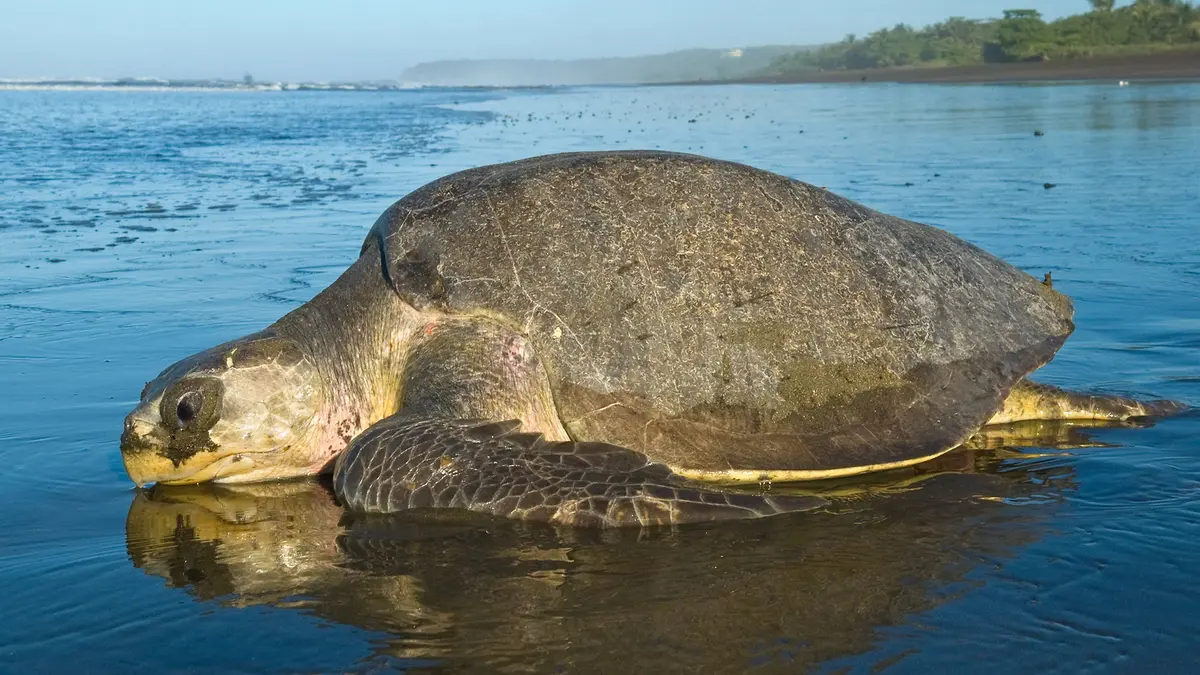
The Olive Ridley is the smallest and most abundant species of sea turtle. Its olive‑coloured carapace gives the species its name. These turtles are famous for Arribada — a mass nesting event where thousands of females come ashore simultaneously to lay eggs. They are found in the warm waters of the Pacific, Atlantic and Indian Oceans; the Gahirmatha sanctuary in Odisha hosts the world’s largest rookery. In India, the species is listed under Schedule I of the Wildlife Protection Act and classified as Vulnerable on the IUCN Red List.
Sri Lanka Dome and migration
- What is the Sri Lanka Dome? It is an offshore region south‑east of Sri Lanka created by seasonal upwelling. Cool, nutrient‑rich waters rise to the surface, triggering plankton blooms that attract fish, whales, seabirds and turtles. Upwelling begins in May, peaks in July and declines by September.
- New findings: Satellite‑tagged turtles released in Tamil Nadu’s rookeries have travelled hundreds of kilometres to reach the Sri Lanka Dome. Experts expect Olive Ridley turtles nesting in Odisha to converge there too.
- Conservation significance: The discovery shows that feeding grounds, migration corridors and nesting beaches are interconnected across borders. Protecting marine species requires cooperation between India and Sri Lanka and careful management of fisheries and shipping lanes.
Characteristics of the Olive Ridley
- Diet and behaviour: The species is omnivorous, feeding on jellyfish, crustaceans, algae and small fish. Adults spend most of their life in the open ocean, migrating long distances between feeding and breeding grounds.
- Reproduction: Females reach maturity at about 10–15 years and lay clutches of around 100 eggs. Only a small fraction of hatchlings survive to adulthood.
Conclusion
The movement of Olive Ridley turtles to the Sri Lanka Dome underlines the connected nature of the Indian Ocean ecosystem. Cross‑border conservation, reduced by‑catch and protection of nesting beaches are essential to ensure that this vulnerable species continues to thrive.
Source: The Hindu