

Why in news?
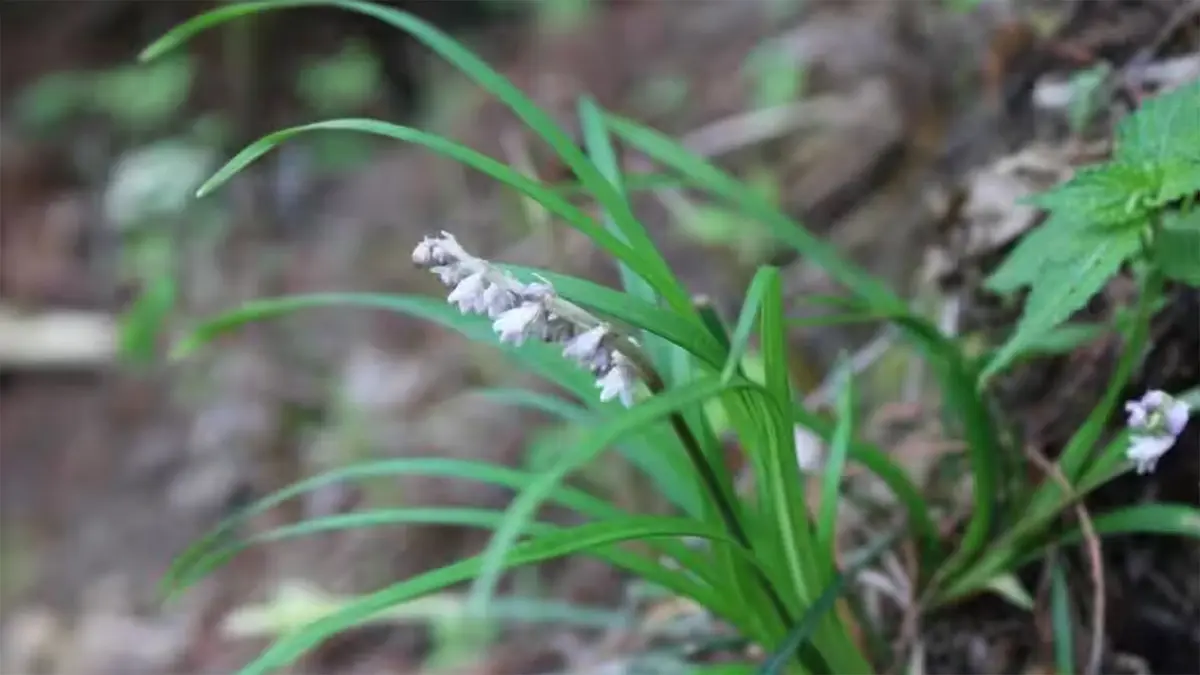
Botanists have documented Ophiopogon japonicus in Arunachal Pradesh, adding a verified record to accounts of India's flora. Their study appeared in Discover Plants on 31 August 2026, following a collection made in May 2025. The plant is a small, grass-like flowering herb already known from East Asia. Its identification matters because similar-looking plants can remain overlooked in surveys. The researchers compared the Arunachal material with botanical descriptions and preserved specimens. They also acknowledged an older specimen from Kumaon that had not entered the relevant Indian floristic accounts. This is therefore a new documented floristic record, not a species newly discovered by science or proof that it recently arrived in India.
A flowering herb that looks like grass
Ophiopogon japonicus, commonly called mondo grass or dwarf lilyturf, belongs to Asparagaceae, the asparagus family. Its narrow green leaves explain the grass-like appearance, but appearance alone does not establish botanical relationships. It is an evergreen perennial: an individual can live across several growing seasons while retaining foliage. Small, pale flowers sit among the leaves, and conspicuous blue, berry-like structures develop later. These features help explain its popularity as an ornamental ground cover.
Its known range is centred on East Asia. Kew's botanical database recognises the species as an accepted name rather than a newly proposed one. Horticultural descriptions also record its preference for moist, well-drained soil and shaded situations. A garden plant growing outside its original range, however, is not automatically evidence of a naturally occurring wild population. Botanists must record the circumstances of a find, including whether it was planted, escaped from cultivation or growing independently.
The Eastern Himalayan setting
The Indian collection came from West Kameng, in the western part of Arunachal Pradesh near Bhutan. The recorded site was beside the road between Shergaon and Gyuto monastery, approximately 2,185 metres above sea level. Plants grew on a moist, shaded forest margin. This is an Eastern Himalayan mountain setting, not the hot lowland environment that a reader might associate with all northeastern vegetation. Altitude, slope and shelter can create very different habitats within a relatively short distance.
Such small habitats matter in botanical exploration. An open roadside and a shaded patch beside it may support different plants despite being close together. Surveying only large trees or conspicuous flowers can miss low-growing herbs. A regional flora is an organised account of the plants recorded from that region. Improving it requires attention to these less obvious plants as well as the more visible parts of the forest.
How a plant record becomes checkable evidence
A photograph can document appearance, but some identification features require closer examination. Flower structures, leaf edges and other small characters help distinguish related species. A herbarium preserves labelled plant material so that another researcher can revisit an identification. Labels connect a specimen with its place, collection date and collector. That connection turns an observation into evidence that can be checked long after the original field visit.
Herbaria also make historical comparisons possible. A modern identification may change how an older specimen is understood, or reveal that an earlier record was overlooked. The existence of a specimen and its inclusion in a published regional flora are therefore different stages. In this case, the earlier Kumaon material limits the meaning of a simple “first in India” headline. The contribution is stronger documentation and recognition, not the claim that nobody previously encountered the plant.
Medicinal interest is a separate scientific question
The species has a history of use in traditional East Asian medicine. That history has encouraged research into its chemical constituents and biological activity. However, identifying a plant in India does not establish a treatment benefit. A 2021 critical review of Ophiopogon and the related genus Liriope examined the quality of pharmacological research. It found problems including excessively high experimental doses and inadequate study controls, and found no relevant clinical studies in its search.
A substance affecting cells in a laboratory may behave differently in a person's body. Dose, absorption, interactions and safety all matter. Traditional use and promising experiments can justify further investigation without proving that a preparation treats a particular disease. Reliable identification comes earlier in that research chain. It helps establish which plant material was studied, making later experiments easier to compare and repeat.
What further fieldwork can establish
One documented locality cannot show how numerous or secure a species is across the Indian Himalaya. Surveys could establish whether nearby populations exist and whether flowering plants regularly produce new individuals. The study identifies road works, landslides and habitat disturbance as potential local pressures. These are reasons to investigate the population, not a formal global extinction-risk classification. Monitoring would connect the taxonomic record with the practical condition of the habitat.
Conclusion
The record shows how careful identification can improve knowledge without creating an entirely new species name. Its value lies in connecting a living population, preserved evidence and earlier botanical history. The next useful step is to understand the plant's wider Indian distribution and local persistence. That would turn a noteworthy addition to the flora into a stronger basis for ecological research and habitat protection.